Welcome to iGrow News, Your Source for the World of Indoor Vertical Farming

AFBF Entrepreneur of the Year is Vertical Harvest Hydroponics
AFBF Entrepreneur of the Year is Vertical Harvest Hydroponics
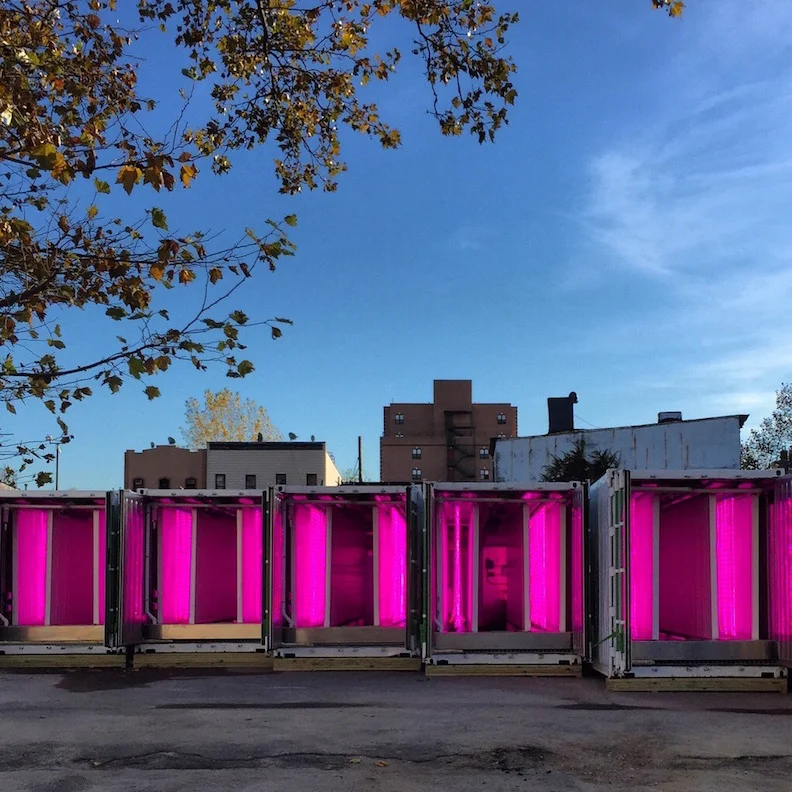
Goal of Vertical Harvest Hydroponics is to produce hydroponic vegetables in 40 foot insulated shipping containers.
Jan 20, 2017
Vertical Harvest Hydroponics of Alaska is the American Farm Bureau Federation’s Farm Bureau Entrepreneur of the Year. Team leads Linda Janes and Dan Perpich won AFBF’s Rural Entrepreneurship Challenge by beating three other teams from across the nation.
Janes and Perpich took home a total of $30,000 in prize money, including $15,000 from sponsor Farm Bureau Bank to produce hydroponic vegetables housed in 40 foot insulated shipping containers.
The four finalists each received $15,000 in October for advancing in the competition.
Levrack of Nebraska won the People’s Choice award with 73% of the vote. The award earned Levrack an additional $10,000 in prize money. Levrack produces efficient storage systems for farm shops. Members of the live audience at the finals competition and members of the general public voted online to select the People’s Choice winner. Ryan Stauffer, Austin Stauffer and Peter Miller were team leads for Levrack.
Windcall Manufacturing of Nebraska, led by Martin Bremmer, and Grow Bioplastics of Tennessee, led by Tony Bova, were the other two finalists who competed in the final round of the challenge in Phoenix.
The final four teams competed for the award by pitching their business ideas to a panel of judges before a live audience. The finalist businesses were chosen from 356 applicants.
The challenge, now in its third year, provides opportunities for individuals to showcase business innovations being developed in rural regions of the U.S. It is the first national business competition focused exclusively on rural entrepreneurs working on food and agriculture businesses. The top challenge teams were selected by 40 judges with expertise in business development, equity investment funding management, agribusiness lending and entrepreneurial coaching.
Semi-finalists in the competition were awarded $10,000 each in October, thanks to the sponsorship of Farm Credit Council. They are: Demeter Inc., Irwin, Ohio; Farmzie, Raleigh, North Carolina; Gardens 4 Education, Hanford, California; Inland Sea Company LLC, Ames, Iowa; Lowcountry Street Grocery, Charleston, South Carolina; and Performance Livestock Analytics Inc., Osage, Iowa.
“Entrepreneurs – whether on the farm or in the community – are the lifeblood of the rural economy,” said Todd Van Hoose, CEO, Farm Credit Council. “That’s why we’re excited to partner again with the Farm Bureau for the third annual Rural Entrepreneurship Challenge. This competition recognizes and awards the best and brightest start-ups focused on supporting rural communities and agriculture. We look forward to following the progress of these talented individuals and wish them the best.”
The top 10 challenge teams were selected by 15 judges with expertise in business development, agribusiness lending and entrepreneurial coaching.
Source: AFBF

Huntington Native Brings Urban Farming to Long Island
Huntington Native Brings Urban Farming to Long Island
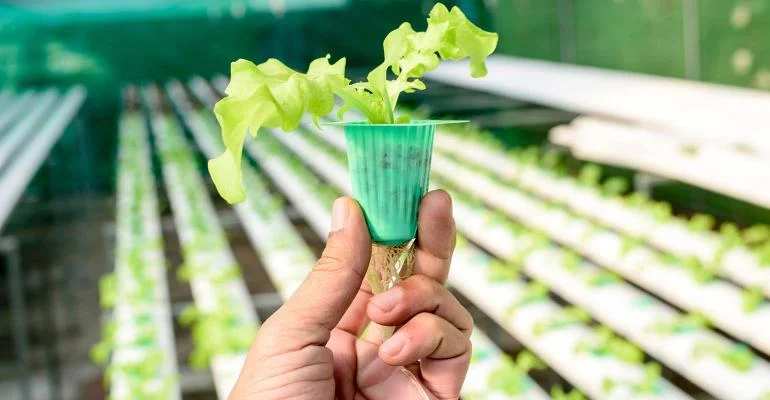
The farmer, who’s on a mission to grow the perfect head of lettuce, will be at the Huntington Indoor Winter Farmer’s Market this Sunday.
By Paige McAtee (Patch Staff) - January 20, 2017 6:59 pm ET
East Northport resident Jonathan Bernard is on a mission to bring urban farming to Long Island and start a real food revolution.
Bernard, 24, is a graduate from Half Hollow Hills West High School and Stony Brook University, where he earned his Bachelor’s in accounting.
The accountant-turned urban farmer, who has always loved to cook and grow vegetables, gave up crunching numbers to focus on urban farming with Square Roots. He officially started farming in October.
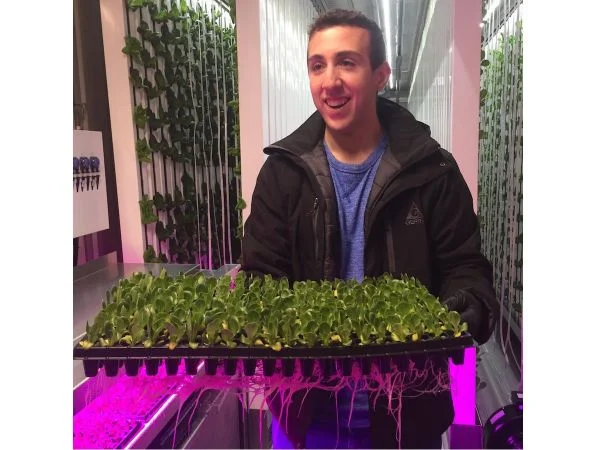
Bernard farms lettuce in a 40-foot-long container and grows about 1,000 heads of lettuce a week. His goal is to grow the perfect head of lettuce.
“I’m getting pretty close to it,” Bernard told Patch. “It’s kind of like a science to get these things right.”
Bringing Urban Farming to Long Island
Bernard told Patch he wants to bring his lettuce to Long Island to show everyone what real food tastes like.
Eating fresh produce is a different experience most people on Long Island don’t get to experience, he said. Fresh produce surprisingly tastes a lot different than the vegetables in grocery stores.
Bernard said he was shocked the first time he tasted fresh spinach.
The Huntington native already sells his lettuce to Lalo, a restaurant in New York City, but is looking to go directly to the consumer.
Bernard will be selling his lettuce Sunday at the Huntington Indoor Winter Farmer’s Market, located at 155 Lowndes Ave. in Huntington Station, from 9 a.m. to 1 p.m. This will be his first week attending.
His goal revenue for the year is $150,000. While accounting isn’t a necessary skill for farming, it does help when he focuses on the business side of things. “Business is definitely harder than I thought it was,” he added.
How to Grow the Perfect Head of Lettuce
“Just by changing the humidity you can make any vegetable crunchier or softer,” the urban farmer told Patch.
The space where Bernard grows his lettuce uses less resources and produces more crops than traditional farming. Vegetables are grown using LED lighting in a controlled climate with no GMO or pesticides used. About 80 percent less water is used in these spaces since the water is recycled.
Unlike produce in grocery stores, these crops are nutrient-dense, Bernard said.
Square Roots vegetables have a higher cost than typical produce, but Bernard says the advantage is you can harvest it and it lasts two to three weeks as opposed to produce in grocery stores that take a week to arrive and wilt three days after they're purchased.
About Square Roots
Bernard is one of 10 farmers chosen to kickstart the Square Roots movement, which is based in Bed-Stuy, Brooklyn.
Square Roots, which was founded by Kimbal Musk and Tobias Peggs, looks to bring fresh, good tasting and nutrient-dense food to consumers year-round.
The farmers/entrepreneurs are required to grow their crops and businesses and after a year, they're expected to go off on their own. Square Roots will choose another group once the original 10 leaves.
By then, Bernard will hopefully be selling perfect heads of lettuce directly to Long Island consumers.

A D.C. Urban Farm Takes On Urban Problems
A D.C. Urban Farm Takes On Urban Problems
Dreaming Out Loud's new farm hopes to provide jobs, business incubation, and more in a city ward that has often been overlooked
BY WHITNEY PIPKIN | Food Deserts, Food Justice, Urban Agriculture
01.19.17
Little more than grass used to grow on the two-acre plot behind a middle school in the District of Columbia where tomatoes, okra, and infrastructure for food entrepreneurs will begin cropping up this year.
In a ward of the city with just two grocery stores serving more than 70,000 residents, fresh produce is hard to come by. But the Kelly Miller Farm, which will be situated behind a middle school with the same name, aims to offer much more: youth programs, a community garden accessible to seniors, and a commercial kitchen from which area residents can launch food-based businesses.
“It’s like a food system in a box—in one space, in one community,” says Christopher Bradshaw, executive director of Dreaming Out Loud. The D.C. food justice nonprofit is partnering with the city and a half-dozen other organizations to run the farm in a way that generates revenue while also meeting the community’s unique needs. “I don’t know too many places combining those things,” Bradshaw says.
With $150,000 in seed money from the U.S. Department of Agriculture (USDA)—through programs promoting farmers’ markets and specialty crops—and a mix of other local grants, the founders plan to build infrastructure such as hoop houses, and a greenhouse while transforming a gutted shipping container into a commercial kitchen space. Construction is scheduled to begin in the spring and be completed by midsummer.
A USDA spokesman said the farm will serve as a model for organizations across the country that want to help consumers understand how their food is produced, especially in urban settings. But what sets the farm apart from a rooftop garden in the District’s restaurant row is that it’s catered to the people who live in this often-underserved part of the city, not just the ones who work or spend money there.
After graduating from the District’s historically Black Howard University, Bradshaw, 35, stumbled into urban agriculture while trying to teach in an after-school program at a public charter school that has since closed. The students would arrive each day with stomachs full of the Teddy Grahams and Kool-Aid the school provided as snacks only to bounce off the walls during his lessons on “character development.” Then, they’d crash.
Realizing he couldn’t teach the children without first addressing their most basic needs, Bradshaw’s nonprofit started a school garden and then a farmers’ market, so parents could buy better food, too. The latter often proved an exercise in staying power more than money-making and, eventually, Bradshaw decided to pursue broader, community-level programs.
Last year, when Bradshaw reached out looking for rentable, farmable land, the District happened to be looking for a partner to help create a model urban farm for the city. The two joined forces.
Bradshaw says he couldn’t have come as far as he has without the help of both city and federal partners who have prioritized food access over the past eight years. Having an outspoken advocate for this brand of work in the White House’s First Lady hasn’t hurt, either—though it’s left him leery about the prospects of a new administration this year.
Involving the Community
Bradshaw started the Kelly Miller Farm project, now months in the making, with a step he now knows is crucial to success: Asking people who live in the community what they want.
A short walk from two housing projects in a neighborhood whose population is 96 percent African American and 11 percent unemployed, the farm will serve many people who lack access to healthy food and rely on federal nutrition assistance programs like SNAP, or food stamps. It became clear to Bradshaw and other organizers in the community that residents wanted and needed food options beyond corner stores.
Josh Singer, a community garden specialist with the District’s Department of Parks and Recreation, says the city model needs to go further than growing a lot of food on a little land to address urban problems like affordable food and housing. If such projects ignore the context in which they’re growing food and the groups that are already at work in those communities, they may do more harm than good, he worries.
“A lot of times, organizations will use these poor communities and their statistics to get grants to do work that the community never wanted in the first place,” Singer says. With the Dreaming Out Loud project, however, “we have a whole coalition focused on making this space serve the local community.”
Given the area’s specific challenges, growing microgreens to sell at high-dollar to the city’s hottest restaurants—as some urban farms do to make money on expensive land—would not be appropriate, Singer says.
From the beginning, the organizers of this farm wanted to do more than show residents how food is grown; they wanted them to be able to do the work themselves. That’s why the space incorporates a kitchen and incubator where entrepreneurs can work on their recipes and business plans alongside a compost space where locals can get dirt under their nails. Bradshaw said the farm is fundraising to hire a manager and assistants from within the community but that volunteer work is welcome, too.
Partner nonprofits will use the space to teach children from the middle school about food production or to host therapeutic gardening sessions for seniors recovering from addiction. The produce will be sold at a nearby farmers’ market Dreaming Out Loud runs in the ward and possibly through a subscription program. (Bradshaw would like parents to be able to pick up a weekly produce box with their kids from the school.)
Initially, some residents were concerned about the project’s impact on their own properties; construction to rebuild the middle school a few years ago involved work with a wrecking ball that some say damaged the foundations of their homes and left them suspicious of new projects. But, after a few meetings during the project’s early stages, many of them began suggesting ideas for the space.
Boe Luther, 52, has lived in the ward’s Clay Terrace neighborhood his entire life and says the farm project couldn’t come at a better time. As the owner of two ice cream trucks and a regular at the neighborhood’s existing community garden, Luther is eager for others to have the chance to become food entrepreneurs. They could use the project’s kitchen space to make salad dressings or salsas, he says, or grow cut flowers to sell at the market.
“We’ll have to do the research and see what people want,” Luther says. “But a lot of citizens of Ward 7 are happy about it.”
Walking the Talk
Beyond the neighborhood, organizations that work to improve access to nutritious food in the city’s poorest areas are rooting for the farm’s success. The city’s newly minted food policy council, of which Bradshaw is a member, sees the farm as a stage for many of the policies they’ve espoused on paper, including growing both farms and food access in the city’s poorest enclaves.
“The Kelly Miller Farm is embodying those values,” says Laine Cidlowski, the District’s food policy director.
After seeing firsthand the big impact of a small garden, Luther thinks a vibrant farm has the potential to bring much more than food to the neighborhood: “Jobs, training, careers, opportunities, peace of mind, serenity—it brings all of that,” he says.

Introducing A Better Way To Manage Checklists
Introducing A Better Way To Manage Checklists
Operating checklists are critical for a farm’s success. Even airline pilots with decades of experience still run through a checklist before and after each takeoff. Without one, small mistakes become devastating. We took one farm's operating checklist, detailed each step, and set up Agrilyst to manage the farm with our task manager.
You can check out the full 48-step checklist and how we moved paper checklists into our cloud-based platform here.
Want more? Move your checklists over to Agrilyst for free at our website: www.agrilyst.com.
Check out tasks here
Open Letter from Paul Hardej
Open Letter from Paul Hardej
A Note Regarding the Closure of FarmedHere
Paul Hardej, a Co-Founder of FarmedHere, has been a supportive member of the AVF through his involvement with two of our highly active members: Illumitex and Indoor Harvest. His previous venture, FarmedHere, just announced the closure of FarmedHere's 90,000 sq foot Bedford Park facility.
While this may appear to be a setback for the industry, we at AVF feel that vertical farming is stronger than ever. Our detractors will point to negative developments like this one as a weakness of our entire practice. Yet we all know that the industry is full of successful vertical farming businesses. We are glad to share this Open Letter from Paul Hardej on this subject.
What follows is a note from Paul Hardej:
Austin, TX
1/17/2017
Open Letter
Dear Vertical Farming Colleagues:
It’s not unusual that the first movers and shakers in a new industry come across unexpected challenges. As we all recently learned, FarmedHere is closing its vertical farming operations in Chicago. I had the honor of co-founding FarmedHere in 2009, when it was unheard of for commercial farming to be located in city centers. When we started FarmedHere there were no regulations, financing, qualified labor force, nor proven business model for vertical farming. All we had was the promise of technology for growing plants under artificial light. By 2010 we had our first city farm up and running as an ultra-local grow operation, harvesting greens one day before store delivery and farm-to-store direct distribution. It was truly a disruptive model to the traditional food distribution and farming industry.
Despite these challenges, we forged ahead and made great progress. For example, we went through many months of public hearings and complex legal processes to obtain government approval on the city, county, state, and federal levels. In addition, we obtained the first vertical farm USDA organic certification. Ultimately, we scaled our sales of several lines of leafy greens to about 100 grocery stores in the Chicago metropolitan market. In early 2015 due to a misalignment with some of the new FarmedHere investors on the future of FarmedHere, I moved to other ventures but remained optimistic for continued FarmedHere success.
Since vertical farming is a rather unique blend between highly efficient manufacturing and technological farming, its success depends on the following: strong and smart capital, innovative sales and marketing, and a solid management team, working creatively with stakeholders from the local government, growers, technology providers, and customers. While the vertical hydroponic grow technology was proven to work at scale, FarmedHere missed on the business-side, with some of the other necessary ingredients to expand on its initial success.
In 2017 there are many examples of profitable vertical farms across the country and abroad. As demand for local and organic food grows, so will the industry. There are numerous reasons vertical farming is in demand – food safety and transparency, consistency, availability, high quality, nutritional value, not to mention a push towards sustainability. But it’s going to take all of us working together and exchanging ideas and sharing experiences. Like the industry, I’m evolving to keep up with innovation and technology. I am very positive about the future and looking forward to working with all of you.
I would like to thank all the creative builders, architects, growers, angel investors and organic grocery stores who made it possible for FarmedHere to impact the food system with a positive and permanent change. Let’s all remember FarmedHere for what it achieved and how it paved the way for many successful vertical farms all around the World.
Keep on growing,
Paul Hardej
As: Co-Founder of FarmedHere, LLC
Urban Agriculture
Urban Agriculture
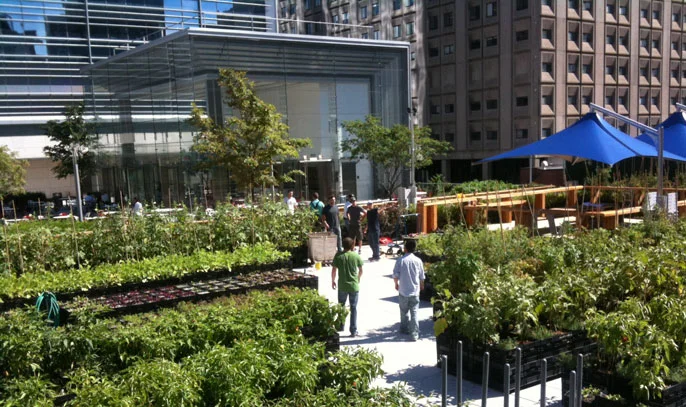
Urban agriculture is reshaping our cities, and urban farmers and gardeners are creating new opportunities for increasing the economic, social, and environmental effects of growing food in and around cities. There are many benefits to growing food in urban areas, and these benefits are being realized by communities, policy makers, and food-system entrepreneurs. As a result, access to land, capital, and markets is creating the necessary environment for farmers to manage a profitable urban farm. This section provides information and resources specific to urban agriculture. It includes information on community gardens, as well as information for helping urban farmers manage risks associated with farming urban soils.
Farmer Tip: Start Small and Take More Risks
Farmer Tip: Start Small and Take More Risks
by Amy Storey | Jan 19, 2017 | Business Mgt & Operations
Considerations of Starting Small
Whether you’re bootstrapping, testing out the feasibility of a farm, or limited to a certain space, there are several good reasons to start small. Farms that start small and scale up take a different approach to the startup process than farms that start big. Kieran Foran knows that well.
Kieran Foran co-founded Fresh Farm Aquaponics with Spencer Curry several years ago. The two use aquaponics to teach schools and non-governmental organizations how to grow their own food. Kieran has a unique look into managing a small startup business and joined us a few weeks ago to discuss that.
Looking back on the founding and growth of Fresh Farm Aquaponics, Kieran has two pieces of advice for small farmers.
1. Don’t be afraid to take risks.
While risks are usually seen as a bad thing for businesses, Kieran thinks that he could have spared more of them in the early days of the business.
“I would tell myself – if I was starting over – to take more risks.”
The reason? Every farm has a learning phase, and a small farm is a perfect place to learn. Many of a new farmers lessons come from trial and error. Kieran says that failures make up for the bulk of Fresh Farm Aquaponics’ learning curve.
The advantage of the small farmer is that they have a bit more freedom to experience those mistakes; the costs are limited to the size of the farm. The smaller the farm, the easier it is to come back. Which brings us to Kieran’s second piece of advice:
2. Start small and work towards your goal.
If you know what your goal is, it doesn’t matter where you start. Starting small can even have benefits. Kieran advises starting small to new farmers.
“Know what you want your end goal to be and then what’s the minimum to reach that goal,” advises Kieran.
Kieran and Spencer, for example, wanted to be a full-fledged commercial farm. They knew they couldn’t start at their goal size, so they started as a backyard farm, and used the profits to scale up.
How to start small
This scaling approach is common among small farmers, many of whom start with limited financing. We advise a 50/50 capitalization strategy (50% down payment on a loan to avoid exorbitant monthly payments down the road). This means that if you only have $10,000 to fund your farm, you’re limited to $20,000 in start-up costs.
Interested in learning more about starting and funding a small farm?
Just because you’re starting small doesn’t mean you aren’t a business. You still have to do feasibility studies, business planning, and financial planning for your business. Research your markets and choose sales models. These may determine your ability to scale up in the future!
Urban Agriculture Pioneer Lufa Farms Opens Third Rooftop Greenhouse Farm
There were two important beginnings in Mo Hage’s world last summer: In July he and his wife, Lauren Rathmell, welcomed their daughter into the world. And in June, work started on construction of the third commercial rooftop greenhouse in the burgeoning urban farming company the couple co-founded, Lufa Farms
Urban Agriculture Pioneer Lufa Farms Opens Third Rooftop Greenhouse Farm
SUSAN SCHWARTZ, MONTREAL GAZETTE
More from Susan Schwartz, Montreal Gazette
Published on: January 18, 2017 | Last Updated: January 18, 2017 11:48 AM EST
There were two important beginnings in Mo Hage’s world last summer: In July he and his wife, Lauren Rathmell, welcomed their daughter into the world. And in June, work started on construction of the third commercial rooftop greenhouse in the burgeoning urban farming company the couple co-founded, Lufa Farms.
Their daughter, Dani, is six months old. And last week Lufa Farms began to harvest produce from that greenhouse, set atop an industrial building in Anjou. The first week brought mega-sized radishes, watercress, Persian cress, arugula and spinach from among more than 40 varieties of greens started out there as seedlings in December; this week, tatsoi, red and green bok choy, Chinese cabbage, romaine and Boston lettuce were added to the mix. Next week there will be more.
The produce is sold to directly to consumers, to subscribers – Lufavores, they are called – who find it in the baskets they order online, along with produce from small family farms, almost all local, and other products including meat, cheese, baked goods, fish and prepared foods, all sourced by Lufa Farms. The year 2016 was a good one: The Lufa Farms subscriber base grew by fully 50 per cent to more than 9,000 families.
Hage and Rathmell, partners in life before they were business partners, had a vision: to create an ecologically — and economically — sustainable model for urban farming and to help to change the way people eat. It took the expertise of many and the investment of $2 million from family friends and others, but in 2011 they opened what was reputed to be the world’s first commercial rooftop greenhouse, atop an industrial building in Ahuntsic.
Radishes are ready for harvest at the rooftop greenhouse built by Lufa Farms in Montreal. PIERRE OBENDRAUF / MONTREAL GAZETTE
A second, in Laval, followed in 2013; the newest, at 63,000 square feet more than double the size of the first, is the largest. Produce is grown hydroponically through a system of plastic tubing that feeds them, recycles the water and reuses it; the circulation system and microclimate are managed by computer software.
Speaking during a Ted-X talk at the Universiteé de Montréal in 2012, Hage observed that our food often travels great distances before it gets to us, losing flavour and nutritional value along the way, that cultivars are often chosen for toughness, and that industrial farms can be “massive consumers of land and water.” A rooftop greenhouse, on the other hand, uses no land. And because it absorbs heat from the building below, it uses 50 per cent less energy than one on the ground – and reduces energy costs for building owners.
How a rooftop farm helps to feed a city
Rathmell, who has a biochemistry degree from McGill University, serves as greenhouse director at Lufa Farms and oversees the farming, plant-science activities and marketing. During a tour on Tuesday of the airy new greenhouse, she pointed out how seedlings are started in small containers of ground-up coconut husks and then planted. Growing times vary, with arugula taking six weeks from seedling to harvest, for instance, and cauliflower twice that. She pointed out four varieties of bok choy, a range of herbs, kohlrabi and mustard greens. Her favourite vegetable, by far, is rainbow chard, with its coloured stems and delicate flavour.
The building on which the Ahuntsic greenhouse sits also contains the Lufa Farms warehouse, where subscribers’ baskets are assembled. Lufavores start out with baskets made up of $30 worth of food, mostly produce, and have until midnight to customize or finalize orders for the following day: The minimum order is $15. At midnight, the “marketplace” is closed and credit cards billed. Partners log in on an online portal to check what was sold that day, then work all night to prepare it.
Lauren Rathmell as a look at fresh greens growing of the rooftop greenhouse built by Lufa Farms in Montreal.PIERRE OBENDRAUF / MONTREAL GAZETTE
“I like the fact that I can customize my baskets and that products are environmentally friendly,” said Verdun resident Sherri Wallace, who has been a Lufavore for about two years. “I get mostly vegetables and, with time, I find the variety has increased. Produce is mostly local but they offer some citrus and collaborate with a farm in Florida so we get a few exotic things like avocados, oranges and grapefruit. And I find the cost reasonable.”
Because only what is sold is harvested, produce is always fresh and both waste and need for storage are eliminated. There are more than 300 pick-up points in cafés, pharmacies and yoga studies around Montreal and, for an extra charge of $5, orders can be delivered to subscribers’ home by a fleet of four electric cars now working at capacity. Recently drop-off points have been added in Quebec City and Trois-Rivières, where the company has growers and producers.
West Island resident Joel Assouline, whose Lufa Farms shopping list includes produce, dairy, some meat, and pasta, said he admires the company’s transparency. “What is cool is that even though they have their own tomatoes, they still carry tomatoes from other farmers. They have products that compete.”
He said he finds the online shopping cart “so user-friendly, with nice pictures. And your basket stays open all week.” Assouline, who has orders delivered to his home, likes also having access “to local and ethical farmers … When you go on their website, you have access to the information of every producer you buy from. For me, if a farmer is disclosing his name and his address, already it’s a good sign.”
Urban Farming Tips From Replantable: The Hottest Urban Farming Project on Kickstarter
We interviewed co-founder Ruwan Subasinghe of Replantable to chat about urban farming tips, the beginning of Replantable, and the Nanofarm, their new urban farming project taking kickstarter by storm
Urban Farming Tips From Replantable: The Hottest Urban Farming Project on Kickstarter
We interviewed co-founder Ruwan Subasinghe of Replantable to chat about urban farming tips, the beginning of Replantable, and the Nanofarm, their new urban farming project taking kickstarter by storm
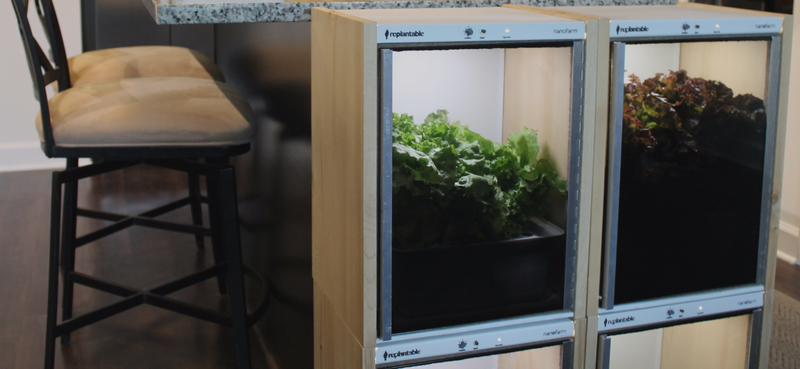
Patrick: Hey guys this is Patrick from Urban Vine and today I have a very special guest, we have Ruwan from Replantable, his company is developing new technology, a new product for growing mixed greens and some other exciting stuff, right in your kitchen, it's a minimalist design, it's meant to be an easy introduction for beginners, for people who may not be as experienced [with urban farming].
How are we doing Ruwan? Are you in Atlanta right now or you guys just got started in Atlanta?
Ruwan: Yeah, in Atlanta right now, and I'm actually home at the moment but we have headquarters downtown in Atlanta and we actually manufacture the appliance here too.
Patrick: Cool, so I guess we could just get started, for people who may not be familiar with Replantable, or especially you and your co-founder, maybe you could talk about how the company started, how you personally got into Urban Farming, where you got introduced to it, and how you progressed.
Ruwan: Sure, so my co-founder and I, my co-founder's name is Alex, we met at Georgia Tech, we studied there, and we cooked a lot, pretty night every much, but, we were tired of our fresh ingredients going bad before we could get a chance to use them, and we wished there was a way to be able to just, pick fresh greens right as you're about to use them, but living in Atlanta, we really didn't have the space to do the backyard gardening, I had a tiny little plot but it really didn't get the right kind of light, and the soil back there, it's a city lot, so not optimal soil for growing.
So that's when we turned to hydroponics, really looking at hydroponics for a solution for urban agriculture, and that is when we started experimenting. We went to the local hydroponics store, and we cooked up a homemade hydroponics unit with fluorescent tubes, and it was a deep water culture system, and yeah, that is kind of how we got started, and we kind of refined it until we got to where we are now.
Patrick: So for people who may not be as familiar, could you talk about what a fluorescent tube and some of the terms you mentioned are?
Ruwan: Sure, so when we were looking for grow lights we started with Amazon, where most searches start for products, but the fluorescents are just one type of bulb you can use to provide plants with the type of light that they need to grow.
Specifically, we used the ones marked as "Daylight", they just have a good spectrum of light for growing plants inside, and there are more professional options, like Sodium lights, metal halide lights, and now LEDs, and actually LEDs are what we use in our product, but we didn't really get into that at first. We started with off the shelf grow light.
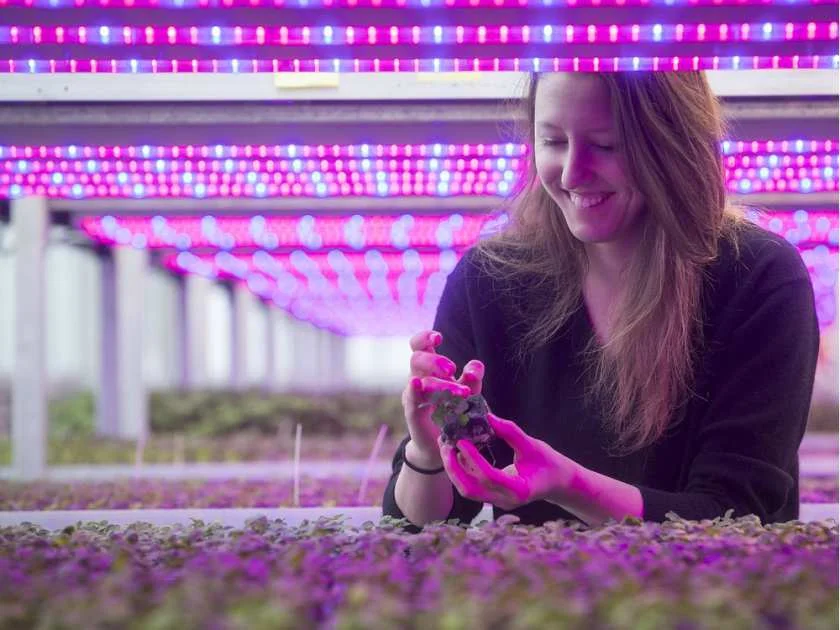
Photo courtesy of Replantable
Patrick: Cool, so, for somebody who is kind of, just starting out, what kind of lights would say are best for them , and what do they really need to know, you mentioned how you went through this iterative process of exploring with these different lights and that kind of culminated in what is now your product on Kickstarter, which we will talk about very soon, but can you talk about that process of figuring out what was best and maybe some tips for people who are just getting started.
Maybe somebody just wants to grow one lettuce plant on their fire escape or something, what are some good tips for somebody trying to do that?
Ruwan: Really it's as simple as going to the hardware store, you can buy one of those compact fluorescent tubes, you can buy one that is marked as "Daylight" you can screw it into one of those standing sockets, or like a clamplight or something, and point it at your plant, and the plants love that kind of light.
It sounds simple once you have figured that out, it's actually kind of hard because the spectrum is all invisible, you don't know, light looks like light to us, to plants they use mostly the red colored light or the blue colored light, and a bit of the ultraviolet and infrared spectrum too, so the spectrum that the bulb puts off is really important, for growing the food, but surprisingly, standard fluorescent will do it.
Patrick: As far as the, obviously at Replantable you guys are focusing on several different types of crops, and I know that that has been part of the design, to have a couple different options there, would suggest for somebody just starting out a certain type of crop? Like is there one that is easier than others or is there one that is especially easy, like, is it lettuce, or what do you think regarding that?
Ruwan: Lettuce specifically is really friendly to grow, it is a cool weather crop, so if you are growing in areas kind of on the warm side, you might want to try something like a Bok Choy, or something like that, but in general, salad greens are really easy to get to germinate, they grow super quickly, which is great for someone who is just starting off, because it is really encouraging to see results really quickly.
If you are trying to grow herbs, those are fairly easy to grow too, but have longer germination times, and the germination rate is lower, so you might plant some seeds and they never actually germinate at all.
Lettuce is an easy crop for beginner urban farmers to start off with
Patrick: Could you talk about the difference between growing outside and growing inside? I know that when we get to talking about urban farming, sometimes some people don't have an option to grow outside, or it may be way too cold outside, or there may be other factors, name your factor pretty much in a city, that forces you to grow inside, so how does that change your approach, and are there any easy mistakes there that you can make?
Ruwan: So with growing inside, you have the benefit of a controlled environment, so you don't have to worry about pests, you don't have to worry about the temperature being crazy high or crazy low, but there are some things that are easy to overlook inside, first, lighting, the sun is amazing, it is the original grower of light, it's amazing for growing food, so you really need to make sure you are replicating that type of useful light.
The second thing is ventilation, which often goes overlooked, because, inside you can have stagnant air, and, if the humidity builds up too much around the plant, it can actually suffocate the plant, and you know, keep that gas exchange from happening at the surface.
But these things are pretty easy to overcome, just set up a fan where you are growing, or even just make sure that your house fan is on.
But those are two big things, that can effect (plant growth) inside.
Patrick: So you're saying you could essentially just take a regular house fan, and you would kind of pooint it towards where you are growing, and that would suffice or what specifically is the set up there?
Ruwan: Yeah, you don't need to be rustling the leaves or anything, you just need to be moving air throughout the room. because plants will quickly get a high humidity area around them if the air is standing still.
Patrick: Obviously you are knowledgeable on this (subject), to such a degree that you created this product, I am curious to know, was it a trial and error process, or were there any books that you read, or were there any people that you talked to, or websites that you followed, I know there is a lot of good websites out there, could you talk about how you got this (urban farming) knowledge and how, if someone was also interested in becoming knowledgable, what would they do?
Ruwan: We got a lot of our knowledge by stopping by the local hydroponics shop, here in Atlanta thae one is Atlantis Hydroponics, but there is a lot of really good resources out there, there's (also) actually a lot of misinformation and partially true information out there, about hydroponics, and it's partly because people like to try different things, and it may work anecdotally, but overtime those may not really pan out.
We looked at a lot of, actually, papers.
Patrick: Like, academic papers?
Ruwan: Oh yeah, definitely, especially since NASA is looking into hydroponics a lot, they publish a lot of really good research on how to grow hydroponically, and also there's the farmer resources, if you look up, "farmer growing guides", there are a lot of growing guides for specific crops such as your lettuce, your tomatoes, the things that are really commonly grown hydroponically, there's a wealth of information about those things. If you start with growing those crops, there's a ton of information out there for farmers and hobby growers alike.
Patrick: That's specifically for people interested in hydroponic?
Ruwan: Right.
Patrick: Do you think hydroponic is any more challenging to start with or do in general than soil or what's the comparison there?
Ruwan: So I think that if you just want to buy a few things and get started quickly, soil is even easier, because a fertile soil is made for growing plants, hydroponics just gives you more control, so you can dial in certain factors, where, if you were soil growing, and your plant is having an issue, it is hard to diagnose sometimes what that could be, it could be a pest in the soil, it could be that a certain nutrient is low in the soil, with hydroponics you can kind of test and correct, but they are both great methods.
Patrick: So essentially the key thing to remember here is hydroponics gives you a little bit more control.
Ruwan: Right, but at the same time you need to know what you are doing, you need to research the hydroponic set up, it is not as simple as "buy a few things and throw it together".
You need to have a pH tester, an EC Tester, which is electrical conductivity, that tells you how much nutrients are in the solution.
Patrick: So you would need an EC tester, and a pH pen.
Ruwan: Those are the 2 basic tools that you can get by on with hydroponics, but you have to know how to interpret the results, you need to know, what is too acidic or what is too basic for the water to be, and then, you have to keep the pH up or the pH down mix, so you can put it in there (the water) and correct.
Patrick: In the water?
Ruwan: Yeah, (you are measuring) in the actual water (for hydroponics).
Patrick: So, back to the narrative now, we kind of had this Q and A session here, so you meet your co-Founder at Georgia Tech, you have this problem, and what happens next?
Ruwan: So, like I told you, we cooked up our hydroponic system, at home, we're growing food, you know it's working, but then we thought, and this took months, it took months to get a system where we did not have to think about it too much, and we could grow food continuously, and we thought back on all the trial and error that we had to do, and that's when we thought that there should be something out there that someone can just plug in, and get going, and that is really the inspiration for our product,
Patrick: What were some of the early major mistakes that you made (in the product development)?
Ruwan: We made every mistake you could possibly make, we overfed the plants, we underfed them, we got the pH wrong, we didn't get them enough light, we gave them too much light. At one point we let it get too hot, too humid, there was just all of those factors, which we had to dial in to get it to work.
Patrick: How did the company form once you figured out the ins and outs of the earliest form of the product?
Ruwan: At first we thought that we were not very good at hydroponics, we were just screwing a lot of stuff up, but when we talked to a lot of people, but when we talked to a lot of people that had tried to grow, both hydroponically and in soil, I mean lots of people have tried to grow their own vegetable garden, sometimes it last just a season, or however long it takes for the things to die when you first plant them,
but we noticed that a lot of people have trouble getting food to grow, and that's when we thought that there could be a product based around this, and then we went one by one through all of those variables that I have been talking about, feeding the plants, the amount of nutrients, pH of the soil or the water, we went through all of those problems and we tried to figure out, how can we create a system that corrects itself, and that was another half a year of development, but we eventually came up with these "plant pads".
Those are like layers of paper and fabric with seeds, and nutrients and pH buffers built in, so we kind of cooked all of that stuff into one product, that basically makes it so you just add water, and it takes care of itself.
Patrick: How similar were those pads to the product you have on Kickstarter now? I think most people, anyone who checks out your website or the Kickstarter, the thing that they would remember would probably be the (growing) box, so where did that come into the equation and how did that work?
Ruwan: The "plant pads" that we developed, our kind of our version of the "growing medium", so a growing medium can be soil, or cocoa fiber, or clay pellets, there's lots of growing mediums, so the plant pads are our version of the growing medium, the Nanofarm is the simply the box that the plant pads go into.
The Nanofarm provides light and ventilation, and the plant pads provide nutrients and the pH balancing, and just the place for the roots to grab onto and for the plant to support itself. So that's how they kind of work together to form that total solution.
Patrick: To get a perspective on the timeline, you guys first started working on this project one year ago, or was it two years ago?
Ruwan: Just about a year ago.
Patrick: Your first plant pad was developed then about 6 months ago, and your Kickstarter has been live for about 2 weeks?
Ruwan: Yeah so we have been pretty quick with the development.
Patrick: once you guys developed the product and it came to marketing it, obviously you guys have had lots of success on kickstarter, gotten thousands and thousands of dollars, so I am curious to know how you guys marketing your technology in this niche (so well?), this isn't a software as a service or something like that, or maybe a couple tips on how you guys did that?
Ruwan: We didn't do much paid advertising or we didn't hire a marketing firm or anything like that...Once we thought we had the product ready to go, we built 30 of these units and actually sold them, and I mean, we hand built these, like, I bent the metal for them myself, and we got them all made up, and we sold them to 30 people in Atlanta, and we saw how they interacted with the product and how they liked the food that comes out of it, and just the word of mouth from that, when you actually have product out there in the world, I mean, you can't walk into someones kitchen and see this growbox on their counter, and not ask them, you know, what is that thing, so we got a lot of word of mouth marketing through that way.
Patrick: For someone who is trying to get some hardcore tips for launching a kickstarter (in this specific space), what would you suggest?
Ruwan: Most of our kickstarter traffic has come through 3rd party reporting, so like journalists writing about it, things like that, and that's what I was saying with the uniqueness of the concept, it's not another app, or something like that, so that helps it standout, the publications that I read regularly, like Treehugger, and things like that...
Patrick: What are some other ones?
Ruwan: Digital Trends, Mashable, just those tech blogs, tech websites, there are reporters there that are interested in urban agriculture, since it is something that is coming up quickly, it is getting hot, and you know, it's becoming a topic that people are writing about, it gets attention, and viewers are interested and readers are interested in it too, so it benefits both of us when I write one of these journalists an email, and I let them know what we are doing in the space, in urban agriculture, and a lot of times they are interested enough to publish something on it.
And that kind of reach benefits their readers as well as us.
Patrick: Has the publication coverage been more organic or have you done more outreach for the coverage?
Ruwan: Definitely I am doing outreach, before we launched the campaign, I got a list together of journalists that cover this regularly, and publications that are in the space also, and I just sent an email saying "Hey, this is what we are doing, if you're interested, I'll send you more information", and that's how we got noticed.
Patrick: Did you send product to them, or that didn't happen because you had so few units?
Ruwan: A couple people did request product, we just couldn't send it to them, unfortunately, and a lot of these websites do need to have a product to review to cover you.
Patrick: Would you say that was the more "major" websites (that requested product) or was it more random, some people asked for it and some people didn't?
Ruwan: I think it was more random, there were definitely big publications that were more interested in just finding the cutting edge, before we could even ship them product,
Patrick: Regarding Kickstarter, I know you guys have not quite completed your goal yet but that you are really close...has this been a good channel for you, would you (Kickstarter), would you do it again? Do you think it is a good (channel) for urban agriculture?
Ruwan: I think crowdfunding specifically Kickstarter has been great so far, for us we're so small, we just don;t have the cash to do a manufacturing run, and have product on inventory to sell, so this is the best way to see if you have that demand, and if you have the demand, you now have the money to fulfill that demand. So I think it does a lot of things all at once, not to mention the organic traffic that kickstarter has driven, just because I think there is a lot of overlap between the average kickstarter backer or kickstarter user and that urban agriculture scene.
Patrick: What kind of traffic has kickstarter sent?
Ruwan: Kickstarter has been sending between a thousand and two thousand hits a day, that's when there aren't any articles or anything out, and then that spikes when someone covers us or there is something out.
Patrick: Which article has sent the most traffic to you guys?
Ruwan: Last I checked, according to Google Analytics, it was Treehugger's article on us, and I think that is partly because their readership is really sustainability focused.
Patrick: How much did that drive?
Ruwan: Probably around 15,000 hits so far.
Patrick: and that was over a couple days or?
Ruwan: That was over 1 or maybe a 48 hour span. Yeah, in terms of the internet traffic
(it) drops off super quick.
Patrick: Wow, now that you have come this far, what are some of the main lessons looking back pertaining to urban farming, maybe something that you thought going into it that your belief has kind of changed, or looking back something you would do differently, what are your thoughts after you reflect on what you have done so far?
Ruwan: I think overthinking growing inside or growing in an urban setting, it's really easy to over analyze this stuff, but we didn't give enough credit at first to the biology of the plants, and how much they can actually deal with variability in the environment.
Because at first, we were like, we need to keep the environment at 70 degrees or 68 degrees, exactly, but then, these plants are growing outside and they are fine until it pretty much freezes out there, so I think a lot of urban ags resources are very, maybe, over-analytical about those parameters, including temperature and humidity and stuff like that.
I think allowing your urban environment to swing in a kind of way that mimics the natural environment is totally fine, and it would have saved us a lot of work if we had realized that earlier.
Patrick: Last question, for people who are interested in learning about what you are working on and the kickstarter, what should they do, where should they go? Is this a good product for somebody who is just getting started (with urban farming), and who maybe doesn;t want to mess around with all the stuff that we just talked about?
What is the value prop for a beginner and what do they do if they want to learn more?
Ruwan: I definitely think the Nanofarm is kind of a plug and play way to get started, and some may see that as copping out, but if you just want to get started growing food, with the minimal amount of set up, that's really pretty easy with the nanofarm, and it is just a hydroponic system so if you want to get your EC pen and your pH pen, and want to start using that with the nanofarm, that is totally possible too.
If you want to learn more about the Nanofarm, you can check out the Kickstarter.
Ruwan Subasinghe is the co-founder of Replantable, their product, the Nanofarm, is a easy to use hydroponic grow box designed for urban farming. It is available now on Kickstarter for pre-order, if you liked this interview, be sure to check out the Kickstarter page and contribute or check out Replantable's website at www.replantable.com
China Is Setting An Example For The Entire World
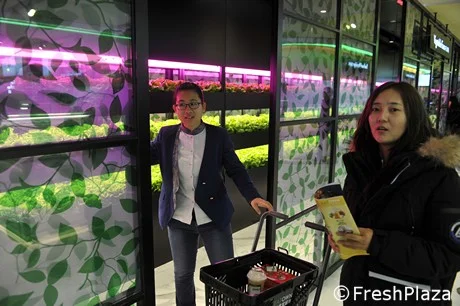
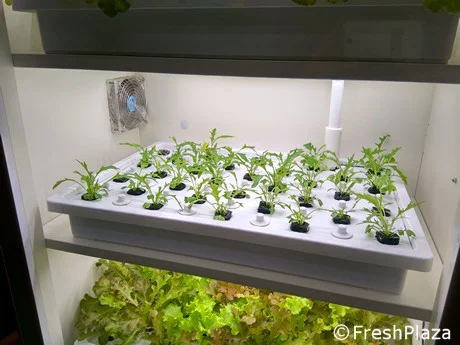
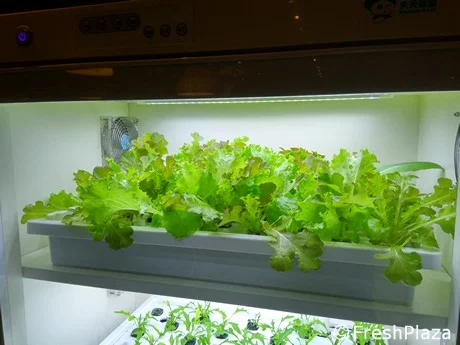
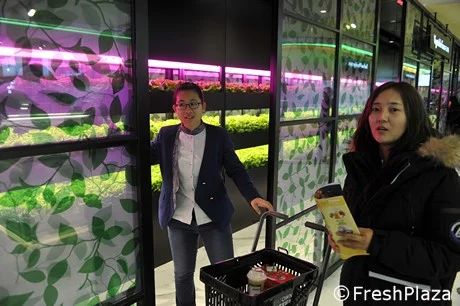
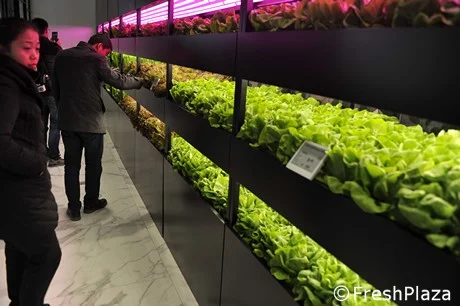
China is setting an example for the entire world. During the visit of a Macfrut delegation to the new Easyhome Ankang supermarket in Beijing, the attention of the visitors was caught by the hydroponic lettuce cultivation system.
Growtainers® Custom Build For A US Food Retailer And On-Site Production
Growtainers® Custom Build For A US Food Retailer And On-Site Production
CEA Advisors & Growtainers® promises even more global excitement in Indoor Farming and Controlled Environment Agriculture in 2017.
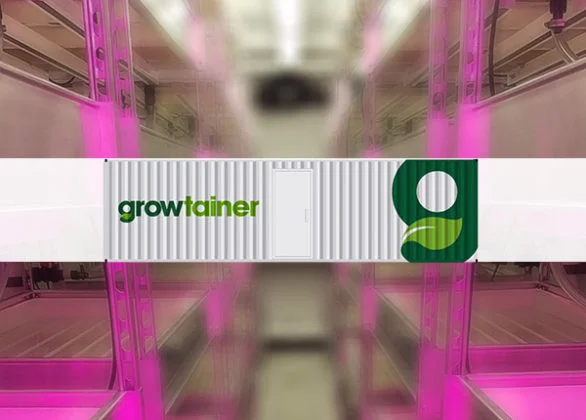
After more than a year of meetings with the Produce Marketing team at a major US food retailer, the first custom built for onsite production Growtainer® has been delivered and will begin production in Q1, 2017. “We spent over a year discussing the retailer’s concerns and objectives and when I was sure we were all on the same page we began the design and manufacturing process” said Glenn Behrman, founder of Greentech Agro LLC and CEA Advisors LLC.
Growtainers® have come a long way from those first two prototype models built about 4 years ago and recently donated to Texas A & M Agrilife Research Center in Dallas. Our understanding of the critical importance of the growing environment and the need for intuitive control systems has increased. “We’re collaborating with more industry experts in all areas that are critical to the development of a well-balanced successful production environment”.
“Increasing global awareness of indoor local vertical production has been the driver in our laser focused pursuit of new, modern and sustainable indoor farming practices”. On site production in the Growtainer® to produce the freshest, unique, gourmet leafy greens and herbs for their customers at the retail level is the objective of the project. Our retail partner is the first in the nation to train their team members in a food safety compliant, climate controlled, LED lit multi-layer vertical indoor production environment.
“CEA Advisors is proud to be working with a forward-thinking food retailer that is committed to innovation and focused on food safety, unique products and the customer experience” said Behrman. For this project, CEA collaborated with a McKinney Texas based water management firm, whose team assisted in the design and installation of a state of the art irrigation system. The container modifications were carried out by the largest and most experienced group in the USA. North America’s leading horticultural supplier of goods and services provides their expert and ongoing consultation to the project, as well.
This unique 53’ custom built Growtainer® has a separate utility area and provides 480 square feet of climate controlled vertical production space, specially designed for maximum efficiency and food safety compliance. Each Growrack® is equipped with energy efficient LED production modules, specifically designed for multilayer cultivation. The irrigation system is divided into separate zones to provide flexibility and allow a wide variety of production of crops at various growth stages. Behrman worked closely with the engineering team to design a sophisticated control system. The proprietary irrigation system is constantly monitored and any corrections to EC or PH are made immediately. Every irrigation event is perfect for the plants optimum growth.
For more information on this and other exciting innovations in Indoor Vertical Farming visit www.growtainers.com or email gb@cea-advisors.com


Vertical Farms: How To Feed Our Rapidly Growing Cities
Vertical Farms: How To Feed Our Rapidly Growing Cities
By Judith Dubin and Leeron Hoory
Jan 17, 2017 at 4:15 PM ET
“As long as there’s been life on earth, there have been parasites,” says Dickson Despommier, emeritus professor of Public Health and microbiology at Columbia University. And, he says, a lot of us live in one: Cities — which feed off the earth’s resources without replenishing them — basically function as giant parasites. “They take advantage of what’s there and use it for their purposes,” Despommier says.
And they’re growing rapidly. By 2050, nearly 80 percent of the world’s population will be living in cities, and we’ll need a sustainable way to grow enough food to feed everyone. To that end, Despommier proposes vertical farms. Basically greenhouses stacked on top of each other, vertical farming produces food more efficiently to “ease the parasitism of cities on food production.”
These farms in buildings already exist in the real world. Japan, South Korea, Singapore, China and Taiwan, have hundreds of vertical farms, as do several U.S states, including New Jersey and Illinois. And that’s a good thing, since already fully one-seventh of the earth’s land mass (or the entire continent of South America) is devoted to producing food for the 7.3 billion people who live here.
If we don’t keep working to implement sustainable ways to feed our cities, Despommier says, “The parasite will exceed its capacity and collapse under its own weight.”
It’s Time We Get Serious About Organic Farming
It’s Time We Get Serious About Organic Farming
Conventional farming and food production practices in this country are creating serious environmental and public health problems. Every day, an industrial farming system spinning out of control confronts all Americans with serious challenges. Among these are the explosion in toxic algae blooms in sensitive waterways, cancer-causing pesticides on foods we feed our children, the rapid spread of antibiotic-resistant superbugs, and, of course, contaminated drinking water, all courtesy of corporate agribusiness.
Thankfully, we have an alternative: organic.
Study after study shows organic food is better for our health, and organic farming is better for our environment.
Organic milk has higher concentrations of beneficial nutrients than its conventional counterpart, and organic foods can have higher levels of antioxidants and far fewer, if any, pesticide residues than conventionally grown crops. In addition to the notable consumer benefits, organic farming consumes far less energy and can reduce water pollution, increase biodiversity, promote healthy soils and sequester significantly more carbon than conventional farming.
The Environmental Working Group (EWG) has been advocating for organic food and farming for more than two decades, with much of our research documenting how the practices and finished products of both conventional and organic agriculture influence our health and the environment.
In that time, I have worked alongside many pioneers and have seen organic farming grow from a fledgling movement available to few, into a nearly $40 billion a year industry. Organic is now the fastest growing segment of the U.S. food industry with some of the country’s largest retailers struggling to keep up with customer demand and keep their store shelves stocked.
Despite years of double-digit growth, far outstripping that seen in the conventional food sector, the number of certified organic farms in the U.S. is struggling to keep pace with soaring consumer demand. According to the U.S. Department of Agriculture, in 2012, fewer than 1 percent of American farms were classified as organic. This has forced many organic food companies in the U.S. to turn to foreign suppliers to meet customer demand.
There is no reason why we cannot be meeting the surging demand for organic foods here at home, growing and producing it ourselves. However, if we are going to grow more organic food in this country we will need more organic farmers. That means recruiting new farmers, and helping existing farmers transition to organic.
Easier Said Than Done
We will need to provide farmers with technical assistance to help them transition to organic. We will also need to invest in more science and research to ensure that organic and transitioning farmers are armed with high yielding, regionally adapted seeds, designed with organic systems in mind.
Now, you don’t have to be a D.C. lobbyist or congressional staffer to know that the purse strings on Capitol Hill have been pulled tight in recent years, and funds supporting agriculture are tethered closely to the interests of Big Ag, not organic. While EWG will continue to call on Congress to make serious investments in organic in the next farm bill, there is a lot that can be accomplished in the interim if the organic community pools its resources, and approves an organic research and promotions program.
That is why EWG supports the organic check-off program.
The principle of a check-off program is simple: Producers of a particular commodity pool their resources, and collectively invest in research and promotion of that commodity. These programs are authorized by Congress and directed by industry-driven boards overseen by the U.S. Department of Agriculture. While this sounds simple, it hasn’t always worked out in the best interest of producers.
EWG is fully aware that farmers have been burned by past check-off programs, and we are glad that so many in the organic community have been part of productive discussions about the organic check-off currently under consideration. After all of those discussions one thing is clear: The organic check-off is not your father’s check-off.
It is the first such program that is not based on a specific commodity, but rather on the notion that if everyone pitches in a little, the organic community can address its shared research, education and promotion needs together.
With the funds raised every year from the check-off, the organic community would be able to provide transitioning farmers with greater technical assistance and training to bring more acres into organic production. It would also be able to fill in the research gaps left every year by limited federal research dollars that all too often skew toward outdated and damaging industrial farming practices. And, the check-off will ensure that the organic sector has an opportunity to educate consumers about organic and promote its benefits in the same way that major commodities like milk and pork were able to do with the “Got Milk?” and “Pork. The Other White Meat” campaigns, respectively.
To be clear, both Congress and organic food companies will also have to do their parts to increase funding for research and promotion of organic in the years to come. But that shouldn’t stop the organic community from supporting the organic check-off program and taking organic to the next level.
After all, EWG not only believes that organic farming can help feed the world, we believe that organic systems and practices may be the only way to do so sustainably. However, the footprint of organic on the agricultural landscape and in Americans’ shopping carts must grow significantly if we are to realize organic’s full potential to feed the planet in ways that enhance the environment and public health.
I hope you will join me in supporting the GRO Organic campaign to make this a reality.

Urban Farming Poised to Revolutionize Agri-Food Production, says Professor Dickson Despommier and Leaders in This Market Sector
David Stradling
Urban Farming Poised to Revolutionize Agri-Food Production, says Professor Dickson Despommier and Leaders in This Market Sector
David Stradling, Sales Director, Global Forum for Innovations in Agriculture, receives inspiration from a banana boat while getting to grips with the urban and vertical farming movement.
The sands that surround the shores of Koh Tao in Northern Thailand are the colour of golden demerara sugar, the surrounding sea is crystal clear, and the wildlife in the sea and on the land seems as plentiful as it is exotic.
But as I snorkel off the southern tip of this divers’ paradise, something is clearly amiss. The corals are often sun bleached, the diversity of fish has been shown to be in decline, and on the island itself, natural fresh water supplies have fallen to an all-time low.
This little corner of heaven has environmental problems that are as pressing to the local ecosystem, and to its three thousand local inhabitants who depend on tourism for their livelihood, as they are to the rest of the planet.
There is no escaping the blight caused by climate change. At 10.0955 degrees west and 99.84042 east, the challenges faced by this tropical paradise are ongoing. Failure to meet them will potentially have as serious an impact on the local environment and its population, as it’ has had on those who made a living from agriculture in what was one of the most fertile regions of the United States - and is now the American dust bowl.
On holiday in Koh Tao recently, I was working out the approach to take in an article exploring urban agriculture and, as a technology sub-set within that, the future of vertical farming. Then inspiration struck in the shape of a banana boat! I’d been chilling out on a mix of vitamin D-inducing sunshine and coconut and banana smoothies when to my dismay, the island’s stock of the fruit dried up. Suddenly, there was a tap on my shoulder, ‘’Bananas here now, the boat has arrived,’’ declared our friendly beach bar waitress.
I was delighted, but at the same time I pondered the fact the fruit was being shipped in, as I would guess was most of the island’s food. Therein lies one part of the challenge. Not only can agri-food production be a drain on the land and its resources, but shipping it from one destination to another is a contributory factor in climate change.
Enter the age of vertical farming! It’s this that some believe could be the key to many of the problems that come with industrial scale agriculture, and the use of farming methods which fail to show consideration for the environment.
Last week I talked at length with Dickson Despommier, Professor of Microbiology and Public Health at Columbia University, New York City, USA, and author of The Vertical Farm: Feeding the World in the 21st Century. Professor Despommier is widely considered a founder of the vertical farming movement, and is a long-term advocate of urban farming as a potential counterbalance to the negative impact of large scale traditional agri-production. We spoke about the future and he provided me with some useful insights into the positive returns, he, and increasing numbers of experts, foresee will be a direct result of continuing innovation and advancement in vertical food production technology.
Vertical farming; the dawn of a new age
WHILE THE MEDIA'S focus throughout the 1990s and the beginning of this century has been mainly on the role that heavy industry and fossil fuels have played in eroding the ozone layer, the role of agriculture in resource depletion and climate change, has gone relatively unnoticed. Traditional agricultural practices continue to take a major toll on planetary resources and are a key offender in climate change. Transporting produce from one place to another involves the emission of gases that damage the outer atmosphere, while over-farming has a disastrous impact on the soil and acts as the biggest drain on water reserves.
Professor Despommier believes that agri-crop growing in the traditional sense is often inefficient, citing the United States where the biggest crop is wheat, followed by corn and soya beans, as an example. He points out that soya beans are often grown as a means of putting nutrition back into the soil, a practice that is extremely inefficient, and is enthusiastic about the use of climate-smart agriculture in outdoor farming. However, all plant life requires water and if that is not available then the only option is to take growing indoors – and to do this locally where the crops which are grown are consumed, so reducing pollution caused by transportation. The Professor has a stark warning for us if we fail to take action. ‘California is in its sixth year of drought,’ he says. ‘Food prices are going crazy and it’s going to get worse.’ In his view, controlled environment agriculture (CEA) is the solution – and vertical farming is the method which could save our environment from disaster.
An efficient greenhouse hydroponics system uses five percent of the water required in the outdoors and can deliver multiple times the yield of farming outdoors. According to Professor Despommier, a vertical farm can deliver the same yield again, using a fraction of the water the greenhouse system requires. So if vertical farming, with all its obvious advantages, has such a role to play, where does that leave the land farmer? ‘’I have a great answer but it isn’t the one that many people want to hear,’’ he says. ‘’Dirt farmers and the big industrial scale producers are struggling to make a living and this will only get harder, given the climate change issues they face.’’ He believes the time is ripe for change in agricultural crop production on an unprecedented scale. The vertical farming industry is moving at an extraordinary pace and he estimates there are currently about 500 successful vertical farms operating globally. In the next few years the number will grow so fast he will lose count. Technology and innovation in this sector is thriving and there is no stopping the movement toward growing crops in the city – in our homes, at our place of work and within the vertical farms that are emerging as commercial enterprises.
It is an exciting prospect but the advantages of vertical and urban farming do not end here. There are huge social-economic-implications too. He refers to projects like the AeroFarms facility in Newark, New Jersey, USA - a project that is delivering prosperity to a part of the city that was formerly in decay, and which will revolutionise and revitalise that whole area.
AeroFarms hopes to develop 25 more farms in the USA and overseas in the next five years. The company says the new trend amongst consumers is for locally grown produce and it has no problem in meeting demand. It can grow plants within twelve to sixteen days, compared with thirty to forty-five days outdoors. A year round controlled environment ‘grow cycle’ allows it to operate at 75 times the production capacity of an outdoor farm.
Other farms that Professor Despommier is optimistic about, include a flag ship, model three- storey farm in Suwon, South Korea, the leading position taken by Sky Greens in Singapore, and a twelve-storey farm in Moscow – all excellent examples of where the sector is heading. He also cites the case of Pasona Group in Tokyo, Japan, which allocated 43,000 sq feet of office space for crop production that is used to feed employees, although this is more of an example of good urban agriculture production. As well as rice, the Pasona building features over 200 varieties of fruit and vegetables.
Another crucial factor in the advancement of urban agriculture and vertical farming is a preference for urban rather than rural dwelling. At present, the split is about 50/50 country to city dwelling, but by 2050 he believes this will change to 80/20 in favour of the city. ‘’All we need to see now is a shift in the mind-set of people who make policy within our cities. Once they understand the importance and benefits of this movement in urban agriculture then there will be no stopping its growth, nor that of vertical farming as a critical part of that.”
In a global context, the Professor believes that, together with the US, it is Japan and countries in the Far East that are driving the movement in take-up of new technologies and ideas. Factors which have influenced change in these regions have included incidents like the Kobe earthquake and the tsunami that hit Japan in 2011. For South East Asia, it has been the intensity of monsoons and the impact of adverse weather on farming that have forced city policy-makers to realise the importance of growing food in their own back yard. “This is a major food security issue,” he says. “When the logistical infrastructure for the delivery of produce is no longer there, or when crops are washed away, then you have a big problem.’’
A small leap for the imagination; a major step for mankind…
In fact, it does not take a major leap of the imagination to see how quickly vertical farming could develop as the dominant force in urban growing, provided innovators can deliver affordable technology solutions. According to the Food & Agriculture Organisation of the United Nations, about 30% of global food supply comes from urban farms. ‘’Most urban farms are small scale and on home plots or in the urban areas of cities,’’ explains Mr Henry Gordon-Smith, Vice Chair of the Association for Vertical Farming (AVF). AVF was set up to foster the growth and development of the movement and to galvanise the efforts of contributing innovators and leaders through collaboration and knowledge-sharing. He says vertical farms will allow urban agriculture to progress further, so cities are more independent than ever in their own food production. Vertical farms can be integrated with existing food systems and set up anywhere, including schools, institutions and government cafeterias. They can also be merged with food distribution hubs, making them more resilient.
Mr Gordon-Smith sees innovation as key to sector development and feels it is moving forward quickly. LED lighting technology and automation and sensor technology are helping to reduce operation costs. LEDS lower the energy consumption, and automation decreases labour costs. He believes that among the companies that stand out for their leadership in these areas are SPREAD Co of Japan and Urban Crops from Belgium. AVF expects there to be a vertical farm in almost every city within a decade.
Neither Professor Despommier nor Mr Gordon-Smith see any drawbacks to vertical farming if costs associated with operating grow-light can be overcome. Both are convinced the potential advantages are huge, and that with the advance of technology and greater political drive from city policy makers, we can look forward to seismic change. ‘’Vertical farms can be pest-free using strict food safety and bio-security protocols and strategic ventilation,’’ Mr Gordon-Smith explained. He concedes there are challenges ahead, but innovation in technological advancement and bypassing some areas (like lighting and robotics) will pave the way. Vertical farming will become more mainstream as we move to a stage ‘’’where water is no longer considered a ‘free’ resource and when climate change hardens its grip, and when costs for LEDs and robotics drop. ‘’
Among the other challenges he cites are zoning and code interpretation, which is delaying the development of vertical farms in many cities. They are also being hampered by a shortage in skilled labour to operate these facilities. Asked about his vision for urban and vertical farming in the next 10 – 15 years, Mr Gordon-Smith predicts:
- High-tech agriculture will become a central education tool in science, engineering, maths and technology.
- Kitchens will be designed with vertical farming systems embedded as appliances.
- City edges and waterways will become agricultural hubs.
- Restaurants, markets, hotels and office buildings will embed agriculture and it will be a part of a unique experience for tenants and the public .
- Large scale warehouse vertical farms like AeroFarms’ model will be common place on the outskirts of large cities.
Where new ideas are matched by contagious enthusiasm…
Other innovators who are embracing vertical and urban farming enthusiastically are equally ambitious, but their vision of how far the change will go and its relationship to traditional methods varies considerably. Marco Tidona, Managing Director of aponix.eu, based in Heidelberg, Germany (exhibiting in the Vertical Farm Zone at GFIA Europe 2017 in the Netherlands), says, ‘’Urban farming will not replace but will complement, the conventional methods of growing our food which will need to become more sustainable.’’ He believes urban production would become an element within a circular economy in the urban area. It would reduce waste and traffic for distribution and have positive social and nutritional effects. Like Professor Despommier and Mr Gordon-Smith, Mr Tidona believes this will have a positive effect on the fallout from transporting and shipping produce. Food miles would be reduced and commuters collect produce as they pass distribution hubs – perhaps set up inside train stations - so distribution in urban areas would become a part of day-to-day movement in the city ecosystem.
Mr Tidona is the designer and engineer behind Aponix Barrel, a unique system for use in vertical agriculture, which epitomises the kind of exciting innovative concepts that surround this emerging sector of agricultural technology. He explains that the barrel is used as a growing device in an existing nutrient cycle, either hydroponic, using liquid mineral fertilizer, or aquaponics, using fish organic fertilizer.
The aponix barrels are especially suited to growing herbs and lettuces in high density urban farming situations. The parts fit together like a Lego set and provide a means to assemble the barrel and do away with the need for complicated rack-structures. After harvesting, the ring segments can be easily cleaned and immediately replanted. Reflecting on the role of innovators like himself, Mr Tidona points to the nature of urban organic agriculture, an heterogeneous area of business with the challenges faced differing between sites. ‘’All the technologies are already here or developing rapidly, like LED lighting. Many innovators are coming to the market and they are a critical part of how the sector will develop.’’
As well as technological advancement and the political will to implement urban agriculture, he believes there are many areas that will need to change so that produce can find a place in the market. In Germany, there are labels such as ‘Öko’ and ‘Bio’, which cannot be used on labelling because they do not apply to crops grown in soilless environments. He suggests an internationally recognised coding system could be set up to help consumers evaluate the produce and compare it with that grown using more traditional means.
Another impressive example of creative thinking in urban agriculture comes from a Vancouver-based start-up company, AVA technologies. AVA has created a tech-enabled and climate-controlled micro farm called the AVA Smart Garden, a smart home gardening appliance that allows the user to produce fresh herbs, sprouts, mushrooms, fruits and vegetables from the comfort of their own home. It isn’t large scale like a vertical farm, but it is sustainable and reduces our personal ‘food print.’ The company has received a very positive response to the product and will be exhibiting in the Telus World of Science in Vancouver in March 2017.
Mr Mike Nasseri, Chief Systems Architect at AVA, says the distances which are travelled by crop vegetables are detrimental to the environment and to the nutritional value of the produce. ‘’By the time most leafy salad arrives with the consumer in Vancouver, it has travelled over 1500 kilometres. The plant enzyme content and nutritional value will have been devalued in that process.’’ With the coming (post-COP21) introduction of pricing for carbon emissions, the cost effectiveness of supply chains will be diminished. He points out that the new market conditions will place heavier demands on local production. This will have the dual effect of lower emissions and higher nutrient content when the product reaches the consumer.
One of the main purposes of the grow-box is to get people thinking about their own food security and to consider the environment, says Ms Valerie Song, joint founder and CEO at AVA. With the world population growing, Ms Song believes there are only a limited number of practical solutions that can address the food security challenge quickly. She says, ‘’There are two options which can be combined and implemented relatively fast and effectively – smart, vertical agriculture.”’ Her next comment harks back to Professor Despommier’s reference to the Pasona Group headquarters in Tokyo: ‘’What if your workplace cafeteria had a mini-farm full of luscious salad greens instead of a soda machine? What if your local restaurant had walls adorned with fresh heirloom tomatoes, instead of dull white paint?’’
Project4 Living Systems Ltd is another company out of Vancouver. Set up in 2013, the company uses permaculture principles and explores ways of enabling food, water and power independence. Mr Ben Newman, CTO at Project4 Living Systems Ltd, agrees with observations made by the other industry leaders, that limitations to development of urban agriculture and vertical farming are top-down. ‘’As we found in Canada, vertical farms are limited by a lack of general awareness and there is little information available due to the cutting-edge nature of technology and the ecosystems approach that we are used to, rather than the reductionism that science is able to offer. City officials often do not understand the concept. Lack of appropriate zoning and outdated regulations strangle projects attempting to create integrated vertical farms.”
Having had its first farming project rejected by the City of Vancouver in 2014, the company is currently awaiting a building permit for the city’s first ‘Food Hub’, comprising kitchen and dining area and a laboratory and innovation space. Mr Newman explains that, ‘’The purpose of the Food Hub is to draw attention to, and create a community of, food forward-thinkers, technologists and innovators to support the local food movements and enhance the possibilities of vertical urban farming in Vancouver and elsewhere.” His company is firmly behind vertical farming and he believes the changing political environment will be a driver in its development.
Evergreen Farm Oy of Finland (exhibiting in the Vertical Farm Zone at GFIA Europe 2017 in the Netherlands) is preparing to launch a 12,000 sq metre growing area with a major vertical farm in the city of Nokia in the South of Finland in May 2017. The company’s managing director and system designer, Mr Ali Amirlatifi, claims the growing system for integration into the Nokia site is safer than other hydroponic and aeroponic farming systems. The reason for this is that it is a closed loop, with modules that are self-sustaining and separate from one another. This eliminates the chances of disease spreading across an entire crop. The Evergreen Farm Oy system was developed with support from the Finnish Ministry of Natural Resources and University of Contemporary Technology, with a pilot scheme operated ahead of the full scale roll out.
Mr Amirlatifi says the company plans ten farms in Finland and will issue licenses to growers elsewhere in the world, beginning in Africa and the Middle East. As far as crops are concerned, the company has had major success with strawberries, blueberries, short vegetables and herbs, which can be produced all year round. The system has proved highly efficient at yield-delivery and as an example of this, the company believes that ten farms specialising in strawberry growing, have potential to outstrip the production capacity of even major growing regions like Huelva in Spain. Mr Amirlatifi says the company has also developed downscaled systems for less ambitious businesses that can be used domestically in restaurants, and by small and medium sized growers.
Evergreen Farm Oy is in the process of developing systems that will be capable of growing many other crops, such as wheat, oats and rice. In a single year there would be up to four harvests with a much higher yield than could ever be achieved in soil-based production.
It seems that with vertical farming there are no limits to the ideas reaching the marketplace, nor to the reserves of energy possessed by those making its development a part of their own futures. Provided the sector takes off in the manner our experts predict, then it will offer an as yet unrealised and hugely exciting potential.
Article written by David Stradling, Sales Director, Global Forum for Innovations in Agriculture (GFIA). David has 18 years experience in business to business trade fairs and exhibitions. He played a key role over an 11 year period in the launch and subsequent development of Automotive Testing Expo, one of the world’s leading automotive engineering events. He joined Turret Media in 2013, to head GFIA in Abu Dhabi from its launch and subsequent business development, with responsibility for the exhibition and event sponsorship. He is focussed now also on the inaugural European Edition of GFIA, to run in Utrecht, the Netherlands, 9-10th May, 2017. In his early career he worked as a journalist for several newspapers, consumer and business to business magazines. A UK citizen, he has lived and worked in Hongkong, Singapore and Thailand and currently resides in Dubai, UAE.
David welcomes comments and feedback on his article on urban farming and vertical agriculture. Companies wishing to book stand space at either edition of GFIA can contact him through Linkedin, by email at d.stradling@turretme.com or by calling +971 56 320 9377. GFIA Europe features a Vertical farming Zone specifically designed for suppliers in this sector.
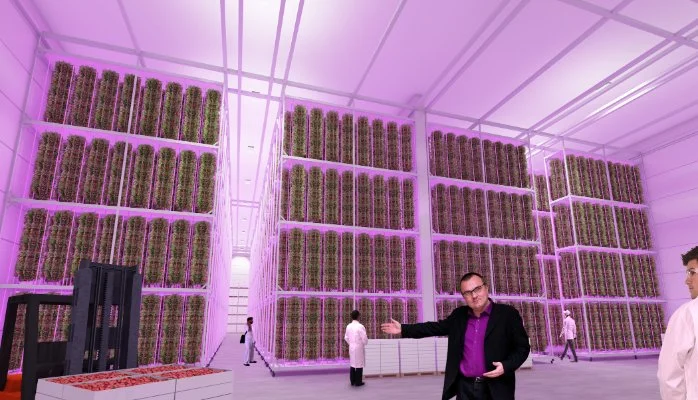
The Best Crops For Vertical Farming
Vertical farming with ZipGrow is one of the most efficient type of growing in modern farms, but one question that people get hung up on is:
The Best Crops For Vertical Farming
Posted by Chris Michael on January 17, 201
A vital question: "What are the best crops for vertical farming?"
Vertical farming with ZipGrow is one of the most efficient type of growing in modern farms, but one question that people get hung up on is:
What can you actually grow on vertical planes?
It's a vital question! Anyone considering a vertical farm should be planning out their crops as part of the process. As a farmer, you have to make sure that you can actually sell what you grow and that your production costs won't be too high.
Part Of That Is Good Crop Choices.
Although choosing crops should be part of a whole feasibility study for your farm, we thought a guide on some of the best vertical crops for vertical farming would be helpful to people in the middle of the planning process.
What Can You Grow vs. What Should You Grow
With the right set-up, you can grow almost anything in a vertical farm.
Just because you can, however, doesn't mean that youshould. Here are several factors to choosing an appropriate crop for your vertical farm.
1) Economic viability
Even if a crop is biologically viable (you can grow it) it might not be economically viable (you can't make money on it!).
If you can't make money on a crop, there could be several reasons:
- Lack of demand (no profit)
- Inappropriate technique (high production costs)
- Climate (high heating, cooling, light costs)
Of course, each of those factors require a little balancing to master. "High" cost is relative to the margin that you're getting on the output.
Once you understand your demand, budget, and climate requirements, there are a few other factors to consider with your crops:
2) Timing and liability
A "turn" is the time it takes from the seedling going into the system to the mature plant coming out and going to market.
Focusing on crops with really fast turns (lettuce, mustard greens, collard greens, basil, mint) allows you to minimize your liability by never being more than six weeks or so away from production.
Slow-turn crops (like herbs and fruiting crops) are typically a bit trickier but can have higher margins than greens, depending on your local markets. We typically recommend a high greens-to-herbs ratio. For example, a new farmer could start with 80% of his space planted with greens and 20% planted with herbs.
(You can play with percentages and yield in our free Production Calculator.)
When you know what you do and don't want, you can start browsing through crop lists and seed catalogues! Here are some of ours and our farmers' favorites:
Lettuces (Romaine, Butterhead, Red Leaf, etc.)
Lettuces have fairly consistent demand across much of the world and throughout the year. There are dozens of varieties of lettuce, making it fun to grow and offer to customers. One of our favorites is Amish Deertongue Lettuce (pictured in the photo above).
Kales (Tuscan, Winterboar, and Dinosaur)
Kales are fairly easy to grow, although the crop requires extra care when harvesting if farmers are to get the highest yield. Each type of kale has its own variation on the rich taste and dark colors. The Tuscan kale above is one of the most popular varieties.
Chard & Collard Greens
Collard greens are like a thicker, deeper version of spinach. They can get quite large in the proper conditions; in the picture above, Sam gets ready to chomp down on a foot-wide collard green leaf!
The gentler version of collard greens, chard is a French green that cooks like spinach. Like kale or collard greens, chard can be harvested multiple times (taking only 30% of the plant each time) and grows back for larger yields later on.
Chives and Mint
Chives and mint are some of the best crops for beginners. Although categorized with herbs, both chives and mint have a quick turn and grow densely like a grass. It is also easy to harvest. Here, Dr. Nate prepares to harvest chives by cutting all the way down the face of the ZipGrow Tower.
Basil is possibly the most loved ZipGrow crop. It grows better in the ZipGrow Towers than any other technique in the world, and creates demand almost everywhere it goes. While a bit trickier to grow, harvest, and store, many farmers include basil in their crop offering. Some farmers even specialize in the popular crop.
Small woody herbs like rosemary and it's kin, thyme and oregano, represent a rather picky group of crops. As woody herbs, they prefer "dry feet", and have a relatively slow growing cycle. Since the shrubby herbs are so potent and unique, many farmers still find the traction to sell them in their markets.
Learn More About Crops
Want to learn more about individual crops? Learn more at Upstart University:
- Growing Basil in Hydroponics? Read This First
- How to Grow Mint in Hydroponics – All You Need to Know
- How to Grow Hydroponic Cabbage: The Beginner’s Guide
- Growing Oregano in Hydroponics? Read This First!
- Get the Scoop on How to Grow Fennel in Hydroponics
- How to Grow Classic Rosemary in Hydroponics
- Get the Tips & Guidelines on Growing Mustard Greens
- Here’s What You Need to Know About Growing Bok Choy in Hydroponics
- The Beginner’s Guide to Growing Kale in Hydroponics
- Best Conditions & Methods for Growing Parsley in Hydroponics
- Everything You Need to Know About Growing Chard Without Soil
- So You Want to Grow Chives? Read this first!
- Harvesting and Handling Lettuce for a Longer Shelf Life
- How to Grow Hydroponic Strawberries [PDF] [Video]
OR see which crops farmers like you are growing all over the world through their own pictures and posts.
Growing is only half of the equation
Farmers want to grow crops, but are often slowed down with the tasks of planning, selling, and marketing their crops. Now farmers can get back to growing by letting Able software do the planning for them. That's right - Able is your new virtual farm assistant!
Conference “Farm & Food 4.0 - Digital Impact Along The Value Chain”
Conference “Farm & Food 4.0 - Digital Impact Along The Value Chain”
Berlin, 15 December 2016 – Digitization is leading to fundamental changes in the business models of nearly all enterprises. What the EU Commissioner Guenther Oettinger emphasized at the first Farm & Food 4.0 congress in January this year has become a key statement for the German agricultural and food sector. This sector is already well-positioned in several areas. Recent years have seen a rapid increase in technological advances in farm machinery and livestock buildings, and among producers, suppliers and logistics specialists. Smart farming, big data and the networking of all business processes are leading to new business models and bringing profound changes to the agricultural and nutrition sector.
“Even if what we eat always remains ‘analogue,’ its route to our plates will change,“ says Maximilian von Löbbecke, head of 365farmnet, one of the leading developers of farm management software, in the lead-up to the second edition of Farm & Food 4.0, which is taking place in January 2017 in Berlin. In the Berlin Congress Centrum (bcc Berlin) the Deutscher Bauernverlag (dbv), along with farmers, manufacturers and representatives of the food trade, start-ups and quality control organizations, will be discussing the technological and digital development of their sector. The dbv is owned by the two large agricultural publishers Landwirtschaftsverlag GmbH (Münster) and Deutscher Landwirtschaftsverlag GmbH (Munich).
Transparency, smart farming, food safety, automation and sustainability are only some of the themes that will be discussed on 23 January 2017. An impressive group of experts has been assembled for the event. Michael Horsch (Horsch Maschinen GmbH), Markwart von Pentz (John Deere), Dr. Roland Leidenfrost (Deepfield Robotics, Bosch) and Simone Strey (Peat) will be discussing digitization in the agricultural sector, the challenges involved and current developments. New digital processes in the food sector will be examined by Andreas Friesch (Vorwerk), Professor Stefan Töpfl (University of Osnabrück), Ulrich Wagner (Wimex), Martin Weber (infarm.de) and Christoph Wenk-Fischer (bevh). And light will be shed on the topic of big data and food security/origins by, among others, Jörg Pretzel (GS1 Germany), Dr. Ralf Herbrich (Amazon), Dr. Jana Moser (datareality.eu), Alexander Zumdieck (Metro AG) and Stephan Tromp (IFS).
A new aspect of this year’s conference is the format World Café, where participants will write, paint and sketch their thoughts on the cafés tablecloths and move between different theme tables. Current themes will be discussed among specialist colleagues, and new ideas and approaches will be developed. Collective knowledge broadens perspectives.
Over 400 people are expected to take part in the “Farm & Food 4.0 – digital impact along the value chain” conference. They will include company owners, directors, managers, scientists, members of start-ups in the agricultural and food sector, political decision-makers, IT specialists, consultants and investors. The congress’s ideational partners are the Federal Federation of the German Food Industry (BVE) and the German Farmers’ Federation (DBV), its media partners are agrarheute and Lebensmittel Praxis, and its premium partner is 365farmnet.
Conference hashtag: #farmfood40
FarmedHere, Indoor Farm In Bedford Park, Turning Off The Lights For Good
FarmedHere, Indoor Farm In Bedford Park, Turning Off The Lights For Good
Chicago Tribune
FarmedHere, a commercial-scale hydroponic farm in Bedford Park, had lofty goals of expanding to cities across the U.S. and beyond. The company was "on the precipice of international expansion," then-CEO Matt Matros said in July 2015.
Early last year, Matros announced a $23 million, 60,000-square-foot indoor farm that was to be the linchpin of a new development in a blighted area of Louisville, Ky.
But plans fell apart. Faced with onerous operational costs and increasing competition in the Chicago market, Nate Laurell, who took over as CEO last January, decided over the summer to pull the plug on the Louisville farm.
And as of Monday, FarmedHere, a pioneer of the new wave of commercial urban farms in the Chicago area, is closing its 90,000-square-foot Bedford Park facility for good.
"It was a difficult decision. This whole thing has been a hard decision to make. But we continue to be big believers in the (local food) space," Laurell said.
Though the farm is closing, it's not the end of the line. Here Holdings, parent company of FarmedHere, is shifting its focus and resources to making food products — such as juices, salad dressings and spreads — under the Here brand, which will be made at the company's food processing plant in Carol Stream. The goods will be made with produce from local farms, such as tomatoes from Rochelle-based MightyVine, in partnership with Local Foods, a Chicago produce distributor.
New CEO Matt Matros sees FarmedHere close to international expansion
Laurell and other investors believe the new direction will be success. But the rise and fall of FarmedHere, founded in 2011 and considered a national leader in indoor farming, provides a sobering example of how difficult the urban farming business can be.
Last year, FarmedHere arrived at a crossroads: Grow large enough to offset the considerable labor and energy costs — or instead focus the business on making branded products, Laurell said. Ultimately, the company decided return on investment looked significantly better by giving up the farm.
"The more I learned about the reality of farming, it led to a change of strategy," Laurell said.
Some of the 30 or so FarmedHere workers will find employment at the Carol Stream facility; others will be laid off, said Laurell, who said he couldn't provide exact numbers at this point.
FarmedHere's salad dressings, basil and microgreens are sold at stores throughout the Chicago area, including Whole Foods, Mariano's and Pete's Fresh Market. Here Holdings is in conversations with retailers now about selling the new Here-branded products that will be rolling out in the first and second quarters of the year, Laurell said.
"They really grew some fantastic products. They did a beautiful job," said Steven Jarzombek, vice president of produce for Mariano's, adding he expected Mariano's would continue to partner with Here Holdings going forward.
FarmedHere: Mark Thomann's drive to be 'a vehicle for greater good'
Despite the challenges, urban farming continues to grow. In recent years, competitors like Gotham Greens, BrightFarms and MightyVine have opened indoor farming facilities in the Chicago area — part of the "local food" movement that's enthralled consumers and chefs across the U.S.
Such companies also can provide a source of jobs and economic development, which was the hope for the planned West Louisville FoodPort. FarmedHere agreed to occupy more than half of the development, said Stephen Reily, the Louisville developer who formed the nonprofit Seed Capital Kentucky for the project.
The project, touted by the Louisville mayor and Kentucky governor, was approved for up to $400,000 in tax credits.
Once FarmedHere pulled out, Seed Capital couldn't find a feasible way to move forward with the project, Reily said. More generally, he said, the setback reflected the gap between the excitement surrounding indoor farming and the much harsher current reality for the still-budding industry.
"There are not a lot of success stories yet," Reily said.
Reached by phone, Matros mostly declined to comment, referring questions to Laurell. Founder of the Protein Bar fast casual chain, Matros has moved on and is preparing to launch a new coffee company called Limitless High Definition Coffee & Tea in Chicago's Fulton Market district.
Organic, local, sustainable. But can startups make sure food is safe?
"I don't know that it didn't work," said Matros, of FarmedHere. "We just changed entities. ... I know all this stuff is positive."
In July, FarmedHere merged with 87P, a food processing plant in Carol Stream that makes juices, to form Here Holdings, a Delaware entity, Laurell said.
Prior to the failed Louisville expansion, Mark Thomann led FarmedHere as CEO, from April 2014 to July 2015. Thomann, an entrepreneur known for restoring old brands through his River West Brands firm, said he was drawn to the mission of FarmedHere after being diagnosed with cancer.
"I got sick and really wanted to fix a broken food system," Thomann said.
The end of the farm is bittersweet for Thomann, who, like Matros, is an investor in Here Holdings. He believes it will be a greater success financially in its new iteration. But he also still feels personal ties to FarmedHere and believes in the future of indoor farming.
"There's a lot of good that FarmedHere did for indoor farming and hopefully lessons learned will prove beneficial for businesses that come after," Thomann said.
For Steve Rodriguez, the change in business model will mean a shift in his life direction. A graduate of the Chicago Botanic Garden's Windy City Harvest urban farming program, Rodriguez has worked for FarmedHere since 2012, working his way up from washer to crop manager.
Rodriguez described working at FarmedHere as an overwhelmingly positive experience and lamented parting ways with some of his co-workers.
"For us to get shut down like that, to me, it kind of broke my heart," Rodriguez said.
Next, the 29-year-old father of four young children will go to work at the Carol Stream facility — doing what exactly, he's not sure. But he's ready to work his way up again, if he has to. For the forseeable future, he's done with urban farming.
"I have to find another way. I'm not going to go through this again," Rodriguez said. "As much as I love farming, my family comes first."
Twitter @GregTrotterTrib
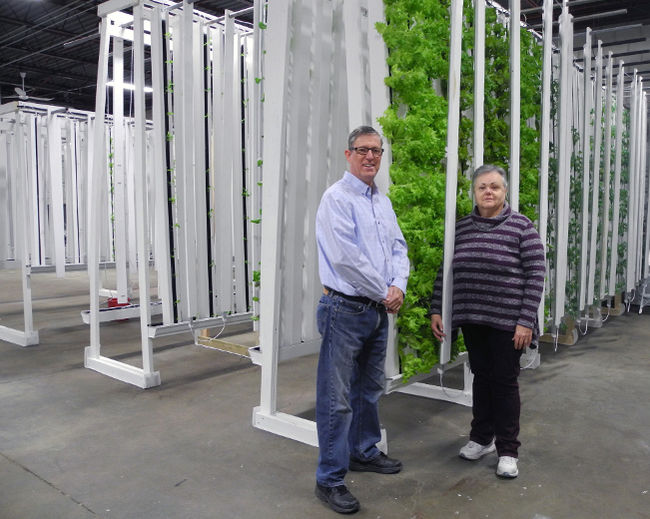
Nothing Is Harvested On This St. Thomas Farm Until You Order It
Nothing Is Harvested On This St. Thomas Farm Until You Order It
By Jennifer Bieman, St. Thomas Times-Journal
Saturday, January 14, 2017 | 10:02:01 EST AM
Where some saw an empty warehouse space, Ruth and Harvey Easton saw a fresh new business idea.
The couple has built an indoor hydroponic farm from the ground up in a 6,000 sq. ft. Burwell Rd. building. St. Thomas' Urban Farm is getting ready for its grand opening on Feb. 1.
“We can control the environment in here. There's no pests, there's no excessive humidity... It's a very contained system, we can monitor it,” said Ruth Easton, co-owner of The Urban Farm.
The former medical lab technician and cytologist lost her job in March 2015 and, not wanting to retire just yet, decided to embark on a new career path.
“We've always gardened, we have a garden in our backyard,” said Easton. “I knew something about hydroponics, but not a lot, so I went online.”
Easton and her husband Harvey researched hydroponic technology and decided to build a business together. The husband and wife team got to work on the ambitious indoor farm in August 2016 and began growing their first plants shortly after. The pair, who hail from Port Stanley, have been spending 10 hours each day tending to the plants, sprouting seedlings and planning for an ambitious expansion.
“Eventually... I'll be able to grow peppers, beans, tomatoes, strawberries. I'm planning on growing those off-season,” said Easton. “Hopefully this time next year I'll be selling strawberries.”
The plants are grown on towering vertical racks, not horizontally like most hydroponic farms, with coloured LED lights and no soil. Water is circulated automatically through the system with special pumps and computers to measure nutrient and fertilizer levels. It takes about six weeks for most of Easton's crops to go from seeds to harvest-ready plants.
Though The Urban Farm boasts some high-tech infrastructure, building the business didn't take millions of dollars in capital costs. They built their own racks for $3,500 and are running the lights through the evening hours to avoid peak electricity costs. The couple is trying to keep their expenses manageable, their carbon footprint low and their business growing.
Right now, the Eastons have dozens of different plants on the go, from bok choy to kale, spinach, several varieties of leaf lettuce and herbs. Though they haven't begun selling their harvest yet, The Urban Farm's produce will soon be hitting the market. Easton said there's been some early interest from local restaurants, bars and caterers. The public will also be able to pick up produce of their own at the Burwell St. location.
“They can come in, say 'I want green loose leaf lettuce' for example. There will be no coolers out there... Someone will come to the rack, cut it off, bag it, weigh it and sell it,” said Easton. “It's called live sales. Nothing is harvested until you order it.”
The Eastons are hosting an official grand opening for The Urban Farm on Wednesday Feb. 1 beginning at 9 a.m. They will be giving tours of their facility and helping the public learn a little more about hydroponic farming.
The Urban Farm Grand Opening
When: Wednesday Feb. 1 starting at 9 a.m.
Where: 150 Burwell Rd. St. Thomas
More Information: 519- 914-016
Green Sense Farms Builds Bridges By Exporting Know-How
Green Sense Farms Builds Bridges By Exporting Know-How
Tony V. Martin
A Portage company has brought new meaning to the phrase, east meets west, by exporting its indoor food-growing technology to China.
Green Sense Farms, of Portage, last year partnered with Star Global Holdings, of the People's Republic of China, to begin building a network of indoor vertical farms that use Phillips LED grow lights to grow produce.
The first farm was built in August in the city of Shenzhen in southern China's Guangdong Province and will serve the Shenzhen area.
Future plans call for building a network of some 20 farms in Bejing, Shanghai and Chengdu to provide fresh, chemical-free produce to major cities in China, said Green Sense Farms CEO Robert Colangelo.
"We're exporting our technology. Food is a bridge-builder. When feeding people, you rise above the political," Colangelo said.
Being able to grow food indoors is something that is new to China but very much needed, given that 80 percent of the aquifer in that country is affected by industrial output from factories.
"So even getting clean water is a challenge," Colangelo said.
By growing a variety of greens and herbs geared to the palate of the Chinese, Green Sense Farms can increase food security and help feed the Chinese people in an environmentally friendly way, Colangelo said.
"It's fun to be part of it. Rarely do you get to be part of something like this," Colangelo said.
Green start
Green Sense Farms started its first indoor growing operation in AmeriPlex at the Port business park in Portage in March 2014. Arugula, cilantro, kale, peas, lettuce and other crops are grown for markets within an average distance of 75 miles, guaranteeing freshness.
The 20,000-square-foot facility — hailed by Popular Science magazine as one of the year's 100 Greatest Inventions in 2014 — produces a large volume of crops year-round in a small footprint, a fraction of the size of a field farm and using much less land, water and fertilizer.
Most of its customers are restaurants, grocers and produce sellers, including Whole Foods, Strack & VanTil and Meijer.
Green Sense Farms is one of just a couple of commercial indoor vertical farms in the state, said Lyndsay Ploehn, a Purdue Extension educator for agriculture and natural resources based in Porter County.
"And Green Sense Farms is one of the first to take their technology to another country," Ploehn said. "They're not traditional farmers. They are kind of thinking out of the box."
Indoor vertical farms are a supplement to traditional outdoor farming, both Ploehn and Colangelo agree.
"It's not going to replace traditional farming. They're not taking away farmland, but are using abandoned buildings to grow food, and land is expensive to produce what they are producing," Ploehn said.
And there have been traditional greenhouse-type businesses in the past that have grown a variety of vegetables and other produce.
"It (vertical farming) isn't new. What's new is the scale they're doing it in," Ploehn said.
The first China farm is expected to produce 750,000 to 1 million heads of lettuce and about 1.5 million leafy greens per year. It's a production level slightly less than the Portage facility, but it's still the start of making a beneficial change in China's food production, Colangelo said.
First there's the population the farm can potentially serve.
Green Sense is starting out in an area of China that has about 50 million people in a 50-mile radius. And after the first farm, there are plans for many more in the area.
"The expansion possibilities are unlimited in China," Colangelo said.
And there's also the quality of product the farm will be growing. China's dense population and large industrial climate has taken away farmland and highly polluted the air, water and soil. By growing produce in vertical towers, Green Sense needs little space compared to a traditional farm, Colangelo said.
Expansion plans
Green Sense is expanding elsewhere, too. Green Sense is partnering with Ivy Tech Community College on a $3 million, 20,000-square-foot farm to be built at 250 E. Sample St. in South Bend.
"We like to be innovative and do things to improve the community and make it more sustainable," Colangelo said.
Green Sense will oversee the farm, but Ivy Tech students will work there in an earn-to-learn setup. Students also will earn credit toward related degrees from the college.
Colangelo's future goals include expanding operations in the United States, Scandinavia and Canada.
Another long-term goal is to spin off a biopharmaceutical business that grows plant proteins using non-GMO seeds that can be synthesized into vaccines and medicine.
Colangelo is a Chicago-area native who has authored books on the environment.
The idea for the indoor urban garden went through many iterations. Colangelo worked with Phillips as a technology partner on lighting and conducted research with Purdue University.
People have been experimenting with vertical farms since the 1980s, Colangelo said. In the case of Green Sense Farms, Colangelo and others integrated and modified an existing system and arrived at a successful product.
"It's ours," Colangelo said.
Colangelo received both his master’s and bachelor’s degrees in earth science from Northeastern Illinois University.
Colangelo spent much of his career in the environmental field, including working with the National Brownfield Association to come up with ideas to clean up the environment.
During his work and research in large cities such as Chicago and New York, the topics of producing food and vertical farming continued to surface.
"We came up with the methodology, and the rest is history," Colangelo said.


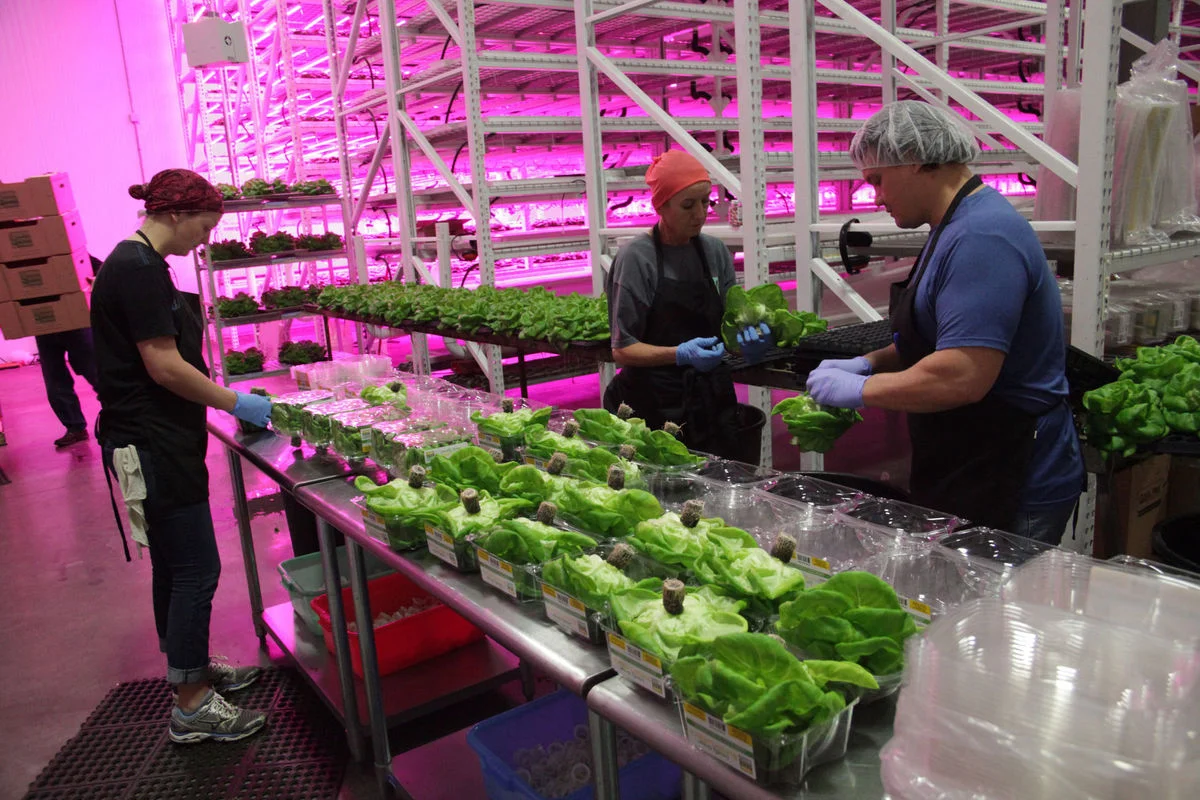
The Green Miracle of the Bronx to Deliver Aglanta’s Keynote
The Green Miracle of the Bronx to Deliver Aglanta’s Keynote
Hearing Stephen Ritz of Green Bronx Machine speak is a sensational experience. Stephen’s energetic style fully engages by binding the listener on a journey of wide ranging emotions. There will bemoments of intense sorrow and despair where the world seems hopelessly broken. Rest assured though, Stephen guides us to emerge from rock bottom with a powerful realization: a movement to grow away our problems is achievable and gaining more momentum every day.
Stephen Ritz is a South Bronx educator / administrator who believes that students shouldn’t have to leave their community to live, learn, and earn in a better one. Moving generations of students into spheres of personal and academic successes which they had never imagined — while reclaiming and rebuilding the Bronx — Stephen’s extended student and community family have grown more than 40,000 pounds of vegetables in the Bronx while generating extraordinary academic performance. Recently named a 2015 Top Ten Finalist for the $1m Global Teacher Prize, Stephen’s accolades include a 2016 Project Based Learning Champion Award, 2016 Health Champion Award, 2016 Dr. Oz Award, 2015 BAMMY Laureate – Elementary Educator of the Year Award, 2014 Greenius Award, 2014 Green Difference Award, 2013 Latin Trends Award, ABC Above and Beyond Award, Chevrolet / General Motors National Green Educator Award, USS Intrepid Hometown Hero Award, NYC Chancellor’s Award and various others.
Do all those awards get you excited to try Stephen’s flavorfully compelling speaking style? Taste it yourself straight from the source by listening to Stephen’s TED Talk, which has over one million views. During his talk, Stephen discusses how he began his journey as a teacher working at a school in a tough neighborhood. He knew nothing about growing produce, yet he was able to learn alongside his students and eventually shape his organization into an influential thought leader for youth food justice.
Did you just watch the TED talk? If so, we understand that your chest may be bumping like a dryer with shoes in it. By all means, take a deep breath and let that feeling sink in.
Now that we’re on the same page with what Stephen Ritz and Green Bronx Machine are capable of, we at Agritecture are thrilled to announce that Stephen will deliver the keynote at our upcoming Aglanta conference on Feb 19th. Although it feels like we’re stating the obvious at this point, we must say we are filled with honest-to-goodness jubilation about this development.
Our goals in organizing the Aglanta conference are further highlighted here, but in one sentence the target is: to connect the opportunities of urban agriculture to the community of Atlanta. One way we aim to achieve that goal is with an education workshop, which will help Atlanta educators learn to implement a Farm in School model in their city. We view Stephen’s work with Green Bronx Machine as an ideal node in the advocacy for the farm in school model. Stephen’s experience offers ‘been there done that’ insights as a role model in our movement to grow hope, which is a significant part of what Aglanta is all about.
Green Bronx Machine began as a way to engage at-risk youth, to make cultivating food as exciting as an iPad or Snapchat. But Green Bronx Machine isn’t a technology; it’s a way of life that has since expanded to reach many more children. Students at Ritz’s school have grown over 30,000 pounds of vegetables inside their fourth floor classroom using 90% less water than conventional agriculture. “My kids are all losing weight,” Stephen was quoted saying in this article. “They’re eating things that they’ve never eaten before. They’re getting critical nutrition where they need it most: in school. It affects their academic health, their social health and their physical health.”
Stephen recognizes that the best way to really help a child, though, is to have an adult who supports and cares about them. So with Green Bronx Machine’s Health, Wellness and Learning Centervegetables are grown so that parents can come in after school and cook the freshly harvested produce with their children. It has become an adult workforce development program where parents and children have the opportunity to eat, learn, and cook together.
Stephen’s vision has now gone global, taking him and his students from the Bronx to as far away as Dubai. Earlier this year, Stephen was campaigning his green education vision at the White House’s South by South Lawn event. President Obama described South by South Lawn as an event that seeks to tackle the task of “building a future that’s more inclusive, tolerant, and full of opportunity for everybody.” We can’t think of a more perfect fit for what Green Bronx Machine does.
Agritecture is proud to have Stephen Ritz delivering the keynote at Aglanta. We invite you to meet Stephen at the event, and to support Green Bronx Machine by donating or by volunteering.
As Stephen AKA El Capitan would say, “Si Se Puede!”
By Andrew Blume
@ablumetweets
andrew@agritecture.com
Original Source on Agritecture Here
We hope to see you at Aglanta on February 19, 2017
at The Georgia Freight Depot in downtown Atlanta
Register for Tickets here.
Early bird Ticket sales end Jan. 18th, 2017
Or contact Jeff Landau for Sponsorship Information
Jeffrey@blueplanet.consulting