


Welcome to iGrow News, Your Source for the World of Indoor Vertical Farming
Greenhouse Grows Inspired Young People
Greenhouse Grows Inspired Young People
By Anne Hillman, Alaska Public Media
January 13, 2017
A new Anchorage greenhouse is sprouting more than seeds – it’s helping young people develop life skills and improve their mental health. Anchorage Community Mental Health Services recently began the new program Seeds of Change
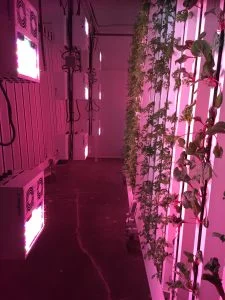
Nineteen-year-old Quavon Bracken walked through the facility’s rows and rows of tall, dangling racks of hydroponic growing towers. Green vegetables and herbs were just starting to poke out through slits the sides.
“My favorite over here is the Jericho Romaine,” he said, pointing to small heads of lettuce. “They’re really green right now.”
Their growth is spurred by powerful LED lights that sway back and forth in front of the plants. When the lights switch on with a loud click, it’s so bright, you gotta wear shades.
Bracken started working with Seeds of Change a few weeks ago. Most of the time he’s a peer outreach worker with Alaska Youth Advocates. Their teen center is now located in the same building as the greenhouse in midtown Anchorage, and the youth workers are helping get the project up and running.
Bracken said he’s been interested in agriculture for a while, and he hopes to work on a farm in Israel sometime soon. In the meantime, working with Seeds of Change is giving him the chance to learn about tending plants – what nutrients they need, how much light. Soon he’ll be helping sell the produce at local farmers’ markets and to restaurants. But the experience is having a deeper impact, too.
“I feel like kind of at peace. Like I can plant some seeds and then you know, think about something that challenges me in life,then just go along planting the seeds. I just feel like I can think a little more around it. Probably all the oxygen that’s being emitted from them,” he said, chuckling.
Those are some of the ideas behind the new nearly $3 million-dollar project.
“That sense of being responsible for life and nurturing it is a really powerful thing,” said Mike Sobocinski, the Chief Operating Officer at Anchorage Community Mental Health Services and one of the founders of the program.
Seeds of Change is primarily targeting young people who have been involved with foster care, juvenile justice, and mental health programs.
“We tend to look at these youth as ‘at-risk’ and what we’re doing here is looking at them as ‘at-promise,’” he said. “You give them the opportunity and you have expectations that they’re going to be responsible and you support them along the way. It really does a lot for your mental health.”
The program supplements on-the-job training with life skills lessons, like apartment hunting and resume building. It will employ up to 20 youth at a time for about 6-9 months each. It’s a transitional program to help the young people get started.
Seeds of Change was 15 years in the making. Sobocinski began developing the project well before starting his current post, but he said it was hard to find the money and the space to actually pull it off.
“I like to tell everybody that every community mental health center should own a 10,000 foot greenhouse,” but they don’t, he said.
The greenhouse can produce up to 50 tons of fresh produce per year. Most will be sold to fund the project, which should be self-sustaining by the end of the year. A portion of the food will be donated to people in need.
Quavan Bracken said he’s excited to see the first harvest. “I really wanna like go and slice them down. And I want to see them all piled up in one area and see the massive amount we’re gonna have. Especially for my favorite right there, though, Romaine Jericho.”
The plants should be ready to pick in four to five weeks.

Top 5 Books For Vertical Farming
Top 5 Books For Vertical Farming
Posted on January 12, 2017
Many of you have asked me how I started learning about vertical farming. Well, today I’m sharing five books that cover everything from entrepreneurship and the potential of vertical farming to space efficiency and nutrient management that will help you get started. Without a doubt, the knowledge in these books will put you on your way to owning your own vertical farm.
Recommended Books:
The Vertical Farm: Feeding the World in the 21st Century, Dickson Despommier: Despommier is considered the father of vertical farming and this is the book that got many people started in this movement. After reading this, you’ll fantasize about skyscrapers feeding cities and know where to look for further research.
The E-Myth Revisited, Michael Gerber: This is a general business book that demonstrates the importance of implementing replicable systems – something most small farmers avoid that leads to wasting their own labor and often money on bad hiring decisions and inefficient work flow.
The Urban Farmer: Growing Food for Profit on Leased and Borrowed Land, Curtis Stone: While not focused on hydroponic or vertical production, learning how Stone thinks through his farming decisions in terms of maximizing profit and space is beneficial for any farmer.
Vertical Gardening: Grow Up, Not Out, for More Vegetables and Flowers in Much Less Space, Derek Fell: Though this book is meant for gardeners, its principles are easily transferable and people love it. Fell teaches you how to look at intensifying a given space while minimizing effort – the foundation of vertical farming.
Teaming With Nutrients, Jeff Lowenfels: This book makes cellular biology not only readable, but super engaging too. While also written for gardeners, the science Lowenfels explains is absolutely necessary for people working with hydroponics or reliant on nutrient (whether from things like compost tea or synthetics).
There are others out there that I’ve read, and I’m sure some that I’m missing out on some, but I’ve found most other books on vertical farming to be either too ponderous/impracticable for starting out, or filled with useless minutiae.
So, instead of having you wade through that unknown, this list was selected by myself and the other vertical farming panelists at Future Harvest’s Cultivate the Chesapeake Foodshed for their quality and accessibility. While I’ve been working with vertical farms and helping others set up their own for about 3 years, I’ve only just started selling produce commercially. So don’t just take my word for it! Niraj Ray and Mary Ackley have demonstrated their chops and are doing great things here in DC. Check out their sites while you’re at it!
Thanks for checking out our blog and website. I will note that the links are affiliate links, meaning amazon will give me a portion of the sale if you make the purchase on that page. That would really help me out (more LEDs!) and if you’d like to say thank you for giving you some helpful information, buying there is a good way to do it.

CT Agri-Tech Maker Lands Product Deal
JANUARY 12, 2017 | CT GREEN GUIDE
CT Agri-Tech Maker Lands Product Deal
A South Windsor company that began as a member of UConn's startup incubator program said it will supply its LED technology to a Las Vegas manufacturer of vertical aeroponic farming systems.
Agrivolution, founded in 2012 by Richard Fu, said Indoor Farms of America recently selected it as a horticultural LED provider for leafy greens and other crops such as heirloom tomatoes, squash and cucumber.
Terms of the agreement were not disclosed, but the companies said the selection came after approximately one year of testing Agrivolution's Triple-Band LED bars against a dozen other lights.
Indoor Farms began selling its vertical aeroponic farming systems in late 2015 and last year announced it had secured a product distributor in South Africa. Aeroponics
Growing Power Vertical Farm
Growing Power Vertical Far
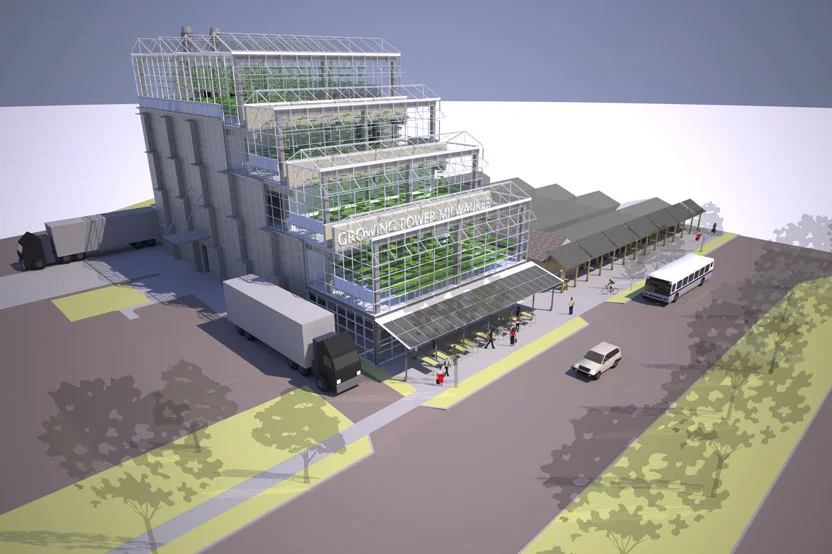
LOCATION: Milwaukee, Wisconsin
SIZE: 27,000 square feet
STATUS: In Progress
PROGRAM: Highly sustainable urban five-story vertical farm including greenhouses, conference / training and retail spaces
Growing Power, Inc. is an internationally-recognized non-profit organization and land trust supporting people from diverse backgrounds and the environment in which they live by helping to provide equal access to healthy, high-quality, safe and affordable food. This mission is implemented by providing hands-on training, on-the-ground demonstration, outreach, and technical assistance through the development of Community Food Systems that help people grow, process, market and distribute food in a sustainable manner.
Growing Power currently operates six greenhouses on a historic two-acre site that is the last remaining farm and greenhouse operation within the City of Milwaukee. As the organization has expanded, the need for additional space to support production, classes, meetings, meal preparation, offices, and on-site warehousing has grown exponentially. Growing Power and TKWA have worked together to develop plans for an ambitious new facility, the world’s first working urban Vertical Farm.
Five stories of south-facing greenhouse areas will allow production of plants, vegetables, and herbs year-round. Expanded educational classrooms, conference spaces, a demonstration kitchen, food processing and storage, freezers, and loading docks will further support Growing Power’s expanding mission as a local and national resource for learning about sustainable urban food production.
Growing Power was founded by Will Allen, one of the world’s leading authorities in the expanding field of urban agriculture. In 2008 he was named a MacArthur Foundation Fellow and he is a member of the Clinton Global Initiative. In May, 2010 Time Magazine named him one of the Time 100 World’s Most Influential People.

SoCal Urban Farming Org Increases Supply of Fresh Produce to Homeless Shelter by Healing Soil and Residents
SoCal Urban Farming Org Increases Supply of Fresh Produce to Homeless Shelter by Healing Soil and Residents
January 11, 2017
Charli Engelhorn
Prior to the establishment of the GrowGood urban farm on a lot across the way from the Salvation Army Bell Shelter located in Bell, CA, the shelter, which serves nearly 6,000 meals per week, incorporated very little fresh produce into its menu.
“They were spending cents per meal on fresh produce. Food was donated, so no one was going hungry; but the nutritional quality was often low,” says Brad Pregerson, co-founder of GrowGood, a CA-based nonprofit that has been working with the shelter since 2011 to develop a garden-based program to not only increase the supply of fresh produce to the shelter, but also to provide its residents with meaningful work and act as catalyst for healing.
The Salvation Army Bell Shelter, which opened in 1988, was established with help from Pregerson’s grandfather, Harry, a federal judge and veteran, who perceived the dire need to provide housing for the growing population of homeless veterans in Los Angeles County. Today, it houses up to 350 men, women, and veterans, who are able stay for up to two years and receive comprehensive treatment.
After volunteering in the shelter’s kitchen one summer after his college graduation, Pregerson recognized an opportunity to solve the fresh produce deficit at the shelter and improve the health and well-being of its residents.
“Bell is in an industrial part of the county. It’s only eight miles from Downtown Los Angeles (DTLA), but there aren’t a lot of green spaces,” says Pregerson.
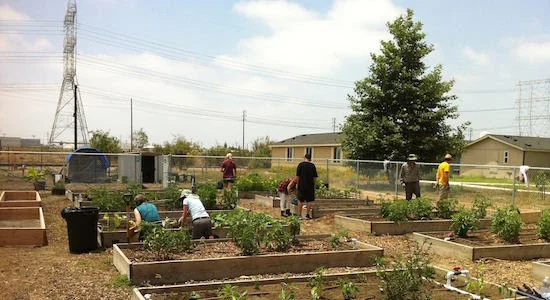
To tackle this environmental challenge, he and his partner in GrowGood, Andrew Hunt, installed several raised bed gardens on the property across from the shelter using imported soil.
“The soil on the property was dead, and we were worried about contamination, something that urban farmers have to contend with,” says Pregerson. “We did extensive soil testing and found there was no toxicity but also no life, so we’ve worked really hard to rehabilitate the soil.”
The farm, which now occupies close to two acres of land, has been able to rehabilitate the soil through the process of biodynamics, a farming ideology that posits that a diversified and balanced farm ecosystem will generate nutrient-rich, self-sustaining fertility, and health.
“We want to grow as much food as possible on this space, but it’s not an exploitative angle, rather a nurturing one of how we can maximize the potential that is here for the sake of the space we have,” says Corinne McAndrews, the head farmer. “The more we grow, the more we learn, and we find that a bigger diversity of life supports a larger soil biology, which supports more plants being grown.”
This diversity includes animals, perennials, native plants, medicinal herbs, and livestock along with the other crops grown on the farm, such as carrots, radishes, beets, lettuce, kale, chard, and hard-neck squashes, to name a few. The farms no-till system acknowledges the interaction of these variables, lending to the notion that the systems in the soil work better when left alone, something McAndrews calls the ultimate humility.
“We see everything that happens here as being part of that essential process,” McAndrews says. “The less we till, the better things grow. In just 18 months, we’ve already seen a vast improvement of soil organic matter and available nitrogen, water retention, and calcium ratios.”
The improvement of the soil is one of the major factors in the farm’s ability to produce more food for the shelter. In 2015, the farm was able to provide 2400 pounds of produce to the shelter’s kitchen, and they are on pace to break 7000 pounds in 2016. McAndrews believes that number will more than double for 2017, estimating close to 20,000 pounds.
Another part of this essential biodynamic system is the human factor, which McAndrews says contributes to the therapeutic objectives of the farm.
“When somebody comes here and views themselves as part of an essential system, it is incredibly healing,” says McAndrews. “What I see is this deep acceptance of the world as a complex place and this desire to be more involved. People come out here day to day and share their time and stories, and it’s really beautiful.”
Inevitably, the human factor also involves inefficiencies in the way the farm is tended, but those inefficiencies are intentional and part of the biodynamic process.
“Often, we see something not go the way I’d planned or hoped, but when you step back, you can see that the failure gave way to something that might be beautiful or necessary,” says McAndrews. “There is just so much potential.”
The hope for the future is to maximize that potential by creating systems to bring more people from the shelter to the farm to participate as stewards of the natural process. A new grant from the Disney Foundation will be used to support that mission by enabling the creation of a commercial greenhouse on the property.
The greenhouse will increase GrowGood’s revenue by allowing it to grow and sell micro greens and specialty greens to restaurants in Downtown Los Angeles. This revenue will in turn help to pay some of the shelter’s residents for their work on the farm, and provide additional funding to increase educational and job-training opportunities.
“The job training and being able to put money in the residents’ pockets is so critical, and the components of our program will really grow once the greenhouse is up,” says Pregerson.
Currently, much of the job training involves helping residents develop awareness about their limitations for work and understanding of what they need to succeed in the workforce, such as communicating, being on time, conflict resolution, accountability, and confidence. With the implementation of the commercial greenhouse enterprise, Pregerson will increase that training to include every stage of the business, from sales to delivery.
GrowGood is also looking to create more revenue through Farm-to-Table dinners as outreach fundraising marketing events, the first of which will be held in February.
The hope for the future is to create a sustainable and replicable model that can be used for more sites like the one at the Bell shelter and engage more foundations and donors.
“We’re motivated about the potential to have this sustain itself and show other people that it can work. We want to continue to connect with the philanthropic world, but also with chefs who want to build a resilient food future, where we have small-scale farms all over the country that can support people,” McAndrews says. “It’s only going to be true if we make it possible.”

Indoor Vertical Farm Hosts Farm Foundation’s Round Table
Indoor Vertical Farm Hosts Farm Foundation’s Round Table
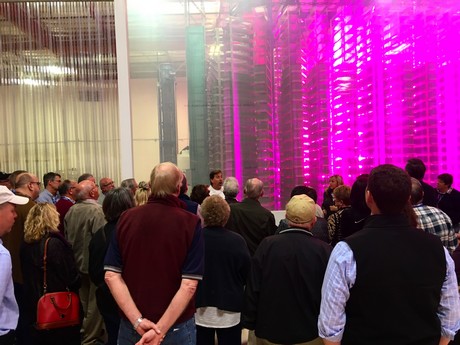
Urban Produce, Orange County’s organic, indoor vertical farm, hosted members of the Farm Foundation’s Round Table for a tour at their state-of-the-art facility in Irvine, California on Wednesday, January 4th. Urban Produce’s patented growing technology has placed them at the forefront of sustainable agriculture; making them an ideal destination for The Farm Foundation’s bi-annual Round Table tour.
A program of Farm Foundation, NFP, the Round Table is an invitational discussion forum comprised of agricultural leaders from across North America. The Farm Foundation® Round Table meets twice yearly to provide a forum for discussion and interaction among select members and invited government, academic, agribusiness and other interest group leaders.
“We’re proud to welcome esteemed members of the Farm Foundation’s Round Table into our facility,” commented Ed Horton, who was named one of Agriculture’s Leading Innovators by USA Today. “To be able to share our advancements in agricultural technology and our global vision with some of the nation’s leading stakeholders in our field is a catalyst for even more discussion, innovation, and partnership opportunities.”
The Round Table program is designed to create an exchange of ideas and to foster understanding of different approaches to issues and challenges facing agriculture, the food system and rural regions.
Ed Horton, President and CEO of Urban Produce led the group through their state-of-the-art facility which houses their patented High Density Vertical Growing System. He showed members how Urban Produce can successfully grow 16 acres of organic produce using just 1/8 an acre. Urban Produce continues to push the envelope of sustainability by creating its own water for its crops through Atmospheric Water Generation; ultimately using 93% less water than traditional farms producing similar yields. Members learned how vertical farming offers a sustainable solution to climate change, the rapidly growing population, and increase in food deserts.
For more information: Talia Samuels | Outshine PR | Tel: 949.690.1531
Publication date: 1/11/2017

Blue Planet Consulting 2016 Annual Report
visit blueplanet.consulting in your browser today and learn more
Blue Planet Consulting 2016 Annual Report
- Published on January 11, 2017
Henry Gordon-Smith
Urban Agriculture Consultant
2016 was a year of notable growth for Blue Planet Consulting. For one, we successfully acquired over 15 new client projects, many of which have already been fulfilled to completion. Servicing these clients has strengthened our core team with relevant skills and experience to keep Blue Planet Consulting (BPC) on the forefront of building a thriving urban agriculture industry.
Further keeping our team in the catbird seat of the industry is our continued management of both Sky Vegetables and Stonebridge Farms. Managing these commercial farms for our partners has supplied BPC with more of the relevant knowledge and experience to be able to provide our clients with data-driven and first-hand operator insights. Our involvement with these facilities proved highly useful in multiple client engagements in 2016. Typical urban agriculture problems surrounding waste, labor, energy, sales, and marketing are being overcome by our growing team every day.
Related: Blue Planet Consulting 2015 Annual Report
Another major 2016 development for BPC is that my blog, the Agritecture platform has signed an agreement to be added into the Blue Planet family. This move has diversified BPC’s capabilities, giving the company access to quickly communicate to a growing community of urban agriculture professionals. Agritecture’s strong audience growth in 2016 gives me confidence that BPC will continue to develop its ability to influence the industry. This partnership also allows us to grow the amount and quality of knowledge we share through the platform as we have now hired our first employee: Community Manager Andrew Blume.
2016 was a year where BPC sharpened the methodology we use to help our clients overcome the challenges of developing urban agriculture businesses. Whether those challenges are zoning complexity, site and crop selection issues, recruiting strategies, yields and waste calculations, or implementing a new sales strategy for your product – BPC has likely serviced clients with similar issues facing your team.
In the report below, we showcase some of our work in 2016, from client engagements to industry events and partnerships we have supported. These activities depict how we have helped entrepreneurs and large companies navigate the uncharted waters of planning, implementing, and operating their urban agriculture business.
Thank you for your time and interest in our company’s 2016 endeavors. On behalf of my whole team, I wish you a warm, healthy, productive, 2017!
Sincerely,
Our 2016 Client Engagements
We conducted a feasibility study for Rob Laing, CEO of Farm.one and helped turn his brilliant idea of growing rare culinary herbs in Manhattan into a reality. We assisted Farm.one with crop selection, site selection, design, and economic analysis. We even assisted with the installation of Farm.one. We also helped Rob recruit his head grower, the talented David Goldstein. We are happy to hear that Farm.one is expanding its operations to another facility in 2017!
The Child Development Services Corporation (CDSC) is one of the only food banks with a vertical farm within it, providing fresh and clean produce to Clinton Hill residents in need. The farm was originally installed by Boswyck Farms 5 years ago and was in need of a retrofit. We assisted CDSC with a retrofit of the lighting, plumbing, and nutrient dosing systems. We also made the vertical farm more ergonomic for its users. CDSC benefitted from an updated management manual of the farm we developed as well as a training we conducted for their volunteers.
A large Chinese manufacturer wanted to explore how converting some of its facilities into a “green campus” could improve worker health and wellbeing. We provided a rapid concept development service including sketching out four interventions to their existing facilities that would improve oxygen within the factories, provide some produce for consumption, and improve overall well being. The final results were a set of renderings which we pitched to some of the companies executive team who continue to discuss the possibility of developing the green campus in 2017.
Our storefront office in Brooklyn certainly catches the eyes of pedestrians passing by. Josh Smith is a local resident and world-renowned artist that saw the +FARM in our window and ask us to design a custom system for his basement. We consulted with Josh what he wanted to grow and designed a system that fit his space and budget. Now Josh and his wife can enjoy leafy greens and microgreens year-round from their home.
Another community group in Brooklyn that has a system originally set up by Boswyck Farms requested our services to update the system. We advised them on means to improve their management of the farm and also recommended certain equipment upgrades.
This organization serves special needs students and families in New Jersey. We conducted a feasibility study on the costs and benefits of converting an unused ~3,000 sf warehouse into a commercial vertical farm for the purposes of generating additional revenue for the school. Our team completed design of the farm and even conducted focus groups with local residents to determine crop selection and packaging choices. The Reed leadership and board are considering funding options and partnerships to develop the vertical farm in the near future.
Global LED Company
We were hired by a global LED manufacturer to conduct market research and analysis to understand the potential for a new product they were considering developing. Our team developed a thorough document reviewing the potential for the product, target customers, pricing, and marketing strategy recommendations.
We assisted Brooklyn’s newest urban farmers and its only urban agriculture accelerator Square Roots launch their first campus. Our primary contributions were on recruiting, curriculum development, and horticulture planning. Now, many of our team serve as mentors to the 10 entrepreneurs that are growing real food in shipping containers in Brooklyn. Read more about Square Roots here.
Grownex USA chose us to help them launch their brand and new product Salad Wall at NYC AgTech Week. We were happy to assist them by building their first US website, social media accounts, and marketing strategy. We also displayed their system in our office getting them their first customer as a result of the exposure we provided them. Grownex is growing its sales to the US market in 2017 and Blue Planet Consulting is excited to continue to help them share their unique product Salad Wall with the US market.
Phillips Programs (Phase II)
Two years after helping our first client Phillips Programs in Maryland install a hydroponics learning lab (pictured), we were able to help them design their next phase: an additional six vertical microgreens systems. For this project we partnered with our local contacts at Modernature and co-designed cultivation systems that were appropriate for the Programs’ special needs students. Phase II of the Phillips’ Growing Futures Program is set to launch in Spring 2017.
BMoreAg
Also in Maryland, this client is interested in making a big impact on jobs and food security in Baltimore. We are assisting this client with concept development for now and eventually a full feasibility study. The plan is to convert a large vacant lot into a productive mix of vertical farming and greenhouse operation with an on-site market.
We are very excited to be working with Goler CDC, one of Winston-Salem, North Carolina’s well known community groups. Our role in their latest project is to provide a comprehensive feasibility study on converting a vacant lot into a series of greenhouses. This project is currently in progress with the site visit complete and crop selection underway. We will be providing Goler CDC with everything they need to get the project moving forward including equipment selection, economic analysis, management planning, and recruiting. The project is set to break ground in 2017.
Global Investor
We provide a benchmarking and case study report to a global investor interested in understanding the ins and outs of vertical farming. The list was comprehensive and included both case study data and analysis from our team of consultants and the investment climate of the emerging vertical farming industry.
Entrepreneur in Dubai
CJ is a young Dubai-based Indian entrepreneur looking to launch a model for vertical farming in Mumbai, India. We are developing a vertical farming concept for CJ that considers the opportunities and challenges of the local market and climate. Crop selection, pre-sqf costs, and a pitch deck are in progress to help CJ raise money for his unique vertical farming idea.
2016 Agritecture Workshops
In 2016 we conducted three Agritecture workshops:
· Fresno, CA (Feb)
· London, UK (June)
· Boston, MA (Dec)
These three 2016 workshops have brought the total number of Agritecture workshops to seven (7). Agritecture workshops match interdisciplinary teams of architects, growers, entrepreneurs, engineers, marketers, designers, and sustainability managers together for a shared mission: to develop a viable “agritecture” concept for the host city.
The Agritecture Design Workshops comprise of three teams, each matched with the goal of demonstrating creativity, sustainability, and feasibility when integrating agriculture into cities. On-site mentors from Blue Planet Consulting guide participants through urban agriculture project planning, hydroponic agriculture, and sustainability.
In the past, Agritecture Workshops were typically planned in partnership with the Association for Vertical Farming. For the Boston Agritecture Workshop, and for future workshops, this will no longer be the case. The AVF has indicated they will seek to develop their own proprietary workshop series, although they may still occasionally promote future Agritecture workshops.
We would like to thank our main sponsors for the three 2016 workshops included the following companies:
Agritecture also began offering sponsored content packages in 2016. These packages helped innovative companies showcase their products or services to our audience of 30,000+ vertical and urban farming enthusiasts. Contact Andrew@agritecture.com for more information on how you can reach our primarily millennial and gen-X audience.
2016 Milestones
January
- Hired new Engineer Jeffrey Landau
- Acquired new client Farm.one
- Visited the first installed Growtainer in NYC
- Completed DIY vertical farming kits for 2016 client Bergen Academies
February
- Hosted Agritecture Workshop in Fresno, California
- Attended GFIA conference in Abu Dhabi
- Attended FarmTek CEA Workshop
- Acquired new client CDSC
- Acquired new client Foxconn
- Became an Autodesk Entrepreneur Impact Partner
March
- Attended U of A CEAC Short Course
- Attended and Spoke at Thought For Food Summit in Zurich, Switzerland
April
- Attended Indoor Ag Con
- Participated in Urban Agriculture Roundtable with Brooklyn Borough President’s Office
- Acquired new client Los Surres
- Acquired new client Reed Academy
- Initiated the California Urban Agriculture Collective
- Attended Food + Future CoLab event @ IDEO in Boston
- Acquired new client Josh Smith
May
- Attended Silicon Valley AgTech Conference
- Spoke at first AgroHack conference in Puerto Rico
- Acquired new client Global LED Manufacturer
- Hired West Coast Representative David Ceaser
June
- Sponsored AVF Summit 2016
- Conducted first international Agritecture Workshop in London, England
July
- Acquired new client Square Roots Urban Growers
August
- Acquired new client Grownex USA
- Hired Djavid Abraham as our new Lead Systems Designer
September
- Participated in 2nd annual NYC AgTech Week
- Acquired new client Global Investor
- Started phase II for client Phillips Programs
- Hired MIT CityFarm veteran Elaine Kung to join our team as a designer
October
- Spoke at the Canadian Greenhouse Conference, offering the first talk on Vertical Farming to ever be featured at the event.
- Attended Chicago LED Magazine Event
- Attended and spoke at Fluence Bioengineering PhotoX event in Austin, TX
- Attended LARTA Institute Urban Agriculture event in Los Angeles
- Whitehouse announces our DIY vertical farming system +FARM on its website
November
- Hired Andrew Blume to join our team as our Community Manager for Agritecture.com
- Spoke at Building Success event sponsored by Microdesk in San Francisco
- Acquired new client Goler CDC
- Attended Seedstock Grow Local OC event
December
- Acquired new client based in Dubai
- Launched Aglanta: the South’s first CEA conference together with the Mayor’s Office of Atlanta and with platinum level sponsor, Southern Company
Our 2017 Strategy & Outlook
2016 was a big year for proving that Blue Planet Consulting’s methodology and team are capable of meeting industry challenges. Our acquisition of high-profile customers such as Foxconn, Square Roots, and Southern Company are evidence that as urban agriculture becomes more mainstream in 2017, BPC will play a role in assisting more high-profile organizations to enter the space successfully.
While we are ecstatic to have worked with these influential customers, we are also proud that we continued our practice of servicing school and institutional clients at a reduced rate. We’re excited to continue working for these small niche customers and adding more value to their installations with the introduction of the +FARM in 2017. We work with these clients because corporate social responsibility is a major motivating factor for our team. Thus, we fully intend to continue devoting resources to communities and clients of all shapes and sizes in 2017.
I can’t think of a more perfect example of how we will engage with big and small, business and education, industry and community, then the Aglanta Conference on February 19th, 2017. Aglanta will be organized by BPC, the Mayor’s Office of Atlanta, and by the conference’s platinum level sponsor, Southern Company. Alongside these entities will be Aglanta’s keynote speaker, Stephen Ritz, who is the undisputed champion of growing in schools.
I encourage you to purchase tickets to Aglanta here or contact me to get your company involved. There are still some exciting opportunities to exhibit or sponsor the event!
Only a crystal ball with tell us exactly how urban agriculture will manifest in 2017. While there are challenges and risks, we are confident that this is the year lucrative and impactful businesses will emerge. If you intend to pioneer and develop alongside the industry, we encourage you to contact us to see how we can work together to turn your growing aspirations into growing operations.
Request your urban agriculture, greenhouse, or vertical farming feasibility study here.
Vertical Farming May Not Feed The World, But Could Empower Cities
Vertical Farming May Not Feed The World, But Could Empower Cities
BY LISA NIKOLAU ON 11 JANUARY 2017
Aware of population growth’s growing impact on global food security, many agricultural experts are debating the use of vertical farming – and its ability to feed the world – but don’t deny its potential in urban agriculture.
Vertical farming is a relatively new term that, at its core, simply means growing more food in smaller spaces. Instead of having a single layer of crops over a large land area, for example, stacks of crops climb upward, typically in highly controlled indoor environments.
The method usually grows crops without soil or natural light. It’s dramatically different from how humans grew food just a few decades ago, but has the potential to produce drastically higher yields with significantly less space.
For humanitarians, the idea is tantalizing. The world’s population is exploding at an exponential rate, stressing the need to find ways to feed people without further destroying the planet. Proponents say vertical farming uses less water and fossil fuel than outdoor farming and eliminate agricultural runoff, all while providing fresh and local food.
As the concept garners both attention and legitimacy, vertical farms are already popping up in Seattle, Houston, New York and Milwaukee, as well as Linköping, Sweden. Some enthusiasts have even considered the rise in vertical farming the “third green revolution.”
Whether the model can be used among the rural poor – where the bulk of the world’s food is grown, in countries with highest food insecurity – is still up for debate.
“Can vertical farming feed the world? I’ll tell you right now: No it can’t,” said Erik Cutter, founder of California-based urban farm company Alegría Fresh, in an interview with Humanosphere. “It’s too expensive to feed the world.”
According to Cutter, the price tag on the type of vertical farm tower conceptualized by Dickson Despommier – the ecologist credited for modernized the idea of vertical farming – can be upward of $1 billion.
He said such a model might intrigue the elite, but is irrelevant to the majority of the world’s farmers. For them, many agriculturalists say building food security would rely on the adoption of regenerative agriculture – a range of techniques with the aim of restoring soil fertility and sequestering carbon.
In Irvine, Calif., Cutter uses a hydroponic vertical farming system – utilizing coconut fiber instead of soil, and powered by the sun – but is quick to describe its shortcomings. Vertical farms generally have a limited range of crop species, such as leafy greens or herbs, and its energy requirements are debated among critics who say lighting and other necessary equipment have a heavy impact on the climate.
But the biggest problem with vertical farming, Cutter adds, is that there isn’t an economic model to sustain it.
“Really, we have to train thousands of thousands of farmers in this country to farm differently, plus source capital, plus develop a market for that food,” he said. For this reason, he says one of his goals is to create decent-paying jobs in urban agriculture.
Even if it can’t feed the planet, proponents of vertical farming say it could at least work for the world’s cities. One of the largest, AeroFarms in Newark, N.J., appears to have created a sustainable economic model. An in-depth look at the company by the New Yorker explained that its main crop is baby salad greens because its premium price makes the enterprise attractive – and because it’s easy to grow.
If sustainable, such enterprises could help prevent cities from what urban agriculturalists warn is the inevitable: intolerable overcrowding with overwhelmed sanitation systems, housing, water and, of course, food. If the bulk of food production could happen close to these highly concentrated centers, the hope is that urban populations could harbor some control of their food supply.

Agrivolution’s Agri LED Light Picked for New Vertical Farming Panels From Indoor Farms of America
Agrivolution’s Agri LED Light Picked for New Vertical Farming Panels From Indoor Farms of America
January 11, 2017 | 07:38 PM Eastern Standard Time
SOUTH WINDSOR, Conn.--(BUSINESS WIRE)--Light-emitting diode (LED) lighting from agri-technology company Agrivolution LLC has been selected for integration into a patented aeroponic vertical farming system developed by Indoor Farms of America, LLC after Agrivolution won a year-long performance review against other LED products that provide artificial light for agricultural uses.
The new relationship brings together Indoor Farms of America, a U.S. market leader in affordable, economically viable, high-yield vertical aeroponic crop growing equipment that can grow pesticide-free local fruits and vegetables year round, and Agrivolution that supplies advanced horticultural LEDs that are popular in Asia and elsewhere around the globe.
The announcement comes as Las Vegas, NV-based Indoor Farms of America has steadily increased its market share as the company expands across North America and into key markets globally.
"Indoor Farms of America tested the Agrivolution ultra-thin and lightweight bar type Triple-Band LED against a dozen competing products for over a year and determined its superior performance to grow plants indoors," said Agrivolution President Richard Fu. "Based on the trial results, Indoor Farms of America decided on Agrivolution as its standard LED equipment provider for leafy greens and other select crops."
The global vertical farming industry is forecasted to grow to $6.81 Billion by 2022 according to a report issued by international research group Research and Markets called "Global Vertical Farming Market Analysis & Forecast, 2016-2022." Agrivolution expects to supply approximately 10,000 units of the Triple-Band LEDs across North America in 2017.
"We are very happy with the steady performance of the Triple-Band LED bars from Agrivolution," states David Martin, CEO of Indoor Farms of America. "We have grown about 20 different leafy green products, as well as flowering and fruiting plants, and they (Agrivolution LEDs) do a great job in helping us reach our targeted harvest times for what we grow."
Indoor Farms of America will integrate the Agrivolution LEDs into its enhanced aeroponics system to grow larger plants such as heirloom tomatoes, squash, and cucumber. The company has already been successful testing its growing techniques that produce a variety of leafy green products, as well as cherry tomatoes, chili peppers, and strawberries.
Aeroponics is a technique that mists nutrient solutions and supplies ample oxygen to plant and vegetable roots directly. It promotes root growth which reduces root rot and results in healthier plants. Artificial light from LEDs enables plants, vegetables and fruits to photosynthesize ― the process by which plants use ― to convert energy of light into chemical energy as its fuel.
Agrivolution’s UL certified Triple-Band LED being used by Indoor Farms of America is based on a patented single-chip design that emits RED-, BLUE-, and GREEN-bands that covers full Photosynthetically Active Radiation (PAR) between 400 nm and 700 nm. Because of the unique single-chip architecture, the Agrivolution LEDs are able to output a balanced full-spectrum light while reducing energy usage.
Interest in horticultural LED lighting and weather agnostic indoor plant factories that can support steady food production in North America has been on the rise year after year as traditional growers struggle with unpredictable weather patterns in recent years and the extreme, long-term drought in agricultural rich California as well as drought conditions in various parts of the nation including the Northeast.
A separate research report issued last year forecasts the LED grow light module market currently at $395 million in 2014 to reach $1.8 billion by 2021 according to LED Agricultural Grow Lights: Market Shares, Strategies, and Forecasts, Worldwide, 2015 to 2021 by WinterGreen Research.
South Windsor, Connecticut-based Agrivolution is developing innovative products for the indoor vertical farming industry that support sustainable farming solutions.
Agrivolution is a multiple winner of the State of Connecticut's CT Innovation Summit "Tech Companies to Watch."
For more information visit www.agrivolution.co.
Contacts
AGRIVOLUTION CONTACT:
TrahanPR
Michael Trahan, 860-256-1698
trahanm@comcast.net
or
INDOOR FARMS AMERICA CONTACT:
David W. Martin, 702-664-1236
CEO
davem@ifoamerica.com
Alaskan Containerized Hydroponics Win Prestigious Farming Award
Alaskan Containerized Hydroponics Win Prestigious Farming Award
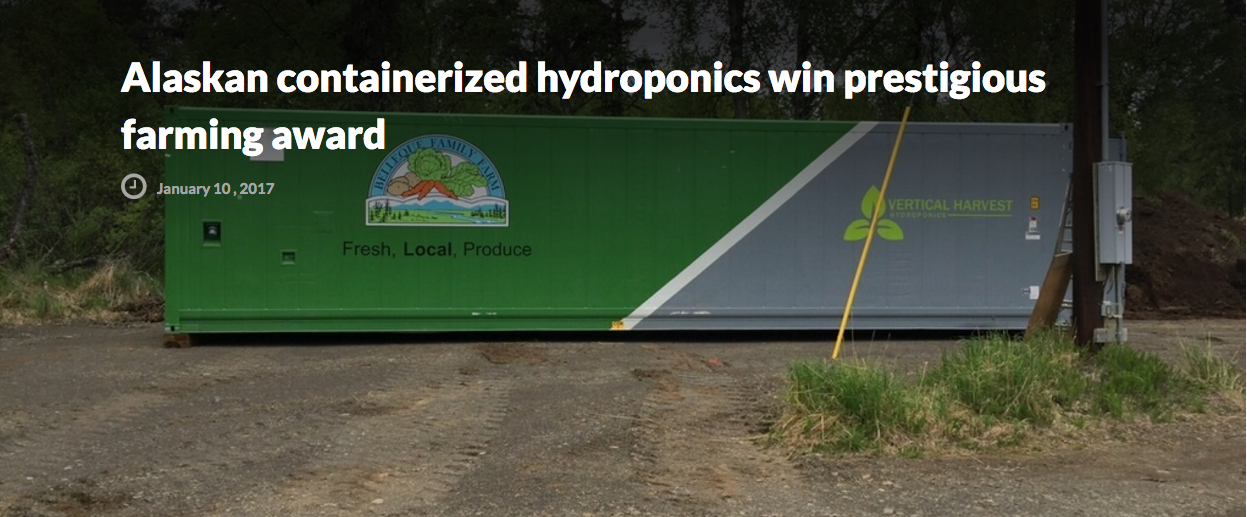
The brains behind an “Arctic ready” hydroponic, mobile system for producing fresh vegetables have won the American Farm Bureau Federation’s (AFBF) Entrepreneur of the Year Award.
Linda Janes and Dan Perpich of Alaska-based Vertical Harvest Hydroponics took home US$30,000 to support their business, which uses LED lighting in containers to produce fresh produce in the most remote of locations.
In a video briefing (below), the group explains 95% of Alaska’s fresh produce has to be imported from the continental U.S. or elsewhere, and often takes two weeks before reaching store shelves plus an extra three or four days to reach rural zones.
As it stands, the company estimates around 25% of the fresh produce that comes into Alaska is wasted, and that the lack of fresh produce availability is contributing to health problems in the state.
But through Vertical Harvest Hydroponics’ manufactured containerized growing systems, producers or interested parties can grow 450 heads of lettuce a week, wherever they may be.
“Innovation and entrepreneurship have always been essential ingredients in the success of America’s farmers and ranchers,” said AFBF president Zippy Duvall.
“From the adoption of new business models and the development of new tools and services, to unique adaptations of technology in agriculture, our industry is driven by people with vision who are willing to step forward with fresh ideas.”
Janes described the experience of winning the award as “surreal”.
“We entered into the Strong Rural American Entrepreneurship Challenge last year and certainly didn’t expect to win. However, we were notified a few months later that we were in the top four out of 356 applicants,” she said.
“This weekend, they flew all the four teams into Phoenix to compete for either the Entrepreneur of the Year (decided by the four judges) or the People’s choice award (via online voting). This competition also coincided with the American Farm Bureau Annual Convention and IDEAg Trade Show, which was held at the Phoenix convention Center.
“In fact, our pitches to the judges and full house audience took place on the convention stage, while the convention was in full swing.”
She said her competitors were “exceptional” with great business models and teams.
“It was an unbelievable moment to hear our name called as the winners. We are humbled and thankful. This was a great opportunity and privilege to be in the company of fantastic and brilliant people,” she said.
“It is wonderful to know that so many great entrepreneurs and farmers are working hard to make our country better. This has been a challenging and rewarding experience. We want to thank everyone who has supported us over the last two years.
“We would like to extend a huge thank you to the American Farm Bureau for their entrepreneurial nature in realizing and following through on the important mission of encouraging innovation and supporting our rural communities and our farmers. This win is overwhelmingly for Alaska.”
Empowering Indoor Farming
EMPOWERING INDOOR FARMING
With integrated, intuitive and intelligent solutions to achieve maximum efficiency, quality, and profitability.
CoolFarm came up in this new context where our dominant food paradigm is breaking down: climate change, increasing droughts, soil depletion and disease, excess fertilization, phosphorus scarcity, water pollution, chemical overloads, pollinator destruction, and biodiversity loss, threaten our business-as-usual approach to food production. Consumers and retailers are increasingly demanding safer, high-quality foods with less unpaid burden on our shared environment and public health. It’s forecasted that by 2050 we will need to feed more than 10 billion people, requiring a 70% increase in global food production.
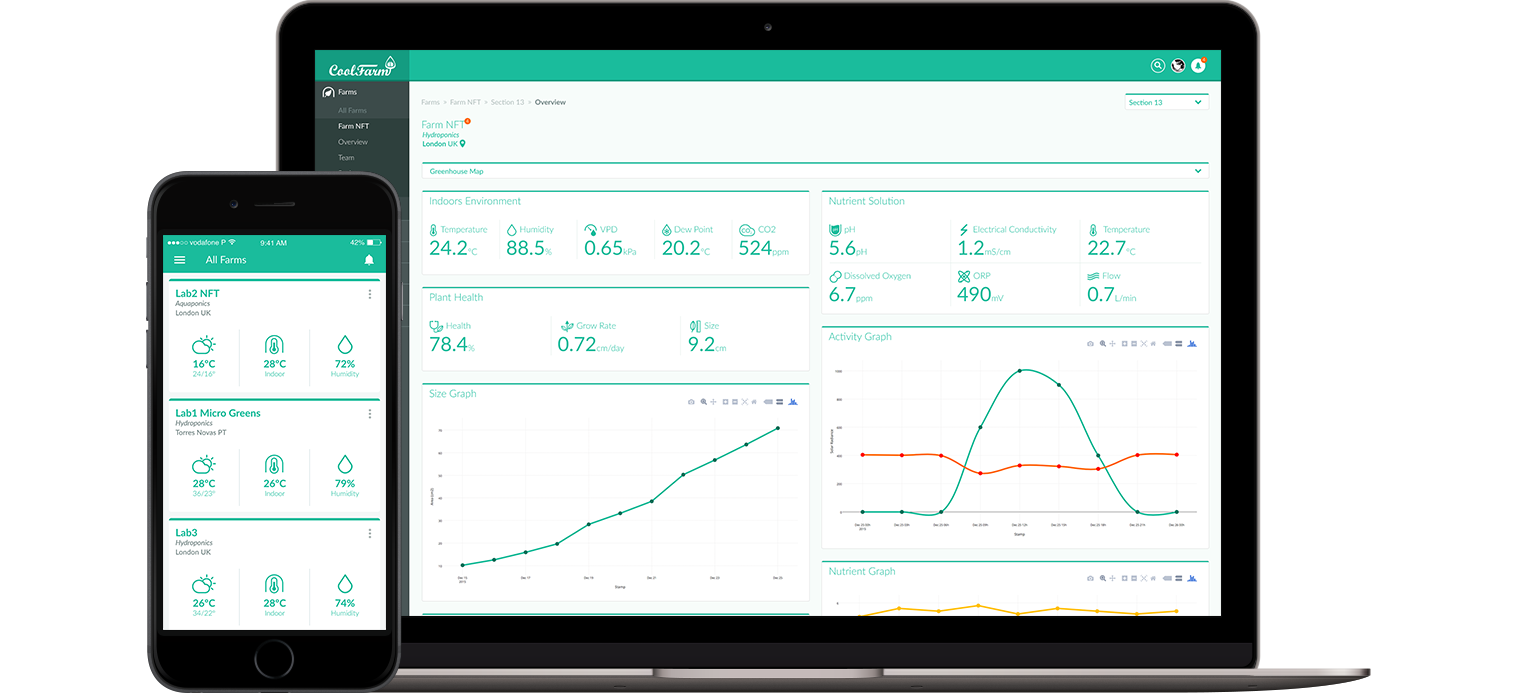
CoolFarm brings a disruptive technology that helps to solve this problem. No matter if we are talking about greenhouses or warehouses (urban farming, indoor farming inside the cities), crop production is optimized, resulting in more efficient management of human resources, maximum water, nutrients, acid, and energy savings. The technology combines artificial intelligence and machine learning, aiming at growing crops in the most efficient way, giving to them what they need and when they need it. All data is managed in the cloud and can be assessed online or offline, through mobile phones, tablets or laptops. For this CoolFarm also developed an innovative optical sensor called CoolFarm Eye that sees and feels the plants behaviors regarding all the actions that are being taken over the crops, allowing plant awareness.
COOLFARM SOLUTIONS
CoolFarm Eye
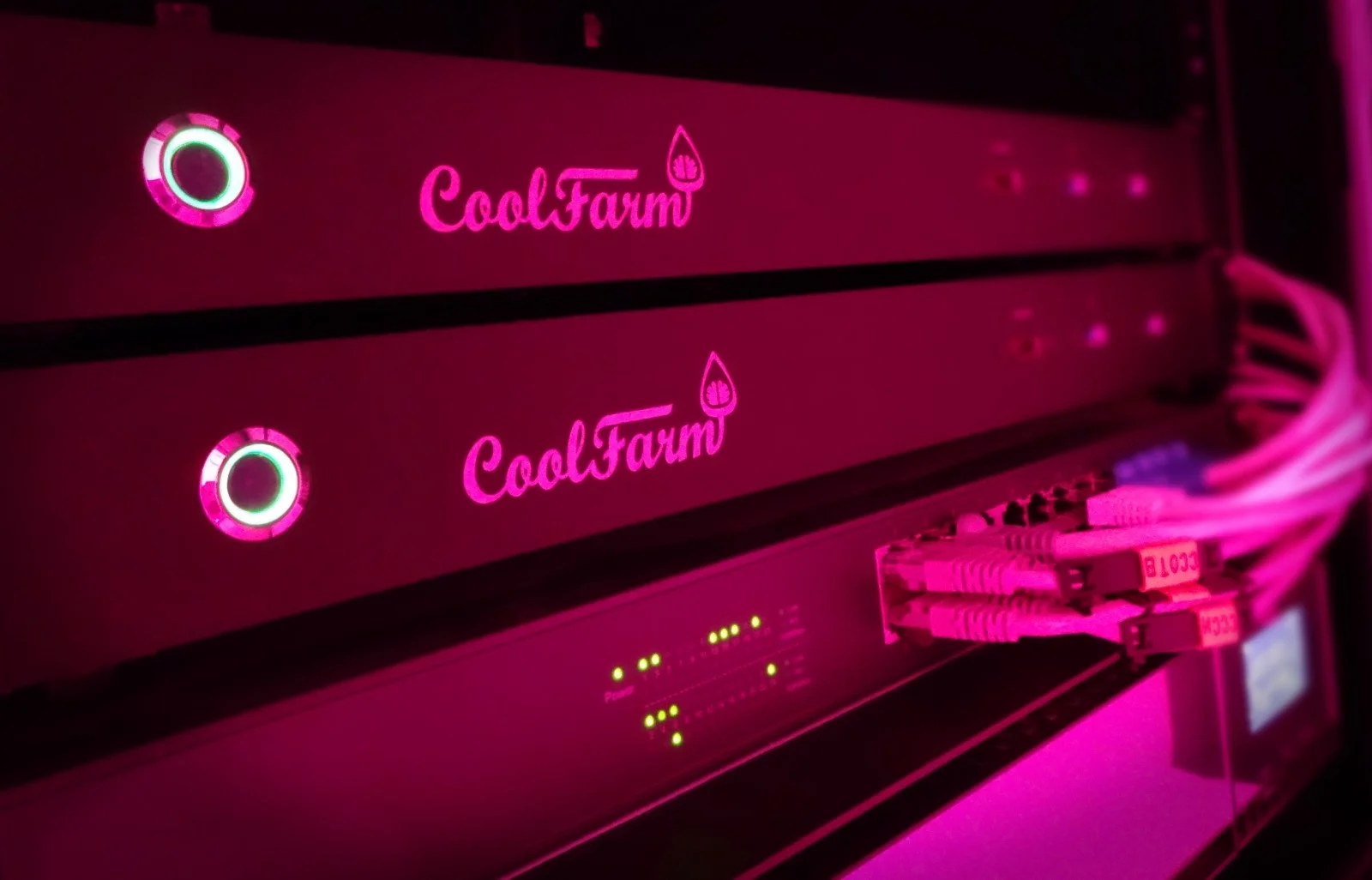
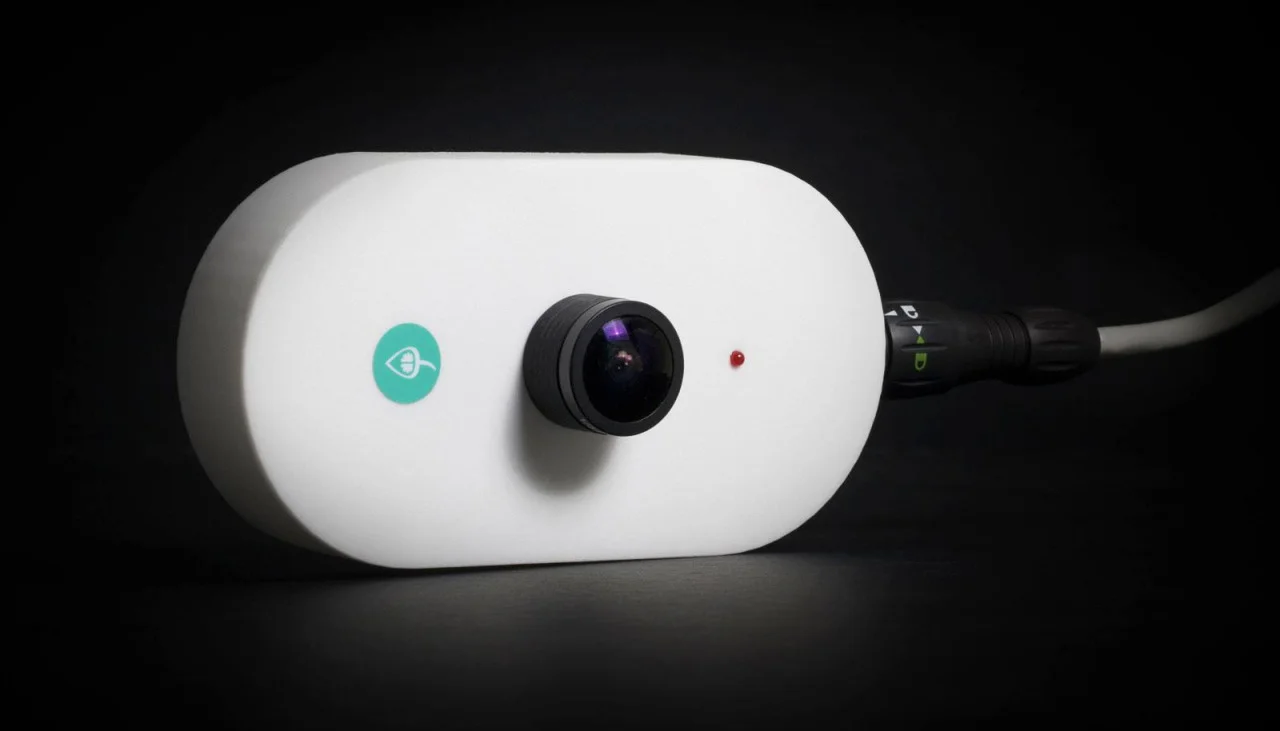
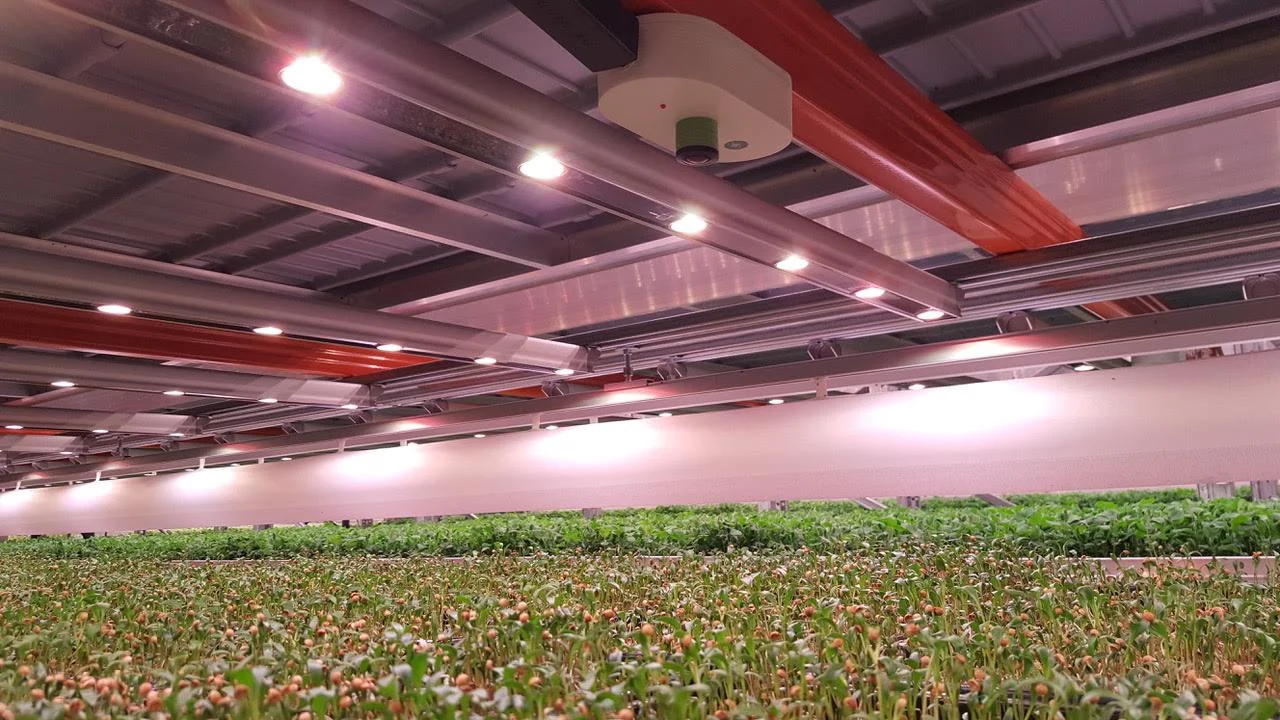
The Eye is a smart camera that uses NDVI (Normalized Difference Vegetation Index) technology combined with advanced computer vision algorithms to measure plant size (Leaf Area Index), growth rate and health index. All data is pushed to the cloud and displayed on your CoolFarm dashboard. It comes equipped with an anti-fog fisheye lens, allowing it to be installed in vertical farming warehouses or normal greenhouses. The Eye uses a single PoE (Power over Ethernet) connection for a cleaner installation, using a single cable for both power and communication. It is equipped with a Web server that allows an easy setup of the sensor, as well as direct access to all images used during the image processing algorithm (raw, LAI and NDVI), for an easier calibration process.
CoolFarm in/cloud
in/coud is made for growers that want to keep their current control systems but also want to manage their farms at once, anywhere and anytime, integrating all relevant data in a unique and easy to use dashboard. The software features are: recipes module to control any relevant variable such as the light cycle, water cycle, nutrients tanks, air specifications and water conditions; integrated data in real time; notifications; powerful analytics; activity log; complete administrative panel to create and manage all users and farms at once.
CoolFarm in/control
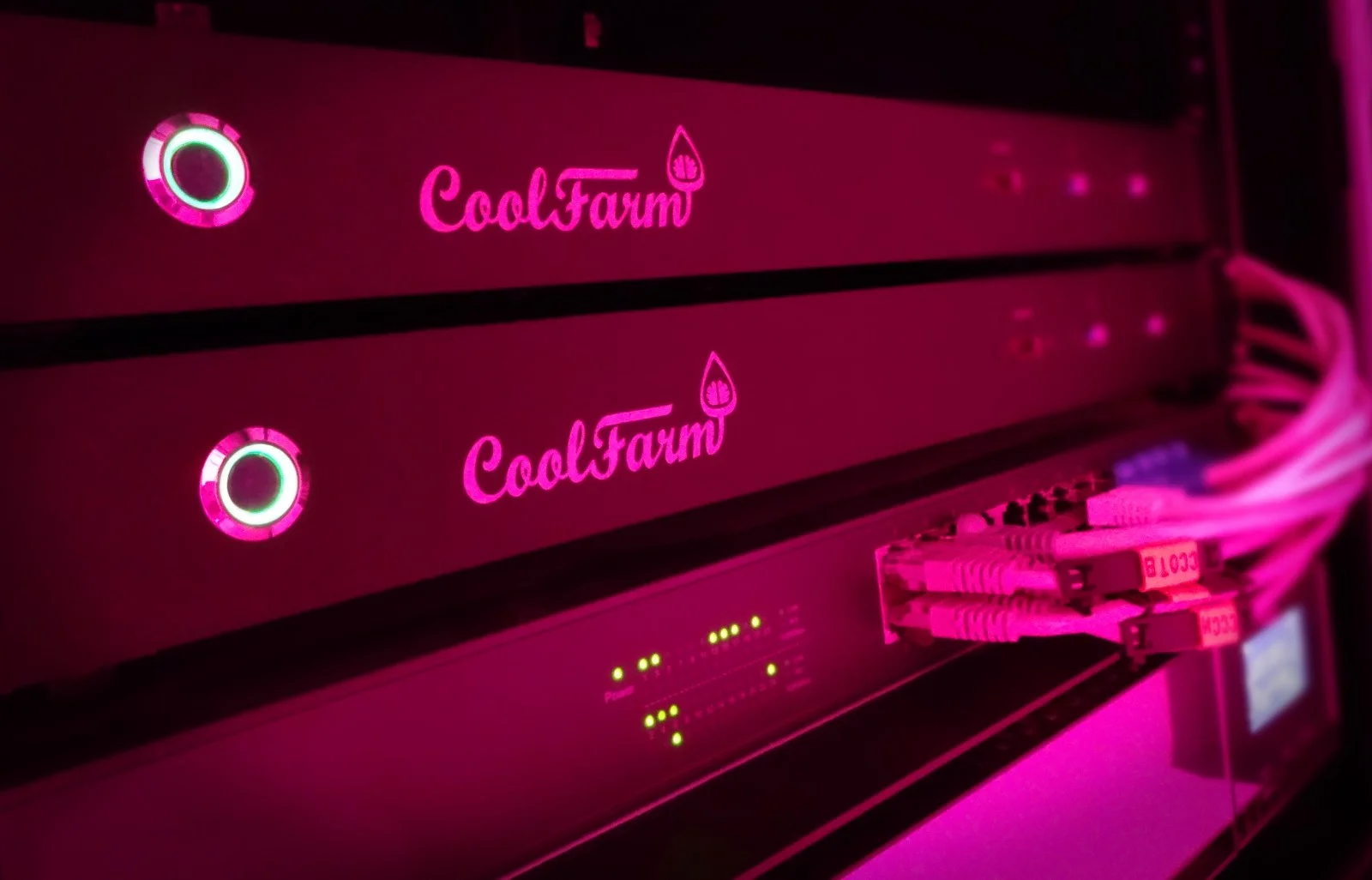
in/control is the all-in-one control system easily adapted to all indoor typologies and growing techniques. It ́s the most integrated, intuitive and intelligent control system available in the market. It includes all in/cloud features and all CoolFarm sensors: Air temperature, Humidity, and CO2; CoolFarm Eye; pH; EC; DO; ORP; Ammonia; Nitrate; Nitrite; Water Flow; Level Sensor and Pressure Sensor.
CoolFarm in/store
To be unveiled to the world in March 2017 at EuroShop (http://www.euroshop-tradefair.com/ ) retail trade fair, in/store is the ultimate turnkey solution to grow indoor! It is a closed climatized and vertical space that works with hydroponics, LED lights, growing beds managed by lifts (that work both vertically and horizontally) and with all CoolFarm Technology inside (meaning that it is intelligent and can be controlled remotely).
The goal is to bring fresh crops into different commercial places, close to people and all year round, with the capability to manage crops cycles in time, meaning more production, no costs in transportation, less environmental pollution and zero waste.
The system is built in a way that there is no need for the operator to enter inside the module to harvest or monitor the crops, since the machine provides to him what he needs and when he needs, eliminating all contamination risks.
If a client wants to grow a large scale production, the client just needs to buy several modules (flexible in height and width). The modules work together like a puzzle, meaning that the client just needs to have one unique feed of water and nutrients for all of them (for example).
It was designed not only to grow plants but also to germinate them.

Indoor Harvest Corp Announces Vertical Farm Development Financing Across North America
Indoor Harvest Corp Announces Vertical Farm Development Financing Across North America
January 10, 2017
Source: Indoor Harvest Corp
HOUSTON, Jan. 10, 2017 (GLOBE NEWSWIRE) -- Indoor Harvest Corp (OTCQB:INQD), through its brand name Indoor Harvest®, is a solutions provider to the vertical farming and indoor agriculture industry. Indoor Harvest is pleased to announce an alliance with OneWorld Business Finance through its division US Energy Capital (OneWorld) to assist with financing for its customers and projects. The new relationship will allow OneWorld to expand their business offering in this new and exciting industry and will allow clients expanded options for financing.
“After conducting a search for a company that combined the experience we were looking for with the flexibility our clients need, we chose OneWorld. A centrally planned indoor farm facility is a cost intensive project. This partnership gives the operators in the industry a strong option to reduce their initial costs and efficiently manage their cash flow while they focus on growing crops and revenue," stated John Choo, CEO of Indoor Harvest. "With the pedigree of US Energy Capital and OneWorld Business Finance, we are excited to bring their options to the Vertical Farming space across North America," further stated Mr. Choo.
“US Energy Capital, recently acquired by OneWorld Business Finance, has been offering attractive vendor finance programs for over 30 years,” stated Jim Borland, Team Leader of the US Energy Division. Jim also stated that they are now excited to work very closely with Indoor Harvest and their clients. “Attractive financing offered by US Energy Capital will make the acquisition of cultivation hardware and facility build outs through Indoor Harvest much easier and quicker.” US Energy Capital will be offering no payments during implementation and installation for qualified companies.
About Indoor Harvest Corp
Indoor Harvest Corp, through its brand name Indoor Harvest®, is a full service design-build engineering firm for the indoor agriculture industry. Providing production platforms and complete custom-designed build-outs for both greenhouse and building integrated agriculture (BIA) grows, tailored to the specific needs of virtually any plant crop, it leads development and implementation in this new and growing industry. Visit our website at http://www.indoorharvest.com for more information about our Company.
About OneWorld and US Energy Capital
OneWorld is an Austin, Texas-based independent business finance company founded in 1995 that provides various forms of commercial finance to companies throughout the United States. Although focused on equipment finance and working capital, OneWorld also works with service companies, manufacturers, healthcare providers and municipalities to help its customers plan for and acquire funding for capital acquisitions, refinancing and operational expansion. Its US Energy Capital division focuses on lighting, energy saving and production assets. More can be found at www.usenergycapital.com or www.oneworldbusinessfinance.com.
FORWARD LOOKING STATEMENTS
This release contains certain “forward-looking statements” relating to the business of Indoor Harvest and its subsidiary companies, which can be identified by the use of forward-looking terminology such as “estimates,” “believes,” “anticipates,” “intends,” "expects” and similar expressions. Such forward-looking statements involve known and unknown risks and uncertainties that may cause actual results to be materially different from those described herein as anticipated, believed, estimated or expected. Certain of these risks and uncertainties are or will be described in greater detail in our filings with the Securities and Exchange Commission. These forward-looking statements are based on Indoor Harvest’s current expectations and beliefs concerning future developments and their potential effects on Indoor Harvest. There can be no assurance that future developments affecting Indoor Harvest will be those anticipated by Indoor Harvest. These forward-looking statements involve a number of risks, uncertainties (some of which are beyond the control of the Company) or other assumptions that may cause actual results or performance to be materially different from those expressed or implied by such forward-looking statements. Indoor Harvest undertakes no obligation to publicly update or revise any forward-looking statements, whether as a result of new information, future events or otherwise, except as may be required under applicable securities laws.
Contacts:
Indoor Harvest Corp
CEO, Mr. John Choo
jchoo@indoorharvest.com
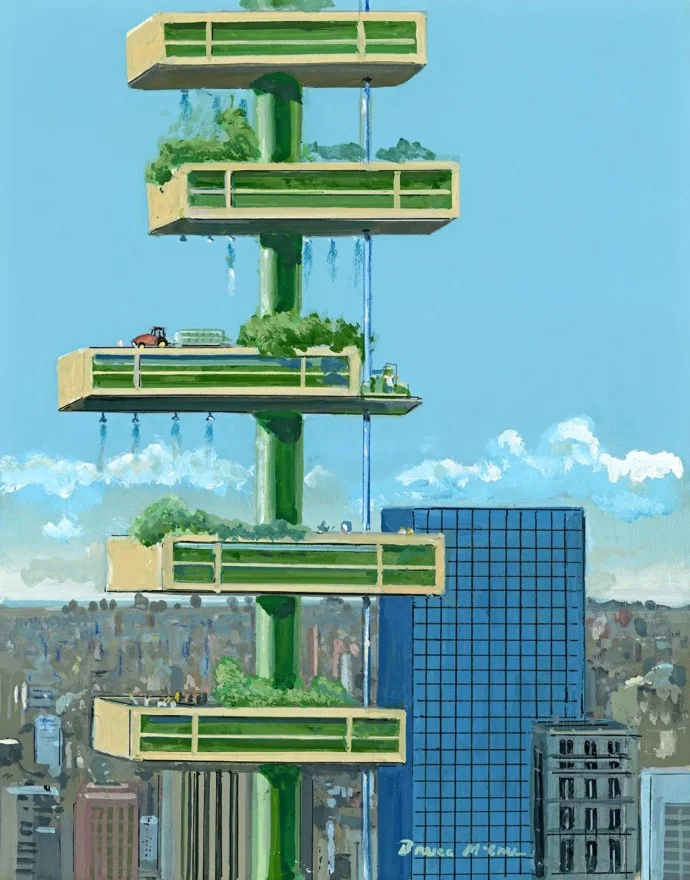
The VERTICAL FARM: Growing Crops in The City, Without Soil or Natural Light
Vertical farming can allow former cropland to go back to nature and reverse the plundering of the earth.Illustration
JANUARY 9, 2017 ISSUE
THE VERTICAL FARM
Growing crops in the city, without soil or natural light
By Ian Frazier
Vertical farming can allow former cropland to go back to nature and reverse the plundering of the earth.Illustration by Bruce McCall
No. 212 Rome Street, in Newark, New Jersey, used to be the address of Grammer, Dempsey & Hudson, a steel-supply company. It was like a lumberyard for steel, which it bought in bulk from distant mills and distributed in smaller amounts, mostly to customers within a hundred-mile radius of Newark. It sold off its assets in 2008 and later shut down. In 2015, a new indoor-agriculture company called AeroFarms leased the property. It had the rusting corrugated-steel exterior torn down and a new building erected on the old frame. Then it filled nearly seventy thousand square feet of floor space with what is called a vertical farm. The building’s ceiling allowed for grow tables to be stacked twelve layers tall, to a height of thirty-six feet, in rows eighty feet long. The vertical farm grows kale, bok choi, watercress, arugula, red-leaf lettuce, mizuna, and other baby salad greens.
Grammer, Dempsey & Hudson was founded in 1929. Its workers were members of the Teamsters Union, whose stance could be aggressive. Once, somebody fired shots into the company’s office, but didn’t hit anyone. Despite the union, the company and its employees got along amicably, and many of them worked there all their lives. Men moved steel plate and I-beams with cranes that ran on tracks in the floor. Trucks pulled up to the loading bays and loaded or unloaded, coming and going through the streets of Newark, past the scrap-metal yards and chemical plants and breweries. In an average year, Grammer, Dempsey & Hudson shipped about twenty thousand tons of steel. When the vertical farm is in full operation, as it expects to be soon, it hopes to ship, annually, more than a thousand tons of greens.
Ingrid Williams, AeroFarms’ director of human resources, lives in Orange but knows Newark well. She has degrees in labor studies and sociology from Rutgers, and she visited many of the city’s public-housing apartment buildings in her previous job as a social-services coördinator. She is a slim, widely smiling woman with shoulder-length dreads who dresses in Michelle Obama blues, blacks, and whites. For a while, she had her own show, “The Wow Mom Show,” on local-access TV. Through it she met many people, including a woman who is a financial expert and helps local residents with their budgets. The two became friends, and last year when this woman was giving a speech at a Newark nonprofit Williams showed up to support her.
One of the other speakers that day was David Rosenberg, the C.E.O. and co-founder of AeroFarms. “A light went on in my head when I heard AeroFarms,” Williams told me. “There’s an AeroFarms mini-farm growing salad greens in the cafeteria of my daughter’s school, Philip’s Academy Charter School, on Central Avenue. I volunteer there all the time as part of parents’ stewardship, and I know the kids love growing their own lettuce for the salad bar.” After the speeches, she stayed to congratulate her friend and also introduced herself to Rosenberg. He asked her if she was looking for a job. She started as H.R. director at AeroFarms nine days later.
The mini-farm in the cafeteria at Philip’s Academy is a significant piece of technology. In fact, it is a key to the story, and it figures in the larger picture of vertical farming worldwide and of indoor agriculture in general. If the current movement to grow more food locally, in urban settings, and by high-tech indoor methods follows the path that some predict for it, the mini-farm in the school cafeteria may one day have its own historical plaque.
The mini-farm’s inventor, Ed Harwood, of Ithaca, New York, sold it to the school in 2010. Harwood is a sixty-six-year-old man of medium stature who speaks with the kind of rural accent that sometimes drops the last letters of words. He has been an associate professor at Cornell’s famous school of agriculture, and he began his career as an inventor by coming up with revolutionary improvements in the computer management of dairy cows, an animal he loves. His joyous enthusiasm for what he does has an almost messianic quality.
After spending part of his youth and young adulthood working on his uncle’s dairy farm, he got degrees in microbiology, animal science, dairy science, and artificial intelligence, and applied his knowledge to the dairy industry. One of the first inventions he worked on was a method to determine when a cow is in estrus. Research showed that cows move around more when they’re ready to breed. Harwood helped develop a cow ankle bracelet that transmitted data on how active the cow was each day; the farmer could then consult the data on his computer and know when it was time for the artificial inseminator. To check the accuracy of the bracelet, Harwood spent days walking around the pasture beside a cow with his hand on her back while he counted her steps. He enjoyed the companionship during this rather tedious exercise in ground-truthing and thinks the cow did, too.
He first became interested in growing crops indoors in the two-thousand-aughts. Around 2003, his notebooks and diaries began to converge on ideas about how he could raise crops without soil, sunlight, or large amounts of water. That last goal pointed toward aeroponic farming, which provides water and nutrients to plants by the spraying of a mist, like the freshening automatic sprays over the vegetables in a grocery’s produce department. Aeroponic farming uses about seventy percent less water than hydroponic farming, which grows plants in water; hydroponic farming uses seventy percent less water than regular farming. If crops can be raised without soil and with a much-reduced weight of water, you can move their beds more easily and stack them high.
Harwood solved the problem of the crop-growing medium by substituting cloth for soil. He tried every type of cloth he could think of—“They got to know me well at the Jo-Ann Fabric store in Ithaca,” he said. Finally, he settled on an artificial fabric that he created himself out of fibres from recycled plastic water bottles, and he patented it. The fabric is a thin white fleece that holds the seeds as they germinate, then keeps the plants upright as they mature. The roots extend below the cloth, where they are available to the water-and-nutrients spray.
Devising a nozzle for the aeroponic sprayer proved a tougher problem. The knock-on aeroponics had always been that the nozzles clogged. How he solved this Harwood won’t say. He has no patent for his new nozzle. “It’s more of a stream than a spray,” he said, “but we’re keeping the design proprietary. I have no fear of anyone copying it. You could look at it all day and never figure out how it works.”
He rented an empty canoe factory in Ithaca and set up a two-level grow tower a hundred feet long and five feet wide to employ his new discoveries, along with a light system that eventually consisted of L.E.D. lights modified to his needs. He had decided to grow commercial crops and chose baby salad greens. “My ‘Aha’ moment came when I was in the Wegmans supermarket in Ithaca,” he said. “My engineer, Travis Martin, and I looked at the greens for sale and saw that a pound of lettuce cost one dollar, while a pound of baby greens cost eight dollars. That was enough of a premium that we figured I could make my system profitable with baby greens, so I started a company I called GreatVeggies, and soon I was selling baby greens in several supermarkets in Ithaca.”
When that didn’t bring in enough money, he shut the company down. His financial situation, never robust, then took an upturn when an investor offered funding on the condition that he concentrate on selling the grow towers themselves, rather than the greens. Switching to that business model, Harwood formed a new company called Aero Farm Systems. He leased a number of his grow towers and sold a few. One of them went to Jeddah, Saudi Arabia, and he has no idea what happened to it. Another went to Philip’s Academy, where it’s the mini-farm in the cafeteria. The new company did not earn much, either, but he kept it going in a smaller part of the canoe factory.
The term “vertical farming” has not been around long. It refers to a method of growing crops, usually without soil or natural light, in beds stacked vertically inside a controlled-environment building. The credit for coining the term seems to belong to Dickson D. Despommier, Ph.D., a professor (now emeritus) of parasitology and environmental science at Columbia University Medical School and the author of “The Vertical Farm: Feeding the World in the 21st Century.”
Hearing that Despommier would be addressing an audience of high-school science teachers at Columbia on a recent morning, I arranged to sit in. During the question period, one of the teachers asked a basic question that had also been puzzling me: What are the plants in a soil-free farm made of? Aren’t plants mostly the soil that they grew in? Despommier explained that plants consist of water, mineral nutrients like potassium and magnesium taken from the soil (or, in the case of a vertical farm, from the nutrients added to the water their roots are sprayed with), and carbon, an element plants get from the CO2 in the air and then convert by photosynthesis into sucrose, which feeds the plant, and cellulose, which provides its structure.
In other words, plants create themselves partly out of thin air. Salad greens are about ninety percent water. About half of the remaining ten percent is carbon. If AeroFarms’ vertical farm grows a thousand tons of greens a year, about fifty tons of that will be carbon taken from the air.
Despommier lives in Fort Lee, New Jersey, and not long after his lecture I visited him at his apartment, in a high-rise with a skyline view of New York. He is a cheerful, demonstrative man, seventy-six years old, with a short gray beard and a mobile face. The concept of vertical farming came from a class he taught in medical ecology, he said. “It was in 2000, and the students that year were bored with what I was teaching, so I asked them a question: ‘What will the world be like in 2050?’ and a followup, ‘What would you like the world to be like in 2050?’ They thought about this and decided that by 2050 the planet will be really crowded, with eight or nine billion people, and they wanted New York City to be able to feed its population entirely on crops grown within its own geographic limit.
“So they turned to the idea of rooftop gardening,” he continued. “They measured every square foot of rooftop space in the city—I admired how they went to the map room of the public library on Forty-second Street and found aerial surveys and got their rulers out—and then they calculated what the city’s population will be in 2050, and the amount of calories that many people will need, and what kind of crops can best provide those calories, and how much space will be necessary to grow those crops. Finally, they determined that by farming every square foot of rooftop space in the city you could provide enough calories to feed only about two per cent of the 2050 population of New York. They were terribly disappointed by this result.”
At the time, Despommier’s wife, Marlene, who is a hospital administrator, was working in midtown Manhattan. As the couple drove back and forth along the West Side Highway, Despommier considered the light-filled glass-and-steel structures, and that got him thinking about the thousands of abandoned buildings throughout the city. He began to wonder why plants couldn’t live on multiple levels, as human beings do. For his next year’s class, he carried over the previous year’s project, and this time had the students calculate what kind of structure a multilevel urban farm would need and how many people you could feed that way.
Despommier taught the class for nine more years, always asking his students to build on what previous classes had done. He began using the term “vertical farming” in the second year. For methods of indoor agriculture, he referred to technology pioneered by nasa and to the work that a scientist named Richard Stoner did decades ago on how to grow crops in non-Earth environments. By the class’s final year, Despommier and his students had determined that a complex of two hundred buildings, each twenty stories high and measuring eighty feet by fifty feet at its base, situated in some wide-open outlying spot—say, Floyd Bennett Field, the airport-turned-park on Jamaica Bay in Brooklyn—could grow enough vegetables and rice to feed everybody who will be living in New York City in the year 2050. These vertical farms could also provide medicinal plants, and all the herbs and spices required for five different traditional cuisines.
The possibilities that opened up put stars in his eyes. Agricultural runoff is the main cause of pollution in the oceans; vertical farms produce no runoff. Outdoor farming consumes seventy percent of the planet’s freshwater; a vertical farm uses only a small amount of water compared with a regular farm. All over the world, croplands have been degraded or are disappearing. Vertical farming can allow former cropland to go back to nature and reverse the plundering of the earth. Despommier began to give talks and get noticed. He became the original vertical-farming proselytizer. Maybe the world’s mood was somehow moving in that direction because ideas that he suggested other people soon created in reality.
“When my book came out, in 2010, there were no functioning vertical farms that I was aware of,” Despommier said. “By the time I published a revised edition, in 2011, vertical farms had been built in England, Holland, Japan, and Korea. Two more were in the planning stages in the U.S. I gave a talk in Korea in 2009, and they invited me back two years later. Fifty reporters were waiting for me. My hosts led me to a new building, where they had ‘Welcome Dr. Despommier’ in neon lights. I saw that, and I cried! The ideas that I had described in my ’09 talk they had used as the basis for building a prototype vertical farm, and here it was. When I’m lying in my coffin and they pull back the lid, the smile on my face will be from that day in Korea.”
Today in the U.S., vertical farms of various designs and sizes exist in Seattle, Detroit, Houston, Brooklyn, Queens, and near Chicago, among other places. AeroFarms is one of the largest. Usually, the main crop is baby salad greens, whose premium price, as Ed Harwood realized, makes the enterprise attractive. The willingness of a certain kind of customer to pay a lot for salad justifies the investment, and after the greens get the business up and running its technology will be adapted for other crops, eventually feeding the world or a major fraction of it. That is the vision.
AeroFarms occupies three other buildings in Newark aside from the main vertical farm, on Rome Street. At 400 Ferry Street, it has a thirty-thousand-square-foot space whose most recent previous use was as a paintball and laser-tag entertainment center called Inferno Limits. The graffiti-type spray-painted murals and stylized paintball splatters of that incarnation still cover the walls. AeroFarms’ headquarters—sometimes referred to as its “world headquarters”—are in this building, some of which is taken up by a multiple-row, eight-level vertical farm that glows and hums. Technicians in white coats who wear white sanitary mobcaps on their heads walk around quietly. Some of these workers are young guys who also have mobcaps on their beards. The salad greens, when you put on coat and mobcap yourself and get close enough to peer into the trays, stand in orderly ranks by the thousands, whole vast armies of little watercresses, arugulas, and kales waiting to be harvested and sold. For more than a year, all the company’s commercial greens came from this vertical farm.
Nobody in the building appears to have an actual office. Employees are distributed in more or less open spaces here and there. In a dim corner of the area with the vertical farm, where the fresh, florist-shop aroma of chlorophyll is strong, young graduates of prestigious colleges confab around laptop screens that show photos of currently germinating seeds and growing leaves. Folding tables burgeon with cables, clipboards, and fast-food impedimenta. David Rosenberg, the C.E.O., who hired Ingrid Williams last year, is the boss. This distinction is hard to notice because he looks more or less like anybody else.
I first met Rosenberg at an international conference on indoor agriculture held at a theatre in Manhattan. He wore dark jeans, a blue-and-white plaid shirt with the AeroFarms logo on the breast pocket, and running shoes. In past years, he used to fence competitively and win championships. He is forty-four, tall, and still fit, with close-shaved black hair and dark, soulful eyes. The quietness and patience with which he speaks can be disconcerting. He grew up in the Bronx, went to U.N.C. at Chapel Hill, and got an M.B.A. from Columbia in 2002. AeroFarms is not his first company. When his grandfather Michael Rhodes, a chemist, died, in 2002, a relative told Rosenberg about a molecule that his grandfather had created that could be used to make a weatherizing treatment for concrete. Rosenberg used his grandfather’s invention to start a business called Hycrete, which he later sold, though not for a sum so great that he has chosen to fund AeroFarms himself. In recent years, his new start-up has raised more than fifty million dollars in investment, about twice as much as has any other vertical farm, or indoor farm of any kind, in the U.S.
After Hycrete, he wanted to create a for-profit company that would do good for the environment and for society. With his fellow business-school alumnus and fellow-fencer Marc Oshima, he set about researching the latest indoor agricultural technology. When they learned about the work of Ed Harwood, they immediately got in touch with him. “David and Marc called me, and they kept calling back and asking better and better questions,” Harwood remembered. “They said they wanted their first farm and their world headquarters to be in Newark, and I told them, ‘I’ve got a grow tower in a school cafeteria in Newark!’ That’s when I knew this was going to work out.”
Rosenberg and Oshima had set up an indoor-agriculture company called Just Greens, which existed primarily in name. Harwood had the trademark on the name Aero Farm Systems. They proposed to him that the two companies merge and do business under the name of AeroFarms. Rosenberg would be the chief executive officer, Oshima the chief marketing officer, and Harwood the chief science officer. Like the original Aero Farms Systems, this company would base itself on Harwood’s patented cloth for growing the plants and on his nozzle for watering and feeding them. It would build the vertical-farm systems but not sell them, grow baby greens commercially, and scale the operation up gigantically. This change in fortunes left Harwood thunderstruck. “I couldn’t believe it,” he said. “How many inventors have inventions sitting around, waiting for a break, and then something like this happens?”
Most of America’s baby greens are grown in irrigated fields in the Salinas Valley, in California. During the winter months, some production moves to similar fields in Arizona or goes even farther south, into Mexico. If you look at the shelves of baby greens in a store, you may find plastic clamshells holding five ounces of greens for $3.99 (organicgirl, from Salinas), or for $3.29 (Earthbound Farm, from near Salinas), or for $2.99 (Fresh Attitude, from Quebec and Florida). Harwood’s magic number of eight dollars a pound would be on the cheap side today. Four dollars for five ounces comes to about thirteen dollars a pound.
AeroFarms supplies greens to the dining rooms at the Times, Goldman Sachs, and several other corporate accounts in New York. At the moment, the greens can be purchased retail only at two ShopRite supermarkets, one on Springfield Avenue in Newark and the other on Broad Street in Bloomfield. The AeroFarms clamshell package (clear plastic, No. 1 recyclable) appears to be the same size as its competition’s but it holds slightly less—4.5 ounces instead of five. It is priced at the highest end, at $3.99. The company plans to have its greens on the shelves soon at Whole Foods stores and Kings, also in the local area. Greens that come from California ride in trucks for days. The driving time from AeroFarms’ farm to the Newark ShopRite is about eleven minutes. The company’s bigger plan is to put similar vertical farms in metro areas all over the country and eventually around the world, so that its distribution will always be local, thereby saving transportation costs and fuel and riding the enthusiasm for the locally grown.
At the Bloomfield ShopRite, I watched a woman pick up a clamshell of AeroFarms arugula, look at it, and put it back. Then she picked up a clamshell of Fresh Attitude arugula and dropped it in her cart. I asked her if she knew that AeroFarms was grown in Newark. She said, “I thought it was only distributed from Newark.” I told her the arugula was indeed Newark-grown and explained about the vertical farm. She put the out-of-state arugula back, picked up the Newark arugula, and thanked me for telling her. I think AeroFarms does not play up Newark enough on the packaging. They should call their product Newark Greens.
The reason they don’t is probably the obvious one—the negative ideas that salad buyers may have about Newark, its poverty and history of environmental disaster, including the presence of Superfund toxic-waste sites contaminated by dioxins and pesticides. That’s not the aura you want for a healthy-greens company. AeroFarms chose Newark because of its convenient location and the relative cheapness of its real estate. City and state development agencies encouraged the decision, and the company has hired about sixty blue-collar workers from Newark, some of them from a program for past offenders. At least geographically, the company so far is exclusively a Newark production.
But in another sense it could be anywhere. The technology it uses derives partly from systems designed to grow crops on the moon. The interior space is its own sealed-off world; nothing inside the vertical-farm buildings is uncontrolled. Countless algorithm-driven computer commands combine to induce the greens to grow, night and day, so that a crop can go from seed to shoot to harvest in eighteen days. Every known influence on the plant’s wellbeing is measured, adjusted, remeasured. Tens of thousands of sensing devices monitor what’s going on. The ambient air is Newark’s, but filtered, ventilated, heated, and cooled. Like all air today, it has an average CO2 content of about four hundred parts per million (we exceeded the three-fifty-p.p.m. threshold a while ago), but an even higher content is better for the plants, so tanks of CO2 enrich the concentration inside the building to a thousand p.p.m.
The L.E.D. grow lights are in plastic tubing above each level of the grow tower. Their radiance has been stripped of the heat-producing part of the spectrum, the most expensive part of it from an energy point of view. The plants don’t need it, preferring cooler reds and blues. In row after row, the L.E.D.s shining these colors call to mind strings of Christmas lights. At different growth stages, the plants require light in different intensities, and algorithms controlling the L.E.D. arrays adjust for that.
In short, each plant grows at the pinnacle of a trembling heap of tightly focussed and hypersensitive data. The temperature, humidity, and CO2 content of the air; the nutrient solution, pH, and electro-conductivity of the water; the plant growth rate, the shape and size, and complexion of the leaves—all these factors and many others are tracked on a second-by-second basis. AeroFarms’ micro-, macro-, and molecular biologists and other plant scientists overseeing the operation receive alerts on their phones if anything goes awry. A few even have phone apps through which they can adjust the functioning of the vertical farm remotely.
Though many of the hundred-plus employees seem to be diffused throughout the enterprise and most vividly present in cyberspace, everybody gathers sometimes in the headquarters building for a buffet-style lunch, at which Rosenberg makes a short speech. Talking quietly, he repeats a theme: “To succeed, we need to be the best at four things. We need to be the best at plant biology, the best at maintaining our plants’ environment, the best at running our operational system, and the best at getting the farm to function well mechanically. We have to be the best total farmers. And to do all this we need the best data. If the data is not current and completely reliable, we will fail. We must always keep paying close attention to the data.”
Ed Harwood’s original prototype mini-farm, the one he sold to Philip’s Academy in 2010, still produces crops six or seven times every school year. The invention sits in a corner of the cafeteria by the round lunch tables and the molded black plastic cafeteria chairs, an improbable-looking teaching tool. Examining it, you feel a mystified wonder, and perhaps a slight misgiving about the inventor’s soundness of mind, remembering what happened to Wile E. Coyote. For concentrated ingenuity and handcrafted uniqueness, its closest simile, I think, is the Wright brothers’ first biplane, the Flyer, now on display in the National Air and Space Museum, in Washington. Like the Flyer, and like many other great inventions, Harwood’s prototype is also an objet d’art.
Its dimensions are five feet wide by twelve feet long by six and a half feet high. Essentially, it consists of two horizontal trays of thick plastic, both about ten inches deep, one above the other, suspended in a strong but minimal framework of aluminum. Below the trays, at floor level, a plastic tank holds two hundred and fifty gallons of water. Frames like those used for window screens fit on top of the plastic trays. Each frame holds a rectangle of Harwood’s grow cloth, about two and a half feet by five feet in size. The cloth is attached to the frame by snaps. On small pipes running along the inside bottom of the tray, Harwood’s special nozzles emit a constant, sputtering spray of water at a downward angle. The spray hits the bottom of the tray and bounces up, and some of it becomes the mist that nourishes the roots growing through the cloths. Eventually, most of the water drains down and returns to the tank to be reused.
Seeds speckle the white surface of the cloth. The L.E.D. lights above the trays shine on the seeds. They germinate, and soon the roots descend. Seedlings grow. In about three weeks, the plants are ready for harvesting. The trays are taken out and the leaves are cut off and given to the cafeteria staff, who put them in the salad bar. The cloths are scraped of residues, which are composted for the school’s rooftop garden, and then the cloths go into the washing machine to be laundered for reseeding.
Throughout the mini-farm, PVC pipes and wires run here and there, connecting to clamps and switches. The pumps hum, the water gurgles, and the whole thing makes the sound of a courtyard fountain.
The teacher who keeps all this machinery in good order is Catkin Flowers. That is her real given name. A tall auburn-haired woman in her forties, she starts her science students working with the farm when they’re in kindergarten. “We use the farm to teach chemistry, math, biology,” she explained to me one morning between classes. “The students learn with it all the way through eighth grade. I think the farm is the reason our science scores are so competitive in the state. We get the kids involved in running the grow cycles and then solving the problems that inevitably come up. That’s how kids really learn, not from sitting back and watching the grownups do everything.”
“We’re also teaching food literacy,” put in Frank Mentesana, the director of EcoSpaces, the school’s environmental-science program, who joined us. “Some of our kids have never seen vegetables growing. They may live in a part of the city that’s a food desert, and their families get food at McDonald’s or at bodegas. They may never have seen fresh greens in a store.”
“Kids love to grow things,” Flowers said. “It teaches them about nutrients, the minerals we put in the water, and why the water’s pH affects how the plants absorb them, and about the light spectrum, and how photosynthesis works. The kids monitor the same kind of data as AeroFarms does, but less of it, of course.”
“Ed Harwood is still a huge help,” Mentesana said. “If we have a problem with the farm that we can’t solve, Ed will make time to stop by and fix it.”
“When we’re ready to harvest, the kids can’t wait to eat what they’ve grown,” Flowers said. “They’ll start eating the plants while they’re harvesting, and we actually have to tell them to wait because these are for the salad bar. They want to find out how they taste. And they’re excited when the plants they’ve grown become part of a meal for the whole school. Because of this farm, our school’s consumption of leafy greens is probably not met by any other school in the country.”
On another morning, I stayed for lunch. First, Mentesana took me, along with Marion Nestle (not Nestlé; she’s no relation), the nutrition expert, and N.Y.U. professor, on a tour of the school. A Clinton campaign e-mail released by WikiLeaks the day before had referred to harassment of Nestle by the beverage industry because of her book “Big Soda: Taking on the Soda Industry (and Winning),” and she was in a great mood, proud to have been mentioned. Robert Wallauer, the school’s young chef, introduced himself. He has worked for famous restaurants but decided he could contribute more to the public good by running school kitchens. The entrée was a Chinese-style dish of pasta with chopped vegetables. I told him it was so delicious that if this were a restaurant I would come back and bring my friends.
Zara Hawkins, a fifth grader, stopped by our table. Her mother is Ingrid Williams, the H.R. director at AeroFarms. Zara has a quiet manner, and she sometimes looks thoughtfully into the near distance as she talks. She noted the greens we’d just been served, supplied by AeroFarms. “We eat a lot of this salad at home,” she said. “My mom brings the bags of lettuce from work. I didn’t use to like it, but now I do. I have the baby kales in omelettes, with cheese. You can also put them in smoothies. They are O.K. In fact, they can be pretty good.”
Wallauer got up and brought us back glasses of a kale-pineapple-and-yogurt smoothie whose color had the bright seaside green of a lime treat. “It takes a while for kids to start eating certain foods if they’re not used to them,” Wallauer said. “We made some of these smoothies yesterday, and we handed them out as dessert. One little girl took a sip and said it was pretty good. Then she took another and looked at me suspiciously and said, ‘Did you put salad in this?’ ”
A few weeks before the vertical farm at 212 Rome Street was to harvest its first official crop, I walked through the building with David Rosenberg. After the usual hand washing, putting on of mobcaps and coats, and wiping our feet on mats for disinfecting, we stepped into the high-ceilinged room where the vertical farm was humming away. If Harwood’s prototype at the school was the Wright brothers’ first biplane, this immense scaled-up elaboration of it was a spaceship in drydock.
I thought of the tenderness of the greens this device produces—a natural simplicity elicited mainly from water and air by high-tech artifice of the most complicated and concentrated kind. It seemed a long way to go for salad. But if it works, as it indeed appears to, who knows what might come of it when we’re nine billion humans on a baking, thirsting globe? Rosenberg and I stood looking at the vertical farm in silence. On his face was a mixture of pride and love; he might have been seven years old. “We are so far above everybody else in this technology,” he said, after a minute or two. “It will take years for the rest of the world to catch up to where we already are now.” ♦
Ian Frazier is a staff writer at The New Yorker.
This article appears in other versions of the January 9, 2017, issue, with the headline “High-Rise Greens.”
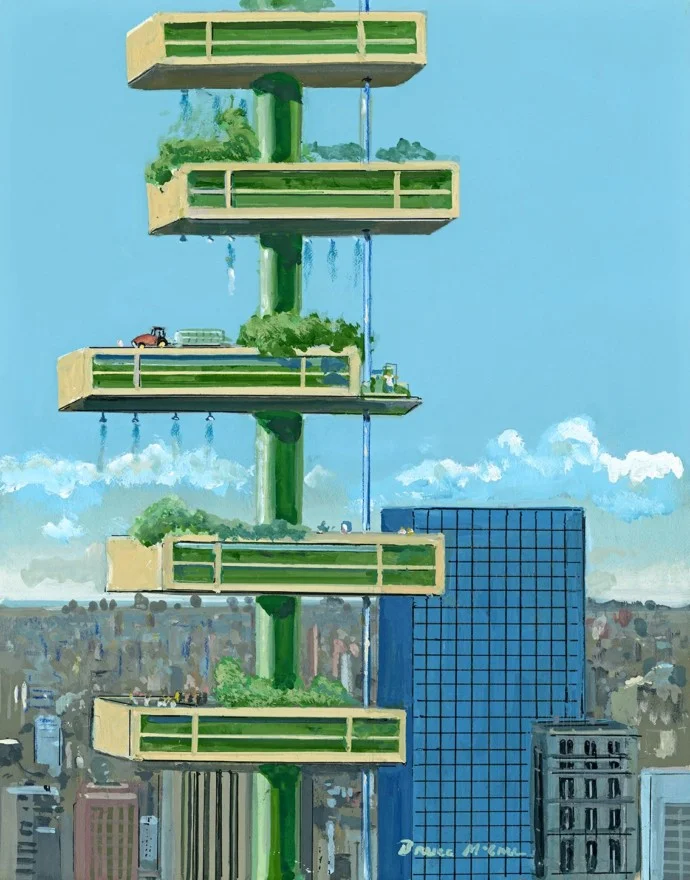
I Was Wrong About Vertical Farms; Aerofarms Shows How To Make Them Really Work
For a long time this TreeHugger was dismissive of vertical farms, agreeing with Adam Stein who wrote that "Using urban real estate in this manner is incredibly wasteful: bad for the economy and bad for the environment. Local food has its merits, but that's what New Jersey is for." As recently as a year ago I was calling them wrong on so many levels.
I Was Wrong About Vertical Farms; Aerofarms Shows How To Make Them Really Work
Lloyd Alter (@lloydalter)
Living / Green Food
January 9, 2017
For a long time this TreeHugger was dismissive of vertical farms, agreeing with Adam Stein who wrote that "Using urban real estate in this manner is incredibly wasteful: bad for the economy and bad for the environment. Local food has its merits, but that's what New Jersey is for." As recently as a year ago I was calling them wrong on so many levels.
I was wrong.
At the time, almost eight years ago, when we were dissing vertical farms, it was all about visions of new towers in the city, expensive purpose-built structures that I thought were "good drawings, lots of ideas and great fun" but unrealistic, like Vincent Callebaut's silly Farmscrapers. I was probably right about that, and Adam Stein was right about New Jersey.
The vertical farm that is changing the way we think about vertical farms is in fact in Newark, New Jersey, inside an existing old steel warehouse that has been converted rather than an expensive new facility. It's called Aerofarms, and Margaret wrote about it when it was proposed two years ago.
When TreeHugger friends Philip and Hank complained about the economics of vertical farms, they noted in EcoGeek:
A farmer can expect his land to be worth roughly $1 per square foot...if it's good, fertile land. The owner of a skyscraper, on the other hand, can expect to pay more than 200 times that per square foot of his building. And that's just the cost of construction. Factor in the costs of electricity to pump water throughout the thing and keep the plants bathed in artificial sunlight all day, and you've got an inefficient mess. Just looking at those numbers, you need two things to happen in order for vertical farms to make sense. You need the price of food to increase 100 fold over today's prices, and you need the productivity of vertical farms to increase 100 fold over traditional farms. Neither of those things will ever happen.
But if you read Ian Frazier's wonderful article in the New Yorker, The Vertical Farm, you find that they did actually solve most of those problems at Aerofarms. The cost of the real estate per square foot is irrelevant, because the plants are stacked in trays eight high.
They are set in a repurposed old building in a city that's very close to New York city but has relatively cheap industrial real estate.
Then there are the changes in technology. LED lighting has evolved to where they can tune the lighting to the exact colours that the plants need for photosynthesis, saving huge amounts of electricity and excess heat over the broad fluorescents and metal halide lights of a decade ago.
And water? Using technology developed by inventor Ed Harwood of Ithaca, New York, the plants are suspended in a fabric made from old pop bottles. Frazier writes:
The fabric is a thin white fleece that holds the seeds as they germinate, then keeps the plants upright as they mature. The roots extend below the cloth, where they are available to the water-and-nutrients spray.
The air in the building is rich in CO2, the lighting is just right, the nutrients are fed at just the right rate using seventy percent less water, and it is all carefully monitored by computers and technicians.
... each plant grows at the pinnacle of a trembling heap of tightly focussed and hypersensitive data. The temperature, humidity, and CO2 content of the air; the nutrient solution, pH, and electro-conductivity of the water; the plant growth rate, the shape and size and complexion of the leaves—all these factors and many others are tracked on a second-by-second basis. AeroFarms’ micro-, macro-, and molecular biologists and other plant scientists overseeing the operation receive alerts on their phones if anything goes awry. A few even have phone apps through which they can adjust the functioning of the vertical farm remotely.
Ten years ago, we showed visions of people in lab coats walking around plants in soil many storeys up in the air. The reality today is very different, using rehabilitated buildings, high density planting, almost no water and LED lighting. It makes so much more sense. Ian Frazier concludes:
I thought of the tenderness of the greens this device produces—a natural simplicity elicited mainly from water and air by high-tech artifice of the most complicated and concentrated kind. It seemed a long way to go for salad. But if it works, as it indeed appears to, who knows what might come of it when we’re nine billion humans on a baking, thirsting globe?
A decade ago we called them pie in the sky, and thought nothing would come of it. Today, I am not so sure. I think I have to eat my words, along with some Aerofarms baby greens the next time I am in New York.
Related on TreeHugger.com:
- Adam Stein on Vertical Farms: "Pie in the Sky"
- Do Vertical Farms Make Sense?
- Futurama Farming in New York
- Gordon Graff Demonstrates That Vertical Farms Can Actually Work
- Vertical farms: Wrong on so many levels
- Fix Our Horizontal Farms Before We Go Vertical
Tags: Food Miles | Food Security
The Great Indoors
The Great Indoors
You’ve heard of recipes for food, but have you heard of a grow recipe? That’s exactly what Philips Grow Wise is developing with partners such as Grow Up Urban Farms in London. Together they are pioneering city farming in the U.K.
By Pithrika Nair.
Any Smart City vision is incomplete without smart food. The current world population of 7.3 billion is projected to reach 9.7 billion in 2050. Of that population 7.7 billion (80 per cent) are expected to live in cities. The UN Food and Agriculture Organization (FAO) also estimates that farmers will have to produce 70 per cent more food by 2050 to meet the needs of these 9.7 billion. Notwithstanding the fact that the quantity of food produced isn’t a safeguard against world hunger (we currently produce enough food to feed the world’s population, but 795 million people still go hungry due to poverty), there is a pressing need to produce more food, with greater efficiency, and a lower carbon footprint.
A potential answer to the problem of food production is urban indoor agriculture, the growing of crops in a building within or near a city, using artificial light to stimulate photosynthesis. The controlled system helps growers reduce or eliminate pesticides and other chemicals, and its proximity to the end consumer ensures fresher produce with greatly reduced food miles. The quality of the solution is driven by how lighting, climate control, software controls, sensoring and logistics work together.
Kate Hofman and Tom Webster founded Grow Up Urban Farms in 2013 as London’s first commercial urban farm. Housed inside an industrial warehouse, the farm combines aquaculture (fish farming), with hydroponics, the practice of growing plants in a nutrient solution with no soil. This is a symbiotic system with one product, the fish, providing fertilizer for the second product, the plants.
With a year round growing season, the 6,000 sq. foot urban farm produces 20,000 kg of salad greens grown in vertically stacked trays under Philips LED lighting. Researchers at Philips GrowWise Center have developed precise ‘growth recipes’ for each product. Just like a cooking recipe, a growth recipe includes an ingredients list and a method, and Philips provides extensive support in both areas to ensure the end result meets the customers’ exact needs.
The ingredients list is the lighting system itself: the type and number of LEDs and where to place them to deliver the optimal lighting conditions and coverage for the plant type and greenhouse set-up, and the growth system.
The full package includes the technology hardware such as racks and automation and software like climate (temperature, humidity, CO2) as well as plant material, fertilizers and growth media. A ‘growth recipe’ helps farmers to optimise their farm systems for productivity.
According to Gus van der Feltz, director of City Farming at Philips, “Indoor growing systems based on LED lighting can maximise plant photosynthesis, for the most delicious and nutritious vegetables grown in a sustainable manner. Growing crops vertically makes it possible to pack more plants per acre, in a much faster way, than would be possible with a field farm, which means more harvests per year. With little waste, no agricultural run-off and more than 90 per cent reduction in the water used to grow clean and healthy food.”
This hyper-controlled growing environment enables better, faster, tastier, cleaner plants through light recipes, in clean air with no pesticides or crop protection.
At the Philips GrowWise research facility in Eindhoven, growers and plant specialists trial a variety of crops under different lighting and climate conditions for a variety of purposes.
“At Philips, we are teaming up with partners to bring this new innovation to the next level,” says Gus van der Feltz. “We are also looking forward to discovering what else can be achieved through this new form of high-tech horticulture. We have already seen that we can increase the amount of vitamin C in tomatoes, colour lettuce, and affect the taste and smell of basil through the smart use of LED light and growth recipes. And it’s possible to grow different varieties indoors. So we certainly have an interesting future ahead of us.”
Does this mean we’ve found the solution to the population-food-location quandary? Not yet. Although the potential unlocked by the LED technology is promising, urban indoor farming still faces several challenges before it starts producing significant, sustainable, and affordable food on a large scale.
A critic of indoor growing systems, Louis D. Albright, programme director of Controlled Environment Agriculture at Cornell University, estimates the high amount of energy required to provide 100 per cent of the light and heat needed doesn’t result in environmental benefits. He found one kilo of tomatoes farmed indoors produces 11-13 kg of CO2 (2-4 kg CO2 in production and 9kg of CO2 in lighting), while tomatoes farmed and transported from California to New York produced 0.6 kg of CO2 (0.3 Kg of CO2 in Production + 0.3 Kg of CO2 in Transport).
What if that energy came from renewable sources? Bruce Bugbee, director of the Plants, Soils & Climate department at Utah State University says, “If we’re going to use solar panels, we’d need 5.4 acres of solar panels to provide 1 acre of sunlight equivalent.”
Based on the current technology and energy options, it’s high end, expensive crops such as herbs and microgreens that offer the best business options for indoor farming. These are the limitations Jeremy Rifkin pointed out (in his presentation to the government of Catalunya), in attempting to plug smart city solutions into a fossil fuel infrastructure.
In an ideal future, a digitised internet of energy would be able to provide renewable energy at the price and efficiency needed to make indoor urban agriculture a viable production option.
The area where high efficiency agricultural LEDS such as those developed at Philips Grow Wise are able to have the most significant impact is as supplementary lighting in greenhouses.
Brookberries Venlo BV grows and supplies strawberries in Venlo, Netherlands. It previously used incandescent lamps to elongate the strawberry plant and encourage growth, but the sale of many types of incandescent lights was banned in the EU from 1 September 2012.
Owners Marcel Dings and Peter van den Eertwegh used the opportunity to trial different technology options, deciding finally to deploy the Philips GreenPower LED flowering lamp on their farms. This has resulted in a staggering 88 per cent reduction in their energy consumption as well as the ability to start harvesting earlier in the year (February and March, rather than in May).
Improved temperature control is also a big plus for Dutch tomato grower Jami. Its grow recipe combines overhead high-pressure sodium lamps with LED lamps hung among the crop to illuminate the lower parts of the plant. The LED lamps can be placed close to the plants without damaging them but also add a little bit of warmth – which the tomato plants thrive on.
Through the placement and monitoring of the LEDs the temperature in the greenhouse is carefully controlled, lengthening the growing season into an all year production. Jami has seen its energy bills fall by 10 per cent, while yields have risen by 35 per cent. Thus, although its energy consumption is high, urban agriculture also benefits greatly from increased control and efficiency.
Citizens within the smart city communities have the chance to gain an understanding and sense of connection with their food, as well as the chance to eat high quality products which have been naturally optimized through light control. Hofman from Grow Up Urban Farm says, “With the lighting we get really good color across the leaf, really good shape, and a really strong and solid product. Everything is delivered to local customers within 12 hours after harvest.”
Twelve hours from harvest to your plate in the heart of London is a significant step in the direction of smart, sustainable food.
If you enjoyed this, you might wish to look at the following:
Philips Lighting looks to the future
Future innovation has its roots in real life projects that are happening right now
smartcitiesworld.net/news/news/philips-lighting-looks-to-the-future-1129
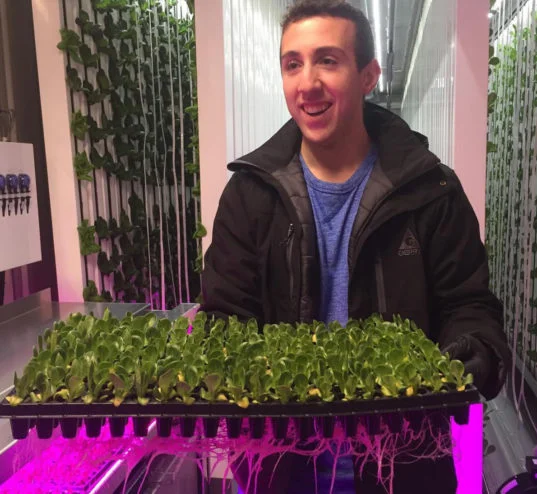
Kimbal Musk Just Launched A Revolutionary Shipping Container Farm Initiative In Brooklyn
"Square Roots is an interactive campus of sorts, where each entrepreneur accepted to the one-year program is able to leverage hands-on experience and receive guided mentorship in running a vertical farm and agriculture business"
Kimbal Musk Just Launched A Revolutionary Shipping Container Farm Initiative In Brooklyn
by Jennifer Lauren, 01/06/17
Near Jay Z’s childhood home and an old Pfizer factory, you will find a set of ten steel shipping containers. Inside those seemingly innocuous containers lies a lush urban farm. Launched by Tobias Peggs and Kimbal Musk, brother to Elon, the containers are part of a project called Square Roots, an urban farming incubator created to support emerging entrepreneurs as they develop their own vertical farm start-ups, which Musk hopes will create a food revolution.
Square Roots is an interactive campus of sorts, where each entrepreneur accepted to the one-year program is able to leverage hands-on experience and receive guided mentorship in running a vertical farm and agriculture business. Vertical farms are ideal for urban settings because they require less space, are able to grow soil-free crops indoors under LED lights and expend markedly less water than traditional outdoor farms. Each 320 square foot shipping container-turned-farm can yield crops that would be the equivalent of two acres of farmland. For all these reasons, exploring the potential of vertical farms is a priority for many –including Square Roots investors such as FoodTech Angels and the USDA.
RELATED: Wind-powered vertical Skyfarms are the future of sustainable agriculture
This November, 10 applicants were selected out of over 500 applications, each coming from different backgrounds and experience levels. While each entrepreneur will not only be able to access invaluable farming know-how and business expertise, the incubator also can serve as a testing ground for the future of vertical farms. For example, exploring how to utilize solar power rather than LED lights, which some say is a drain on electricity. Entrepreneurs received funding and loans from the USDA, Powerplant Ventures, GroundUp, Lightbank, and FoodTech Angels.
The endeavor is one of several of Kimbal Musk’s that are designed to shake up the way we grow and eat food. His other projects include The Kitchen and Next Door, both restaurants that serve dishes from local sources only, and the non-profit The Kitchen Community, which has installed “learning gardens” in over 300 schools. While Square Roots is currently only underway in Brooklyn, the founders aspire to bring the concept to more cities in the near future.
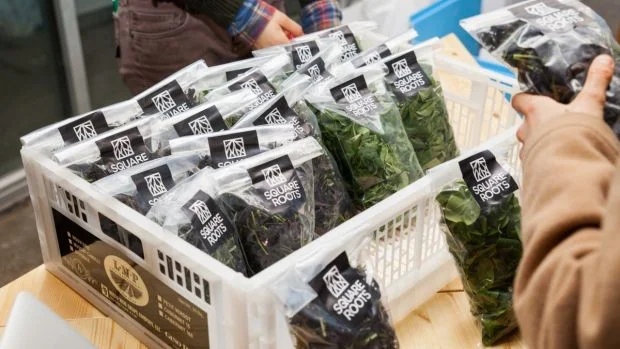
How Elon Musk's Brother Kimbal Musk is disrupting Farming With 'Food Revolution'
How Elon Musk's Brother Kimbal Musk is Disrupting Farming With 'Food Revolution'
Leanna Garfield and Sarah Jacobs
Kimbal Musk - the brother of Tesla Motors chief executive Elon Musk - is trying to change the way we eat by creating what he calls a "real food revolution".
For over a decade, he has run two restaurant chains, The Kitchen and Next Door, which serve dishes made strictly with locally sourced meat and veggies.
Samsung started off its CES event in Las Vegas with a mea culpa over its exploding Galaxy Note 7 smartphones.
In 2011, he started a non-profit program that has installed "Learning Gardens" in more than 300 schools, with the intention of teaching kids about agriculture.
His latest food venture delves into the world of local urban farming.
In early November, Musk and fellow entrepreneur Tobias Peggs launched Square Roots, an urban farming incubator program in Brooklyn, New York.
The setup consists of 10 steel shipping container farms where young entrepreneurs work to develop vertical farming startups.
Unlike traditional outdoor farms, vertical farms grow soil-free crops indoors and under LED lights.
Six weeks into the 12-month program, just after the entrepreneurs completed their first harvests, Business Insider got a tour of the farms.
They are vertical farms — everything grows inside 320-square-foot (30 sq m) steel shipping containers. Each container can produce about 50,000 mini-heads of lettuce a year.
- The United States Department of Agriculture (USDA) gave the Square Roots entrepreneurs small loans to cover preliminary operating expenses.
Other investors include Powerplant Ventures, GroundUp, Lightbank, and FoodTech Angels.
The Square Roots farms sit between an old Pfizer factory and the apartment building where rapper Jay-Z grew up in Brooklyn. Photo: Sarah Jacobs, Business Insider
On four parallel walls, leafy greens and herbs sprout from soil-free growing beds filled with nutrient-rich water. Instead of sunlight, they rely on hanging blue and pink LED rope lights.
About the size of the standard one-car garage, each shipping container can produce the same amount of crops as two acres of outdoor farmland.
Musk and Peggs chose Square Roots' first class of 10 young entrepreneurs from over 500 applications.
Peggs says they represent the next generation of farmers — though not all came to NYC with farming experience.
Another 27-year-old farmer, Electra Jarvis, comes to Square Roots three days per week. On Wednesdays, she spends four hours meticulously placing 800 seeds inside small troughs. Photo: Sarah Jacobs, Business Insider
Before Josh Aliber, 24, moved from Boston to Brooklyn to join Square Roots, he had never farmed. Now he's starting up his own specialty herb business and running a vertical farm.
Last year, while Aliber was recovering from a concussion, he learnt about urban farming from a podcast. He started researching it from his bed, and found out about the Square Roots program.
His shipping container farm runs on 10 gallons of recycled water a day, which is less than the average shower's worth.
Aliber can monitor everything from the oxygen level to the humidity — which affects the plants' taste and texture — using "the computer panel" near the door and sensors in the growing beds.
If he wants a tropical or northeastern climate, he can control that too.
Aliber is selling his specialty herbs and basil primarily to upscale Italian and pizza restaurants in NYC.
All the Square Roots farmers sold their first harvests at a recent local farmer's market. Through the program, he has had the opportunity to work with numerous mentors. Square Roots has 120 mentors so far.
"Yes, I have the ability to make money, but yes, I also have the ability to change the world," he says.
Another 27-year-old farmer, Electra Jarvis, comes to Square Roots three days a week.
On Wednesdays, she spends four hours meticulously placing 800 seeds inside small troughs.Two weeks later, she transplants them to the walls.
"We should be growing closer to us in cities," she says.
Aliber, Jarvis, and the other eight entrepreneurs are not just learning how to grow plants, but also how to grow their businesses. A large part of the program is learning about branding and "how to tell our stories", Jarvis says.
The larger goal of Square Roots, Musk tells Business Insider, is to create "a real food revolution".
In the late 1990s, following the tech boom, the Musk brothers moved from South Africa to Silicon Valley. They invested in X.com, which later merged with PayPal and was acquired by eBay.
Kimbal Musk has known Peggs, who previously worked on tech start-ups sold to Walmart and Adobe, for a decade.
Before Square Roots, they worked together at The Kitchen, where Peggs served as the "President of Impact" and helped expand the chain to new cities.
When asked how his experience in tech translates to running a vertical farming accelerator, Peggs says the two fields share the same motivation.
"You learn how to execute impossible dreams. This was all just a Powerpoint presentation six months ago," says Peggs, pointing to the farms behind him.
"Today's consumer wants to know they are supporting companies that are doing something good for the world," Peggs says. "This not just a Brooklyn foodie trend."
The world's largest vertical farm, Aerofarms, launched this year in Newark, New Jersey. In late 2015, urban farming company Gotham Greens opened the world's largest rooftop farm in Chicago.
Square Roots hopes to expand to 20 cities by 2020.
Vertical farms can grow all year, using significantly less water and space than outdoor farms.
Critics of vertical farms point out that the LEDs drain a lot of electricity. Peggs says Square Roots is exploring how the farmers can switch to solar power in the future, since electricity is the biggest cost for the farms.
Square Roots' lights are only on in the evening and night, so they don't run 24-7 like some other vertical farms.
Square Roots will build offices inside the Pfizer factory in the coming months. In its past life, the building produced ammonia, a chemical that's sprayed on plants and became vital to the industrial food system after WWI.
In 2017 and beyond, sustainable food start-ups will do business there. "It's an act of poetic justice," Peggs says.
This story first appeared in Business Insider. Read it here or follow BusinessInsider Australia on Facebook.
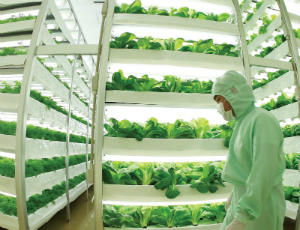
Agricultural Revolution 2.0
"A revolution in food has begun unlike any since the development of agriculture"
AGRICULTURAL REVOLUTION 2.0
How everything you eat is about to change forever. Say goodbye to farmers and ranchers!
By Marshall Connolly (CALIFORNIA NETWORK)
1/6/2017
A revolution in food has begun unlike any since the development of agriculture.
When You Can Farm Indoors, Who Needs Sunlight Or Soil?
In about a decade or so, your food is going to be a lot different. For the first time since humans began farming and ranching, the way we grow and produce food is about the change --dramatically. Farmers and ranchers, your days are numbered.
Vertical farms already exist on small scale, but their popularity is catching on and rapid expansion and development is expected within the next decade.
LOS ANGELES, CA (California Network) -- Around 10,000 B.C., our ancestors changed the way they ate and thereby changed the world. Before that time, our ancestors were forced to hunt and gather for their food. This meant people lived in small wandering bands, probably not exceeding 200 people. Their only job was to find their next meal, a laborious process that often required lengthy periods of walking and running.
Around 10,000 B.C., our ancestors figured out they could domesticate animals and crops. They learned how to plant and harvest. These advancements were so incredible, historians dubbed the change the "Neolithic Revolution."
It changed everything. With the need to chase their next meal eliminated, humans were able to settle down and build villages, towns and eventually cities. Labor was divided among the people, religion flourished and bureaucracy developed.
For 12,000 years or more, this is the way the world has worked, thanks entirely to farming and ranching. Even today, wars are fought over control of lands that produce food. Much of the land area on our planet is dedicated to growing food.
But all this is about to change again, right before your eyes.
In the next decade, what you eat will change. The first change has already arrived, vertical farming.
Farming is about to move from rural farms to tall factories called vertical farms. These factories are not run by farmers, but by industrialists who grow greens instead of forge steel. Tall racks, several stories high, are filled with soil, or a soil substitute, planted and watered. The racks rotate, and a new crop is harvested every day. This means produce will be grown year-round, under controlled conditions, using a minimum of resources. This will reduce food costs by improving efficiency and increasing supply.
At the same time farming moves indoors, so too will ranching. In fact, ranching will undergo the greatest change as we move from growing live animals to simply growing their meat in an industrial setting.
Scientists have developed what is called "cultured meat." Cultured meat is real meat, grown from stem cells of an actual animal, in a laboratory. The meat is real, but it is grown outside of a living animal, probably in a special tray or vat. At present, the process is difficult and expensive but it's developing. Hamburger patties and meatballs have already been grown, cooked and tsted. There are problems with flavor and texture, but these will be overcome.
Several startups as well as Tyson Foods have started to pour money into the development of this new source of protein.
The cost savings are huge. If meat can be grown in a factory, ranchers will not need millions of acres of land. A lot less water can be used. Feed will not be needed, although a synthetic replacement will be required.
As an added benefit, the meat can be genetically altered to govern its characteristics, such as fat content. It also eliminates the need for additives such as antibiotics and other drugs often administered to ranched animals. The cost of cultured meat will be far below the cost of ranch-raised meats, and ranched meat will become an expensive delicacy.
The third and final major change in our food supply will be the development and use of genetically modified organisms, often referred to as GMOs. While GMOs have been the subject of controversy, they are here to stay. Most of our foods are already genetically modified. As food production moves from the farm to the factory, and genetic modification becomes easier, its use will expand. Like it or not, the food of the near future will not be like the food of the recent past.
The timeline for these changes is very short. Vertical farms are already in use and should catch on quickly. GMOs are already in widespread use. And cultured meats are between five years to a decade away, and it may take 20 years before the product is perfected and becomes competitive with ranched meats. But the incentive to make the change is massive, so investment and development are accelerating.
Perhaps the greatest question of all is how will consumers feel about these changes? Vertically farmed vegetables are already being consumed without complaint. GMOs are also widely consumed although there is some pushback from consumers who fear they are unsafe. Such controversy will probably persist, but the new foods will enter the market anyway. The greatest hurdle is faced by cultured meats, which will be faced with skepticism by consumers who might not trust meat grown in a lab. However, competitive pricing, marketing, and time will ensure cultured meats become the norm of the future.
Today, we look at 10,000 B.C. as a time of dramatic change for humanity. It now appears that the early 21st century will be seen in much the same way.
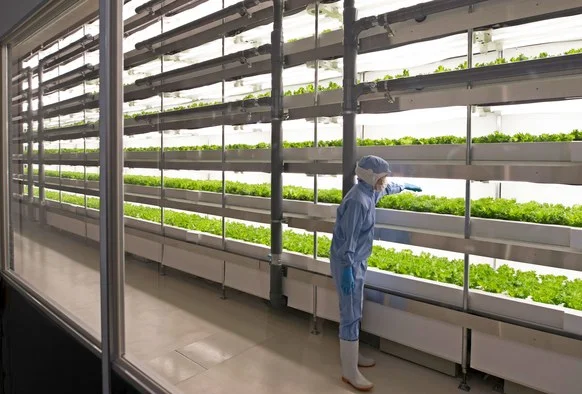
The Rise of the Vertical Indoor Farm
The New Yorker’s Ian Frazier with a very interesting look at the folks who are growing crops in the city: The Vertical Farm.
The Rise of the Vertical Indoor Farm
A Green Thumb (drive)
“The technology it uses derives partly from systems designed to grow crops on the moon. The interior space is its own sealed-off world … Countless algorithm-driven computer commands combine to induce the greens to grow, night and day, so that a crop can go from seed to shoot to harvest in eighteen days. Every known influence on the plant’s wellbeing is measured, adjusted, remeasured. Tens of thousands of sensing devices monitor what’s going on.” Welcome to what could be the future of the world’s produce supply. And unlike today’s messy farms, it won’t require soil, sunlight, or nearly as much water. (Add in a couple quarts of coffee, and that’s basically the environment in which NextDraft grows.) The New Yorker’s Ian Frazier with a very interesting look at the folks who are growing crops in the city: The Vertical Farm.
+ If you can raise crops indoors in the city, then you can go fishing in a barn in Iowa. From MoJo: A Fish Out of Water. Can farmers in Iowa help save the world’s seafood supply?
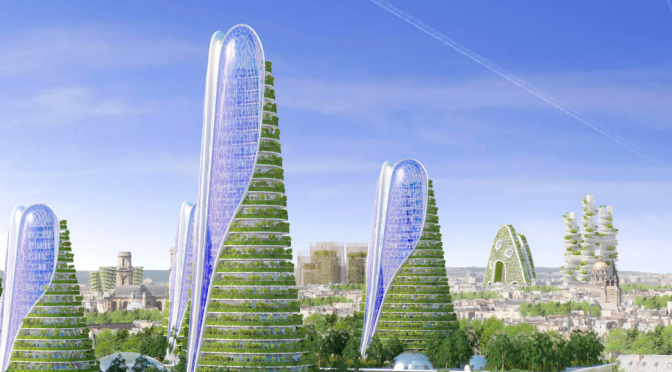
Vertical Farms: Smart Food Solutions
“Agricultural runoff is the main cause of pollution in the oceans; vertical farms produce no runoff"
Vertical Farms: Smart Food Solutions
Posted on January 6, 2017 by Danielle Park
Great article in The New Yorker January 9 issue on Vertical Farming and innovators in Newark who are growing fresh vegetables with a fraction of the water, no soil or chemicals, nor cross-country transport.
This is the ‘buy local’ movement personified and it is perfectly timed to meet our simultaneous needs for plentiful, fresh, healthy food and a sustainable environment. See: The Vertical Farm, growing crops in the city, without soil or natural light:
“Agricultural runoff is the main cause of pollution in the oceans; vertical farms produce no runoff. Outdoor farming consumes seventy per cent of the planet’s freshwater; a vertical farm uses only a small amount of water compared with a regular farm. All over the world, croplands have been degraded or are disappearing. Vertical farming can allow former cropland to go back to nature and reverse the plundering of the earth…
Today in the U.S., vertical farms of various designs and sizes exist in Seattle, Detroit, Houston, Brooklyn, Queens, and near Chicago, among other places. AeroFarms is one of the largest. Usually the main crop is baby salad greens, whose premium price, as Ed Harwood realized, makes the enterprise attractive. The willingness of a certain kind of customer to pay a lot for salad justifies the investment, and after the greens get the business up and running its technology will be adapted for other crops, eventually feeding the world or a major fraction of it. That is the vision.”