


Welcome to iGrow News, Your Source for the World of Indoor Vertical Farming
More Urban Farms Sprouting With USDA's Help
More Urban Farms Sprouting With USDA's Help
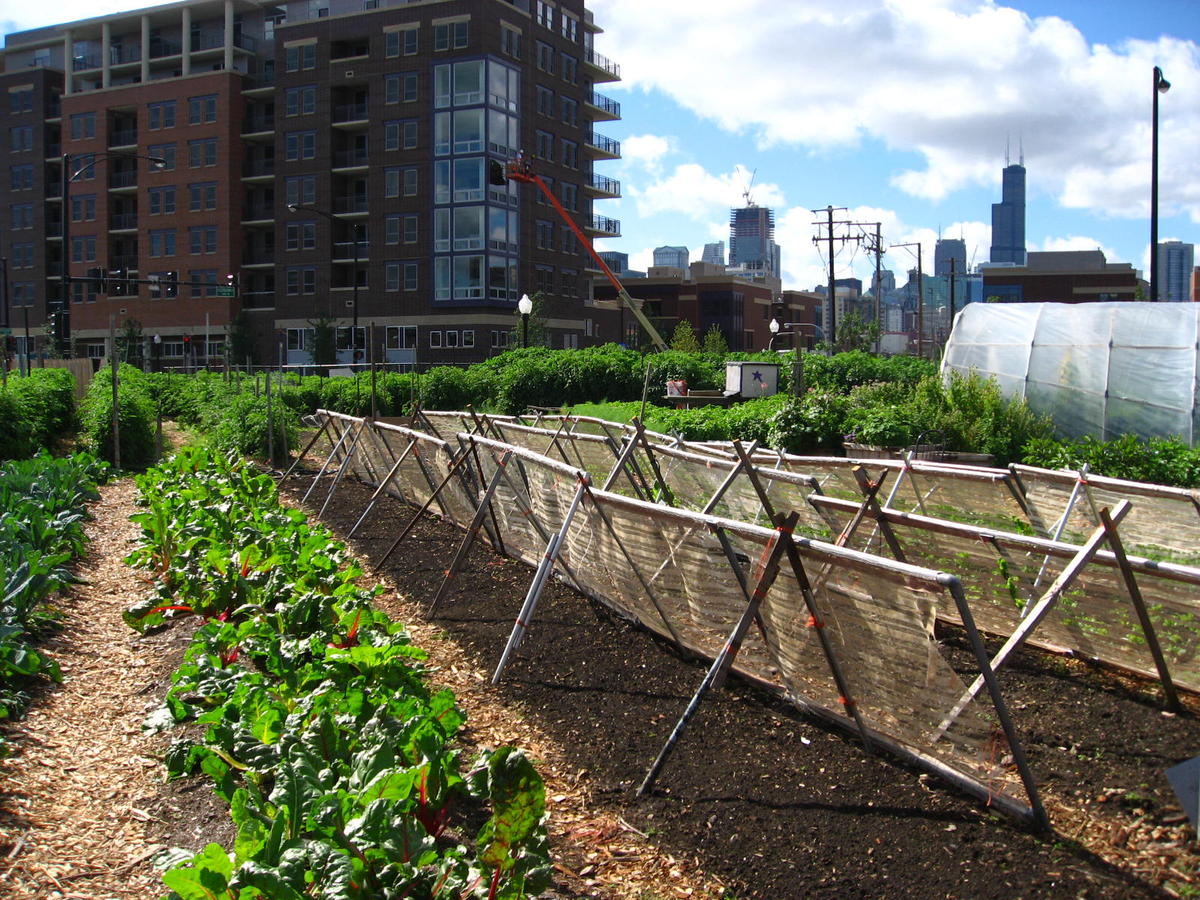
Farming, a largely rural activity, is moving to the cities, as urban farms continue to grow with help from the federal government.
As Business Insider reports, the U.S. Department of Agriculture each year provides millions of dollars to rural farmers, but the same is starting to be said for urban farms.
According to greensgrow.org, urban farming is just what it sounds like – growing or producing food in a city or heavily populated town or municipality.
In 2016, the USDA funded a dozen urban farms and in 2017, even more money is expected to go toward rooftop farms, greenhouses and warehouses in urban settings.
One of the USDA’s programs geared specifically for urban farming is the Microloan program, which offers funding up to $50,000. Since 2013, 23,000 loans worth $518 million have been awarded through the program. About 70 percent have gone to urban farmers.
The USDA also published an “Urban Agriculture Toolkit” this year that is full of advice about how to launch a greenhouse or rooftop farm, and tips about how to apply for loans.
While most USDA grants and loans go to rural farms, but is making efforts at giving urban farmers equal opportunities and recently set up an office in New York City – a departure from the norm, as most of the USDA’s 2,200 offices are in rural states like Missouri, Texas and Iowa.
These initiatives, as Business Insider reports, underscore a growing movement within the USDA to support local food systems and look beyond rural agriculture.
Urban farmers provide a way to meet a growing need for a growing global population.
In 2016, Business Insider reports, Aerofarms was launched inside a 70,000-square-foot warehouse in Newark, New Jersey, making it the largest vertical farm. In 2015, Gotham Greens, the world’s largest rooftop farm, was started in Chicag

No Sunlight, No Soil, No Problem: Vertical Farms Take Growing Indoors
No Sunlight, No Soil, No Problem: Vertical Farms Take Growing Indoors
New Jersey company seeks to build world's largest vertical farm inside old steel mill near the airport
By Steven D'Souza, CBC News
Posted: Dec 28, 2016 5:00 AM ET
Steven D'Souza
CBC News New York
Steven D'Souza is a Gemini-nominated journalist based in New York City. He has reported internationally from the papal conclave in Rome and the World Cup in Brazil, and he spent eight years in Toronto covering stories like the G20 protests and the Rob Ford crack video scandal.
Related Stories
- Food of the future: Bugs, seaweed and vertical farms
- St. Stephen possible home for country's largest aquaponics vertical farm
- Farming in the city: aquaponics farm comes to Montreal
- Stuck-in-the-mud Koreans help Manitoba First Nation grow fresh veggies
- Innovator wants to test fish aquaponics facility in Yukon
Inside a windowless warehouse once used for paintball, with planes heading to nearby Newark airport overhead, an industrial park in New Jersey seems an unlikely place to find fresh locally grown produce.
With LED lights standing in for the sun, and cloth replacing soil, the plants grown at AeroFarms are not your typical greens.
"This is fully controlled agriculture and allows us to understand plant biology in ways that, as humans, we've never achieved," said AeroFarms CEO and co-founder David Rosenberg, standing in front of rows of kale, arugula, lettuce and other leafy greens.
This is a vertical farm — a facility that looks like it jumped off the page of a science-fiction novel instead of an agriculture textbook.
Here seeds are woven into a mesh cloth made of recycled materials. Trays of plants are stacked one on top of the other in long rows. LED lamps provide the light, while water and nutrients are sprayed in a mist to the roots as they dangle below — a process called aeroponics.
"We give the plants what they want, when they want it, how they want it," Rosenberg said.
World's largest vertical farm
The company is currently building what's been described as the world's largest industrial vertical farm, with food grown 12 levels high inside a two-million-square-foot space, which the company says will produce two million pounds of food a year. It's set to open next year.
An AeroFarms' worker waters seeds freshly planted in a special cloth used to grow the plants. In vertical farming, the cloth replaces traditional soil and LED lights replace sunlight. (CBC News)
The pitch is enticing: locally grown food in any climate, year-round. In AeroFarms' case, they say they use 95 per cent less water, no pesticides and don't produce any of the waste that comes with industrial agriculture.
"We can take the exact same seeds that are out in the field that may take 30 to 45 days to grow, [and] we can grow it in 12 to 16 days by creating the perfect environment," said Marc Oshima, AeroFarms' chief marketing officer.
Problems with power
Indoor farming isn't a new concept. Farms across Canada are attempting similar concepts, trying to extend growing seasons and bringing fresher produce to colder climates.
But critics like Bruce Bugbee, a professor of crop physiology at Utah State University, say using artificial light to replace sunlight is still the biggest problem.
"I know how much electricity goes into the electric lights," he said, adding the cost doesn't include carbon emissions created from generating the power.
Then there's the problem of the light quality.
"To me, sunlight is still the gold standard for nutritional quality and they're aspiring to get it as good as the crops grown in sunlight," Bugbee said.
Big-ticket investors
Rosenberg says the company is using energy-efficient lighting and only grows the most cost-effective vegetables, focusing on micro-greens, instead of other vegetables like tomatoes, cucumbers or other larger produce.
Their efforts have won the support of big-name investors, like Goldman Sachs and Prudential, which have provided funding for the more than $30 million US project. One estimate projects that the vertical farming industry will grow to be worth as much as $6 billion US by 2022.
With computer models, data points and mechanical engineers working beside plant scientists and crop physiologists, Oshima says the operation is less farm, more tech startup.
"We like to think of ourselves as the Apple of farming, so the growing towers are really the hardware, the growing recipes for each of the variety is really the software."
A matter of taste
Another knock against indoor and vertical farms is the question of taste. Can plants grown in unnatural environments replicate the taste and texture of outdoor- and soil-grown plants?
To answer that, the company invited Marion Nestle — a professor of nutrition, food studies and public health at New York University — to tour their facility. Nestle was a skeptic.
"I rolled my eyes," she said, describing the initial invitation. "Why are we doing this when you can grow vegetables really beautifully in soil? What's the problem all of this technology is trying to solve?"
AeroFarms says it treats its plants with specific types of light, which allows for more efficient photosynthesis. But critics say the excessive use of electricity makes the operation less green than it appears. (Steven D'Souza/CBC News)
But Nestle says she's now a convert, after tasting samples of the produce AeroFarms sells to local grocery stores, making it available to nearby schools and the community.
"They taste a lot better than the microgreens we get in New York that have sometimes been on the road for a week."
Whether AeroFarms' crops are as nutritious as traditional produce, Nestle can't say; the nutrients the company feeds its plants is a closely kept secret.
While AeroFarms pitches its methods as a way to disrupt traditional farming, save water and provide access to fresh produce in urban areas underserved by grocery stores, Bugbee says vertical farming — and the more expensive produce it grows — won't solve the world's food problems.
"It will provide terrific food for people that can afford it, but they shouldn't be saying they'll save the planet."
Concrete Farms
Concrete Farms
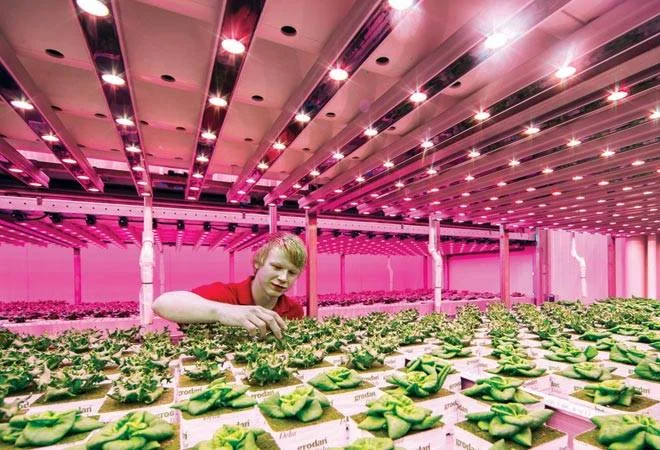
What if you could pluck lettuce, cucumber and tomato from the rooftop farm in your residential building to prepare a salad that is fresh and pesticide free? And that, too, from plants grown without the use of soil?
Well, it could be a common sight in the near future. The Food and Agriculture Organization (FAO) of the United Nations estimates that by 2050, agriculture production must increase by 70 per cent to feed the ever-increasing population. India will be one of the world's top food importers if we do not try out every futuristic technology that can increase productivity by using less water and less or no soil, apart from reducing health risks to near zero.
Rising demand for fresh and pesticide-free horticultural produce for perennially-swelling urban population all over the world is resulting in the introduction of new farming techniques. These include soil-less techniques such as Hydroponics, Aeroponics and Aquaponics that will redefine commercial agriculture.
Vijay S Yelmalle, who runs a Mumbai-based start-up, Center for Research in Alternative Farming Technologies, says as greenhouse technology has had limited success in India, farming without soil is the best way to use our fast-expanding urban spaces. The best part is that mass adoption of this new technology is easier than we think
Soil plays a key role in growth of plants. It supports the plant, provides it nutrients, and holds moisture, organic matter and bacteria. Well-ploughed land means good oxygen circulation to the root zone. The new techniques provide all these things to the plants without using soil as the medium.
The word Hydroponics is derived from two Greek words, 'Hydro' (water) and 'Ponics' (to labour); so, it means putting water to work. In this, the roots of the plant are either submerged in water or in sterile and inert material. The nutrient salts are provided by dissolving them in the water. These salts are natural substances purified by fractional crystallisation, making them technically inorganic. There are different methods that suit specific plant varieties. While Nutrient Film Technology and Deep Water Culture are commonly used for green vegetables, Substrate-Based Hydroponics is often deployed to grow vines of tomato, cucumber, etc.
Commercial Hydroponics farms are usually set up over more than one hectare for optimum use of resources. The Hydroponics technology ensures consistent taste, shape and colour of the produce. The yield is high and predictable and free from soil-borne diseases. Besides, unlike the traditional open farms, commercial soil-less farms are immune from environmental changes. They also use almost 90 per cent less water. Further advancements in artificial lighting, ways to provide nutrients, pest management and building the systems vertically could multiply the yield of Hydroponics farms to tens of times the traditional farming yield.
In Aeroponics, plant roots are suspended in the air, and moisture and nutrients are provided through foggers. This provides most oxygen to the roots, making the plants grow faster and produce more. Aquaponics, on the other hand, involves replacement of nutrient salts with water from aquaculture, a method of growing a lot of fish in a small area. In other words, it finds a solution to the biggest challenge of aquaculture - the generation of ammonia from fish excreta, whose high concentration can be toxic - by allowing bacteria strains to convert ammonia into nitrites (also toxic to the fish) and to nitrates (less toxic to the fish). Nitrates, a major nutrient for the plants, are taken up by the plant roots. The water so cleaned is used for aquaculture.
Vertical/Urban Farming
Vertical farms are located in the centre of cities where space is available at a premium. These are built over a smaller carpet area but designed to grow vegetables in multiple layers. These farms generally employ the Aeroponics technique but Hydroponics and Aquaponics are used as well. Reduction in carbon footprint (vegetables are transported over hundreds of kilometres, adding carbon to the environment), conservation of water (sometimes condensed water from air-conditioning units is used), freshness/safety of the produce, and premium prices are the common considerations behind vertical farming. Worldwide many enthusiasts and agripreneurs are running successful vertical farms with more and more innovative ideas. There is no limit to these farms. They can go as high as you can pump water and access the place, either yourself or through a robot. The Association for Vertical Farming (AVF), an international NGO, is working with many farms to spread the technology. From Middle East to South-East Asia to Japan to USA to Europe, commercial soilless farms are producing quality and insecticide- and chemical-free produce. South Asia, however, has been slow in adopting these new technologies.
Scenario in India
India's protected cultivation (soil-based greenhouse) farming has had limited success due to wrong adaption of technology. Soilless farming being more advanced, most investors are reluctant to try it at a commercial scale. A few successful greenhouse farmers are trying the substrate-based Hydroponics to grow tomato, capsicum and cucumber and becoming successful. The major hurdle in the success of soil-based greenhouse farming, and even in soilless farming, is experience, knowledge and skills. But the scenario is changing fast. Under the initiative of the government of India, universities have started skill-based degree programmes for urban and rural youths. One such course, a degree in Greenhouse Management, is being offered by Ramnarain Ruia College in the heart of Mumbai. Much of the workforce trained in greenhouses is ready to venture into commercial soilless farms. Many agriculturists who are looking after huge commercial soilless farms are also ready to relocate to India if appropriate opportunity is provided

In Kakaako, A Growing Urban Farm Reaches New Heights
"Between the high rise buildings and industrial warehouses, a farm is the last thing you’d expect to find in urban Kaka‘ako. But one business is creating a space for growing food in an unexpected"
In Kakaako, A Growing Urban Farm Reaches New Heights
Between the high rise buildings and industrial warehouses, a farm is the last thing you’d expect to find in urban Kaka‘ako. But one business is creating a space for growing food in an unexpected
From the outside, this looks like just another building in Honolulu’s developing neighborhood of Kaka‘ako. But step inside a door on the second floor and you’re greeted with stacks of red and green lettuce glowing under rows of LED lights. This is Hawai‘i’s first indoor vertical farm.
“This is an ice plant, or crystal lettuce,” said Kerry Kakazu, the owner and operator of MetroGrow Hawai‘i. “It gives a little bit of a salty taste, nice as a garnish with poke or oysters.”
His love of technology and plants led him to research the growing field of vertical farming.
“Vertical farming just means it’s grown indoors and in multiple levels,” said Kakazu. “People have done vertical farming that’s soil based, but most of it is hydroponics.”
Kakazu uses a method he calls aeroponics, where the roots are suspended in air and bathed in a nutrient-rich mist, instead of soaking in water or planted in soil. This environment gives Kakazu more control of his crops. And since it’s indoors, he doesn’t have to worry about weather, pests and other agricultural challenges.
“This shows that you can do this kind of farming,” he said. “I don’t know if this would ever be enough to supply a large amount of food, like a more traditional farm. But for specialty crops or to grow things that are hard to grow outdoors, I think this is an ideal setup.”
Kakazu started MetroGrow Hawai‘i in 2014. He produces about 100 heads of lettuce a week and a couple dozen containers of microgreens. His clients range from high end restaurants in Chinatown to an herbology store that buys medicinal plants grown by Kakazu.
He’s looking to expand out of his 800 square foot space, but has run into challenge other urban dwellers are familiar with: high rents.
“That’s the one thing with urban food. There’s so much competition for the space, so costs can be high,” Kakazu explained. “Whether it can continue to survive this way, or if it has to be subsidized, somebody’s going to have to want food grown in the urban core. So we’ll have to see.”
Kakazu said eventually he’d like to be able to grow enough produce to feed the flow of residents who are moving into his neighborhood.
Space Age Farm: Chef Grows Hydroponic Greens In Upcycled Shipping Container In Bonner, Montana
Space Age Farm: Chef Grows Hydroponic Greens In Bonner, Montana
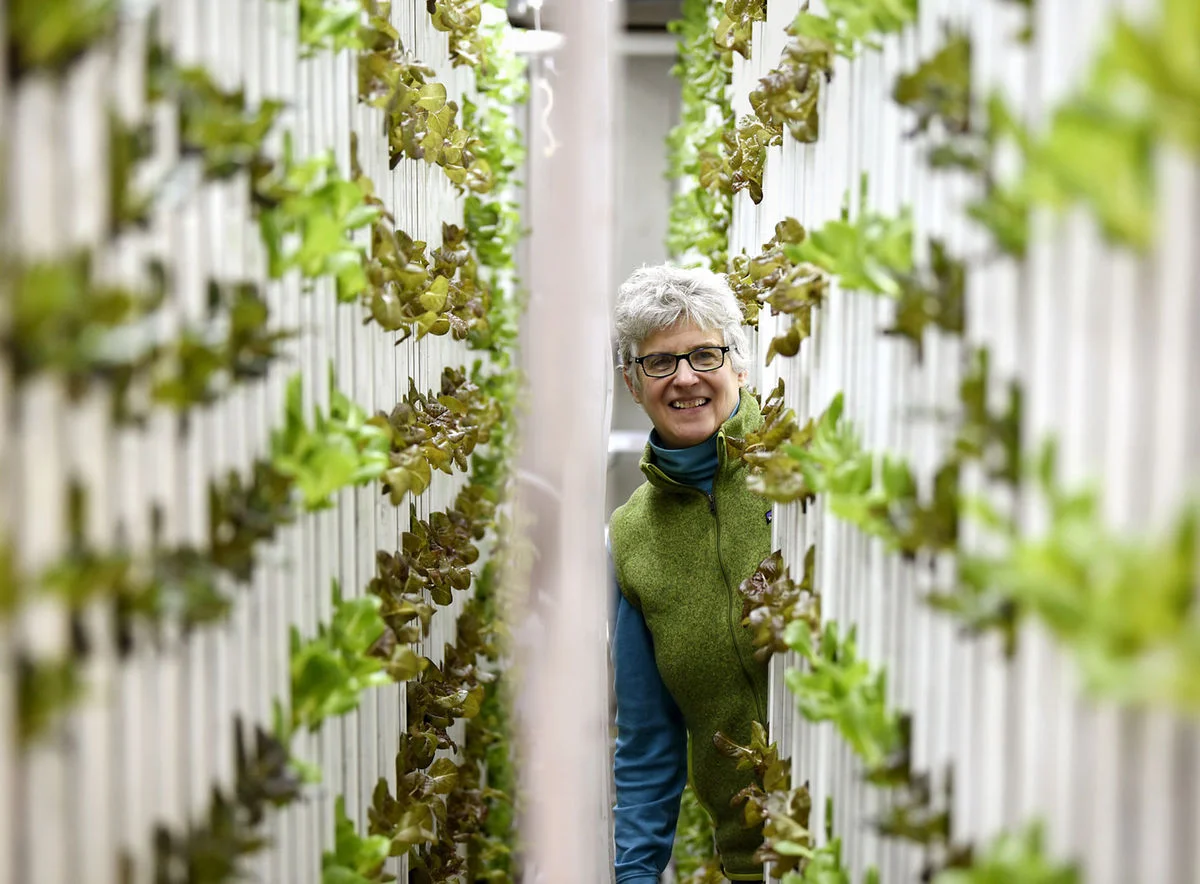
Jennifer Stackpole’s indoor farm looks like something out of a sci-fi movie.
Using a pre-assembled hydroponic vertical growing system inside a converted freight container at the Bonner mill site, Stackpole is growing tender crisp greens for local restaurants, stores and markets even as the temperature dips well below freezing throughout the dark Montana winter months.
Requiring only 10 gallons of water a day, red and blue LED lights, and a complex nutrient delivery and cooling system, Stackpole can produce the same amount of lettuce, kale, wasabi arugula and other leafy greens that ordinarily would take up two acres of farmland.
There is no need for soil, as each seed is inserted into a pre-made plug. Once they sprout, they're put into 256 hanging towers where nutrients and water drip down into a growing medium made from recycled polyethylene terephthalate (PET) bottles.
Stackpole calls her startup Wicked Good Greens, and she plans to purchase a second upcycled shipping container farm – nicknamed the Leafy Green Machine – from the same company where she got her first one, Freight Farms out of Boston. She paid to have it shipped here, but all it needs is to be hooked up to electricity and a garden hose, and she can grow more than 5,000 heads of lettuce at one time.
She also will be able to supply restaurants with a huge array of specialty herbs and crops such as tatsoi, basil, short French radishes and edible flowers.
“You’ve never seen anything like it,” Stackpole says as she demonstrates how she works the computer console that controls everything. “This is space age stuff.”
Because the air temperature and nutrients are regulated, and the plants get an even amount of light for 18 hours a day, the greens grow incredibly fast and without flaws.
“There’s no stress to the plants at all,” she said. “There’s no bugs or weather issues that affect most things that grow in the dirt. It produces these big, beautiful heads of lettuce. Everything’s dialed in.”
As a chef herself who operates Balsamroot Catering Co., Stackpole said that she understands what kitchen managers want. The unblemished greens don’t have to be heavily cleaned or processed, and there’s no brown spots or ridges. That saves time in the kitchen. As more and more customers demand farm-to-table, locally sourced food options, Stackpole is betting on an eager market.
“So we don’t have to eat stuff from Mexico or California that’s been sprayed and gassed and is all withered by the time it gets here,” she said. “When the chef receives these greens, they’ll still be alive so they have a very long shelf life, over two weeks. Timing can be everything to a chef because freshness delivers flavor, texture and aesthetics.” She said they will also appreciate the predictability and variety that her operation will offer.
Stackpole lives in Potomac and once ran the kitchen at the Montana Island Lodge on Salmon Lake. She took a two-day course in Boston to learn how to operate the machine.
There’s a constant workflow process she goes through to keep things moving so that the Leafy Green Machine is constantly producing. Certified organic seeds are planted in the seedling bay using tweezers and a chef’s funnel. After a week on the germination shelf, they get moved to the seedling trough for two weeks until being transferred to the towers for harvest.
A new crop will be ready each week, and she already has a list of customers lined up. Stackpole admits that many people ask her if the machine would be good for growing another type of green – marijuana – but she says that plant doesn’t grow well vertically and she’s not interested.

The US Government Is Loaning Millions Of Dollars To Jumpstart Urban Farming
The US Government Is Loaning Millions Of Dollars To Jumpstart Urban Farming
Electra Jarvis, a 27-year-old urban farming entrepreneur who is part of the Square Roots program in Brooklyn, New York. Mary Wetherill
Every year, the US Department of Agriculture devotes millions of dollars to farmers in rural areas.
The government is increasingly starting to offer assistance to urban farms, too.
In 2016, the USDA funded a dozen urban farms, the highest number in history, Val Dolicini, the administrator for the USDA Farm Services Agency, tells Business Insider.
In 2017, he expects the USDA to funnel even more money toward farms on rooftops, in greenhouses, and in warehouses.
USDA Microloans, a program that offers funding up to $50,000, is specifically geared toward urban farmers. Established in 2013, the program has awarded 23,000 loans worth $518 million to farms in California, Connecticut, and Massachusetts. Though it is open to all farmers, urban farmers often apply for it because it offers the money on a smaller scale than other programs. Seventy percent (or about 16,100 of those loans) have gone to new farmers, many of them in cities.
"Urban farmers are not looking to form 10,000 acres in Missouri, but perhaps in an indoor container on a parking lot next to old factory," Dolcini says.
In 2016, nine young farmers participating in a vertical farming accelerator program called Square Roots, founded by entrepreneurs Kimbal Musk (Elon's brother) and Tobias Peggs, became the first urban farmers to receive microloans in New York.
Farmers selected for Square Roots grow their crops inside climate-controlled, LED-lit shipping containers. The Square Roots farmers used their loans to cover the costs of seeds and operating expenses before their first harvests, Peggs says.
Entrepreneur Tobias Peggs outside Square Roots, a vertical farming startup accelerator in Brooklyn, New York.Sarah Jacobs
Peggs and Musk worked with the USDA to streamline the 2016 microloan application, which will make it even easier for urban farmers to gain funding in the future.
Dolcini says the agency wants to take advantage of people's experiences in other fields, or those who might be making an industry change (One of the Square Roots farmers used to be an accountant, and others are recent university graduates). The program also now allows grantees to use the loan for non-traditional farm equipment (think LEDs instead of tractors), which is beneficial for urban farmers.
Earlier in 2016, the USDA also published an "Urban Agriculture Toolkit," which includes advice about how to launch a greenhouse or rooftop farm, and how to apply for loans.
"The funding process made it impossible, or certainly extremely difficult, to complete if you were an urban farmer," Peggs says. "'Question 1: how big is your field?' is hard to answer if you don't have one."
The majority of USDA grants and loans still go to rural farms, but the agency is making an active effort to give urban farmers equal opportunities. Dolcini says these efforts were highlighted under the Obama administration, with the launch of the Know Your Farmer, Know Your Food campaign in 2009. It's easier to meet your farmer, he adds, when they grow in your own city.
"We've d one a lot of work in the Obama administration to open doors wider to urban farmers," Dolcini says. "The Square Roots farmers represent the tip of the iceberg into our foray into regional foods and giving folks greater access to the USDA who previously haven't had access."
Though Dolcini is leaving his position in January, he is optimistic that the USDA will still support urban farming under the Trump administration.
"We have demonstrated to the nation that our investments in microloans and conservation grants have really paid off, and we have made business case for them," he says. "It will be hard to un-do the success we've had."
Agriculture was not a significant part of Trump's platform. But his agricultural advisors and potential picks for the Secretary of Agriculture may hint at what his presidency could mean for the future of urban farming. A number have emphasized rural farming in their work. Some have also have advocated for industrial farming, a process in which food is produced on a huge scale in rural areas.
The USDA currently has 2,200 offices, the majority of which are located in rural states, like Missouri, Iowa, and Texas. In winter 2016 , Dolcini says the USDA hired NYC's first urban agriculture specialist, who will coordinate farm efforts in Brooklyn.
These initiatives underscore a growing movement within the USDA to support local food systems and look beyond rural agriculture.
"The global population is expected to be 9 billion by 2050. We really need to pull every farm into finding solutions for that — not just folks out in the Midwest who grow the lion's share of food but also those in urban agriculture," he says.
Though the modern local agriculture movement sprouted up in the late '90s, it has grown rapidly in cities in recent years. Today, urban farmers are not just growing a few tomatoes on rooftops, they're moving toward commercial production.
In 2016, the world's largest vertical farm, Aerofarms, launched inside a 70,000-square-foot warehouse in Newark, New Jersey. Brooklyn-based urban farming company Gotham Greens opened the world's largest rooftop farm in Chicago in late 2015.
"It seems like there's a new innovation every day in agriculture," Dolcini says.
Modular Farms Newsletter #5
2016 has been an incredible year of growth for Zipgrow, Modular Farms,
Upstart Farmers and the entire hydroponic food industry
Modular Farms Newsletter #5
This year in Brampton the ugly head of winter has reared itself a little earlier than we hoped. On the bright side, it's given us extra motivation to spend more time working within the heavily insulated walls of our Modular Farm. And for good reason, as we have begun donating our weekly harvests to the Daily Bread Food Bank in Etobicoke.
Since November 23rd, the Daily Bread team has been working tirelessly to ensure that this year's holiday food drive feeds as many hungry Canadians as possible. To date, they have amassed over 200,000 pounds of food, but they still have a long way to go. Their goal this season is 1.5 million pounds and if we all pitch in a little extra food we have no doubt that they'll get there!
We'd like to sincerely thank everyone who made the trip to our office last month to participate in our inaugural open house event. It was a pleasure to see such an intelligent and curious group of like-minded individuals interacting and sharing ideas; we hope that you all had as much fun attending the event as we did hosting it. We also made sure to videotape a portion of the event for those who couldn't be there physically, which you can watch by clicking here.
Back inside the office things are more exciting than ever. For starters, we recently added a new member to our team - Kamil - who has given us a much-needed boost in our engineering efforts. Under his guidance, our first round of Primary Modules will be making their way off the assembly line and into the hands of our customers in early 2017, followed by our Macro and Vestibule Module prototypes. Also, as you can see from the above gif, our Master Farmer Kevin has been skillfully pollinating and nurturing our first generation of office-grown Strawberry and Cherry Tomato plants, which we are excited to announce are getting close to being harvestable!
In addition to hosting clients and friends, we also had the pleasure of welcoming in a class of inquisitive young pupils and teachers from the St. Joan of Arc Secondary School in Mississauga. The students had already been operating their own classroom hydroponic and aquaponic system for a while and we were blown away by their level of understanding and appreciation for Zipgrow technology and our Modular Farm. When the students left that day, our team breathed a sigh of relief knowing that the next generation of Canadian hydroponic farmers are already blossoming, and will be well equipped to face the food scarcity challenges that the future holds for both our country and the rest of the world.
2016 has been an incredible year of growth for Zipgrow, Modular Farms, Upstart Farmers and the entire hydroponic food industry. More than ever, people have become conscious of the need for sustainable farming practices that are close to home. More importantly, these same people have begun taking it upon themselves to act as a force for change in their own communities. We are proud and grateful to be in a position to empower, educate and support people like you, and we can't wait to see what we can all accomplish together in 2017.
Happy holidays from all of us here at Modular Farms. We wish you nothing but health, happiness, and success in the new year!
Green Wolf Vertical Farm: Bringing Freshness To The Texas Panhandle
Green Wolf Vertical Farm: Bringing Freshness to the Texas Panhandle
Posted by Amy Storey on December 23, 2016Find me on:
Hundreds of years ago, the Texas panhandle was home to thousands of buffalo. After a few centuries of buffalo stomping on the ground, the soil was compacted and dense, leaving a challenge to future farmers.
Now, the land cattle country and home to thousands of acres of corn, wheat, milo, cotton, and other commodity crops grown by large farmers who have to amend the soil to make a living.
Although commodity growers (think wheat, soybeans, etc.) have established themselves and adapted their practices to grow in the hard Texas soil, small farmers have not.
The dramatic amendments that would have to be made to grow sensitive crops in the area are cost prohibitive, and other factors make growing too challenging to be profitable.
But to some, the lack of fresh produce is an opportunity, not an obstacle.
Marre Seleska currently runs Green Wolf Vertical Farm in Amarillo, Texas. She's a great example of someone who saw the challenges, and raised them a vertical farm.
According to Marre:
"The Texas Panhandle has long been known for its capricious weather. Soaking rains with the occasional crazy hail storms in the spring, hot dry winds in the summer, hot then cold fall and the occasional blizzard and then heat wave in the winter and of course drought. All of this weather craziness makes it our greenhouse and microgreen production so valuable in this area."
Marre is one of the only growers in her area, and certainly the only that can offer fresh leafy greens. Others that grow mostly grow okra, squash, tomato, beans, and peas. Fresh chard and kale, lettuce, and other greens are nearly impossible to find.
Marre, like many small farmers, didn't start out with plans for a large farm. In fact, she first started growing in a 15 by 20 foot sunroom to test the idea. She knew she would have to do three things with the space:
- Control the environment to balance the harsh Texas weather.
- Use unique growing methods to get the most out of the 300 square foot space.
Marre began growing in a ZipGrow hydroponic system with a relatively small goal.
"After much research into different ways of growing produce that DIDN’T involve traditional farming due to the poor soil, the unavailability of small plots of land and crazy weather, we found that the ZipGrow Towers combined all of the best parts of hydroponic systems in a much smaller space . . . It really just started out as an experiment for providing for family. I come from a line of women who did that for their families."
But as she began to test the growing techniques, the potential of the operation dawned on her.
"I began to see that this could turn into a commercial venture quite easily. Because it was nothing like those around [me]."
Marre saw the potential to scale and start selling produce. So she did it. She polished a crop list, added microgreens to the system, and started selling at farmer's markets. Market-goers loved them.
"We had repeat customers at the farmers market who came specifically for that. They're learning that they can bump up their nutrition without having to eat bushel baskets of lettuce and kale and broccoli. . . they can get microgreens and add it to their salad and bump up their nutritional intake by anywhere from 4-40%."
In comparison to the trucked-in greens, Marre's have higher quality and a much longer shelf life because they are younger when the customers get them.
"With the microgreens, nobody sells them live here. They're all cut. And they don't last very long. Where with mine, they last seven to ten days. Its fresher, it tastes better. I had one [customer] tell me that 'I never knew lettuce had a flavor until I bought yours.' "
This shared experience is part of what powers Marre and Green Wolf. "Being able to tell someone, 'here taste this' and watch their eyes light up... oh, that just gets me."
Green Wolf's produce certainly makes an impression. Consumers and chefs began to take notice and soon farmers market sales grew into restaurant sales.
Marre's farm - named Green Wolf Vertical Farm - represented a whole new palette of flavor and color for chefs, who Marre sees as food artists.
Where grocery stores might have alfalfa sprouts and sunflower shoots, Marre tests15-16 different varieties of microgreens alone.
Marre also has an advantage because as a small, personal farm she is able to customize orders and try out crops for customers.
If chefs are the artists, Green Wolf Vertical Farm is the ultimate art depot.
"They can talk to us and ask 'can you grow this' and 'I want to try something different'. I do a lot of consulting with chefs with their menu. I've had catering chefs what would go with a greek dinner. I do a lot of research on that also."
As Green Wolf Vertical Farm becomes a more valuable resource for chefs in the area, Marre is thinking about how to expand that resource to others in the community.
"I see it expanding to a lot more than just local chefs. Because we started out at a farmer's market, we had a lot of people who were able to try them out who had never heard of them before, who had no idea that they could even buy them."
Now, Marre is finishing up a greenhouse where she can expand the crop selection to her community to include crops like eggplant, gourmet bell peppers, salad tomatoes, and peas.
"We have a medium sized high hoop greenhouse that we will have half in the ZipGrow Towers and half in grow bags (for fruiting crops). In that space, not only can we grow year round, we can grow more than if we were using a traditional farming model with less loss."
Future of Food: 'Urban AG Field Trip’ To Explore Urban Farming Operations in L.A. County
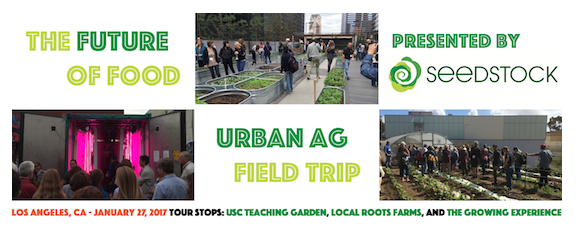
Slated for Friday, January 27, 2017, the Seedstock 'Future of Food - Urban Ag Field Trip’ will look at the impact of urban farming in Los Angeles County, the most populous county in the United States
Future of Food: 'Urban AG Field Trip’ To Explore Urban Farming Operations in L.A. County
Press release from our friends at Seedstock. We had a wonderful time at their Grow Local OC event and are planning to attend this field trip as well:
Slated for Friday, January 27, 2017, the Seedstock 'Future of Food - Urban Ag Field Trip’ will look at the impact of urban farming in Los Angeles County, the most populous county in the United States.
The trip will offer an excursion into the diversity of urban farming and state-of-the-art hydroponic, aquaponic and aeroponic agriculture operations in Southern California. Tour participants will be treated to lectures and sessions from pioneering farmers who are embracing innovative business models and growing systems to both increase food security and take advantage of the escalating demand for local food.
“Urban agriculture ventures ranging from commercial hydroponic enterprises and rooftop aeroponic farms to community gardens planted atop formerly vacant lots are not only disrupting the food system, but also generating community and economic capital,” said Robert Puro, co-founder and CEO of sustainable agricutlure social venture Seedstock. “The tour will give attendees an up close and personal look at the impact and future of agriculture in cities.”
Scheduled Field Trips Stops include:
The University of Southern California (USC) Teaching Garden - The USC Teaching Garden utilizes aeroponics to challenge the food systems status quo on campus. It was established to supply fresh produce to the university’s on-campus restaurants, dining halls, catering services, and hotel, while also teaching students and staff about flavor and sustainability. The garden utilizes aeroponic towers to produce chemical-free fruit, vegetables, herbs, and edible flowers without traditional soil growing media.
Local Roots Farms is an indoor vertical farming company based in Los Angeles that designs, builds, deploys, and operates controlled environment farms. Situated in shipping containers, the farms (called TerraFarms) grow with up to 99% less water, 365 days a year, pesticide and herbicide free, and with absolute consistency in production. Their plug and play form provides an innovative solution to the retail and foodservice sectors by greatly reducing supply-chain risks such as price volatility and food safety exposure.
The Growing Experience (TGE) is a seven-acre urban farm in North Long Beach that is located on a previously vacant lot. TGE is unique in that it is owned and operated by the Housing Authority of the County of Los Angeles (HACoLA), which manages 3,229 units of public and other affordable housing for the county’s Public Housing program. The urban farm utilizes traditional as well as aquaponics growing systems to help meet the needs of the community by increasing access to healthy foods.
A farm-to-fork lunch hosted by Local Roots Farms featuring lettuce grown on site in the company’s TerraFarms will be provided by lunch sponsor Tender Greens.
To register and learn more, follow this link:
http://seedstockurbanag.eventbrite.com/
About Seedstock
Seedstock is a social venture that fosters the development of robust and sustainable local food systems through consulting services and the use of a variety of tools, including the news and information blog Seedstock (http://www.Seedstock.com) and live events. Seedstock works with government agencies, municipalities and all private sector stakeholders to create a sustainable food ecosystem of innovation, entrepreneurship and investment.

Vertical Farming Market Worth US$ 6 Billion by 2022
12-21-2016 01:07 PM CET - Business, Economy, Finances, Banking & Insurance
Vertical Farming Market Worth US$ 6 Billion by 2022
Press release from: (MRE) Market Research Engine
Florida, December 20: Market Research Engine has published a new report titled “Vertical Farming Market by Growth Mechanism, Functional Mechanism and by Geography - Global Forecast to 2022”.
Vertical Farming is the future of modern day agriculture which is completely done in indoor agriculture labs. The vertical Farming market is expected to cross USD 6 Billion by 2022.
Browse full report here - www.marketresearchengine.com/reportdetails/vertical-farmi...
Vertical farming is an urban farming method where plant cultivation is carried out in multi storied building greenhouses using hydroponics or acquaponics growth mechanism. The vertical farming market will include those companies which are engaged in providing food by using vertical farming method and also the companies which provide various infrastructural services and equipment required for vertical farming. One of the main points is providing quality food with minimum use of pesticides is that these food products can be consumed by critically ill patients and by people having dermatological problems.
The report segments the global vertical farming market on the basis of functional device, growth mechanism and geography. The report also gives the detail vertical farming market by crop types with more emphasis on key vegetables and fruits produced in vertical farms.
How Vertical Farming is basically done?
Here plants are grown hydroponically, or without soil, nourished instead by the recycling of a nutrient-rich water solution. Some such farms rely on aeroponics, where the water solution is misted onto the plants' roots. The farms are typically several stories tall, allowing for crops to be stacked in an enclosed space. Photosynthesis is brought about by artificial light, and sometimes augmented by natural light, like in a greenhouse.
The primary reason of adoption of vertical farming technology as it will help to increase the crop production without increasing additional land area. This method will not use traditional farming methods rather new cultivation methods are used like hydroponics or acquaponics.
Hydroponics is most widely used for vertical farming.
The main driving factors for vertical farming are high quality of food with no use of pesticides and also no crop failures due to changing weather conditions.
The main players in the vertical farming are Green Sense Farms, Sky Greens, Indore Harvest Corporation, MoFlo Aeroponics and Everlight Electronics.
Download Free Sample Report: www.marketresearchengine.com/requestsample/vertical-farmi...
Who Should Buy this Report?
• Technology Providers
• Technology Investors
• Technology Standards Organizations
• Modern Agricultural Forums, Alliances, and Associations
• Government Agencies
• Venture Capitalists/Investors
• Private Firms
• Analysts and strategic business planners, and others.
Segmentation of this Report:
By Growth Mechanism
• Aeroponics
• Hydroponics
• Others
By Functional Mechanism
• Photosynthesis Process/Lighting
• Hydroponic Components
• Climate Control
• Sensors
By Geography
• North America
• Europe
• Asia-Pacific
• Rest of the World (ROW)
About MarketResearchEngine.com
Market Research Engine is a global market research and consulting organization. We provide market intelligence in emerging healthcare technologies, niche technologies and markets. Our market analysis powered by rigorous methodology and quality metrics provide information and forecasts across emerging markets, emerging technologies and emerging business models. Our deep focus on industry verticals and country reports help our clients to identify opportunities and develop business strategies.
Media Contact
Company Name: Market Research Engine
Contact Person: John Bay
Email: john@marketresearchengine.com
Phone: +1-855-984-1862, +91-860-565-7204
Country: United States
Website: www.marketresearchengine.com/
Address: 3422 SW 15 Street, Suite #8942, Deerfield Beach, FL 33442, United States

Five Urban Farming Projects In Chicago To Watch In 2017
City of Chicago
The city is jumping into the urban farming game, aided by a $1 million federal grant, one of 45 projects awarded a total of $26.6 million this year through the U.S. Department of Agriculture's annual Conservation Innovation Grants.
Five Urban Farming Projects In Chicago To Watch In 2017
Greg TrotterContact ReporterChicago Tribune
Come spring, a new urban farm is expected to take root in Lawndale with a groundbreaking for a $3.5 million year-round facility.
The Farm on Ogden, as it will be called, is a partnership between Lawndale Christian Health Center and Windy City Harvest, Chicago Botanic Garden's urban farming program that grows more than 100,000 pounds of produce a year in addition to training low-income people of color how to farm.
Like a tomato plant bursting from a pothole, Chicago's urban farming scene is a tiny hope-filled industry in a tough city, steadily growing as a source of jobs, economic development and food in some of the poorest neighborhoods on the South and West sides. That growth will continue with an assortment of new projects and expansions in 2017.
The Lawndale neighborhood farm, at 3555 W. Ogden Ave., will provide a needed boost to Windy City Harvest, allowing it to double its training capacity and increase overall production, said Angela Mason, associate vice president of the urban farming program.
"This will be a really warm and welcoming space when we're through," Mason said, standing in the cavernous vacant building that will be transformed into an indoor farm and community center.
There's still another $395,000 left to raise, but the plan is to continue fundraising while building the project, Mason said.
The roughly 30,000-square-foot facility will house a 50,000-gallon aquaponic system, a greenhouse, cold storage area and — facing West Ogden — a "healthy corner store," Mason said. It also will feature a commercial kitchen for making "value-added" products like salsa and for hosting cooking classes.
The health center will own the facility; Windy City will be the tenant. Rent will be paid in the form of produce for the fledgling VeggieRx program, in which health care providers "prescribe" boxes of produce for people with chronic health conditions, Mason said.
Produce grown at Windy City's 13 other sites also will be aggregated at and distributed from The Farm on Ogden. Currently, about half of the program's produce is sold to restaurants through a produce wholesaler — an important source of revenue that helps support services that generate less money. The rest of the produce is sold at a lower price in low-income communities.
Part of the goal, Mason said, is to make the program more self-sufficient by eventually increasing the earned revenue into a 50-50 split with raised revenue. Once the Lawndale facility is operational, Windy City will be able to grow more produce make more money, and rely less on grants.
But equally important to Windy City, the indoor farm will broaden the program's impact. Currently, the initiative trains about 200 people per year — a mix of community college students, at-risk youth and nonviolent criminal offenders in separate programs. After the Lawndale farm is built, that number will more than double.
Rosario Maldonado manages and coordinates sales for Windy City in addition to farming her own quarter-acre plot of land as part of Windy City's incubator program. The Farm on Ogden will help provide more income for her and other farmers in the winter because they'll be able to make products like salsas, jellies and teas in the commercial kitchen, she said.
"We need to become more self-sustainable as a city, so we need to find ways to do more year-round production all around," Maldonado said.
Windy City Harvest isn't the only farm in town. Here are other urban ag projects happening in 2017.
City of Chicago
The city is jumping into the urban farming game, aided by a $1 million federal grant, one of 45 projects awarded a total of $26.6 million this year through the U.S. Department of Agriculture's annual Conservation Innovation Grants.
Through its "Growing for Chicago" initiative, the city plans to promote and coordinate urban farming efforts, provide microgrants and training through partnerships with existing nonprofits, and prepare vacant land in the Englewood neighborhood for farming, said Chris Wheat, chief sustainability officer for Chicago.
The first order of business will hiring the city's first full-time urban agriculture coordinator, who will serve as a liaison of sorts between city departments and the various nonprofits and businesses doing the farming, Wheat said. One of the goals is to streamline the bureaucratic process for those wishing to farm to obtain the necessary permits, he said.
The city is also in the process of acquiring and remediating land near the long-awaited Englewood Line rail trail, and will eventually coordinate with public trusts and nonprofits to place farmers on the land, Wheat said.
"Urban farming in Chicago in 10 years looks to be an important element of economic development and important in terms of how communities come together," Wheat said.
Growing Home
Growing Home, an Englewood-based urban farm and job training nonprofit, has its own expansion plans. Currently, Growing Home grows about 30,000 pounds of produce on about 1 acre.
Within the next five years, the plan is to expand the farming operations onto two nearby parcels of donated land, more than doubling the operation, said Executive Director Harry Rhodes.
Accomplishing that will take more money. Growing Home is conducting a feasibility study, which could lead to a fundraising campaign in the next couple of years, Rhodes said.
Job training is the top priority of Growing Home. This year, 52 people enrolled in Growing Home's 14-week work training program and most of them later secured full-time jobs, Rhodes said. After the planned expansion, Growing Home's goal would be to triple that impact by training between 150 and 200 people a year.
"You hear about the shootings," Rhodes said. "You don't hear enough about the good things happening in Englewood."
Chicago awarded $1M USDA urban farming grant
Urban Canopy
Alex Poltorak is building his own urban farming dream in Englewood.
This year, Urban Canopy grew about 10,000 pounds of produce on about 1.25 acres of farmland established on top of a parking lot in Englewood, as well as microgreens inside a former meatpacking plant in the Back of the Yards neighborhood.
Unlike both Windy City Harvest and Growing Home, Urban Canopy is a for-profit company but measures success in terms of jobs provided and environmental impact — not just its bottom line, said Poltorak, its founder, who declined to discuss specific revenue and profit figures.
In the spring, Urban Canopy received a $12,000 grant from the Frontera Farmer Foundation and used the money to expand the farm, Poltorak said.
The plan for the year ahead is to build the farm out more, hire more people and continue to prove the business model, Poltorak said.
Advocates for Urban Agriculture
Not all farming involves digging in the dirt. Billy Burdett, executive director of Advocates for Urban Agriculture, is trying to cultivate a garden of data that will help Chicago's urban farming movement coalesce.
In a partnership with NeighborSpace and DePaul University, Burdett's organization is building an interactive online map of all the urban farms in the city, the Chicago Urban Agriculture Mapping Project.
Currently, the map shows 66 urban farms in Chicago — a definition that includes nonprofits and commercial enterprises alike — up from 50 when the mapping project launched in March of last year.
But Burdett acknowledged the map needs some updating. At least one farm on the map is no longer in business.
In a few months, Burdett's group will hire some college students to update the data, he said.
In time, the mapping project also will include data such as the number of people employed and the amount of produce grown at each farm, he said. The point is to become a more organized and formalized industry in Chicago, which will help with advocacy efforts.
"We want to make sure this is as up-to-date as possible and we're really excited to expand the information that it covers," he said.
Twitter @GregTrotterTrib
Here's What Happened at Freight Farms in 2016
Here's What Happened at Freight Farms in 2016
December 20, 2016
It's been another momentous year at Freight Farms, and we want to take a moment to celebrate just how far we've all come. If you’ll recall, at the end of last year we pledged to empower even more farmers across the globe, expand our own capabilities as a team and bring to light the power of farmhand. We've tallied up some numbers to see where we stand at the end of 2016...
We're thrilled to have over 100 Leafy Green Machines operating all across the world, by farmers with incredibly diverse backgrounds and motivations. As this network of freight farmers takes shape across the globe, we are excited to witness just how influential they are on the food movement as a whole.
With so many farmers joining the movement, we needed to scale up our own capabilities to ensure we were able to support them all! This year we added 11 new faces to the Freight Farms team, almost doubling our size! What departments grew the most? The Customer Success Team, the Farm Team and the Software Development Team.
The reasons for the growth of the Customer Success and Farm Team are pretty obvious, but why Software Development? One reason: to expand the capabilities of farmhand. Farmhand is what connects us and our farmers to the LGM, and it is an incredibly powerful tool. In 2016 we launched and improved numerous features to gather over 2.6 billion data points from all the LGMs.
That’s just a glimpse into what happened this year...take a look below at the rest of the highlights from 2016.
Affinor Growers Updates on License Holders, Quebec Property, and THC BioMed Equipment Shipment
Affinor is pleased to announce the license holder, Vertical Designs Ltd, located in Abbotsford BC has purchased 10 acres of agriculture land, received permits to build from the city, broke ground this month and has recently signed an agreement with Discovery Organics to purchase and distribute all strawberries produced by the facility.
Affinor Growers Updates on License Holders, Quebec Property, and THC BioMed Equipment Shipment
VANCOUVER, BRITISH COLUMBIA--(Marketwired - Dec. 20, 2016) - Affinor Growers (CSE:AFI)(CSE:AFI.CN)(FRANKFURT:1AF)(OTCQB:RSSFF) ("Affinor" or the "Corporation), a diversified agriculture and biotechnology company with proprietary vertical farming systems, would like to update shareholders on the progress with several license holders, the THC BioMed equipment shipment and property in Quebec.
License Holders Making Progress
Affinor is pleased to announce the license holder, Vertical Designs Ltd, located in Abbotsford BC has purchased 10 acres of agriculture land, received permits to build from the city, broke ground this month and has recently signed an agreement with Discovery Organics to purchase and distribute all strawberries produced by the facility. Vertical Designs Ltd. is planning to increase the total amount of towers to 36 in the initial build out, increasing Affinor's revenue on equipment sales and royalties. An additional 60,000 square feet of greenhouse over several phases is also being planned to ramp up production when needed to meet local demand roughly, adding another 200 towers when complete. Affinor is a 10% shareholder of Vertical Designs BC Ltd., and will benefit from profits, equipment sales, royalties and have a showcase facility available to sell additional license agreements.
Affinor is also pleased to announce that the license holder in Springfield Tennessee has recently closed on a property to build a greenhouse vertical farming facility. Affinor is working closely with them on planning, design and concepts to help with the next stage of permitting.
THC BioMed Equipment Shipment
Affinor is pleased to announce the equipment to grow and trial cannabis with THC BioMed located in Kelowna BC has been fabricated, finished and ready to be shipped. THC BioMed has requested to delay the shipment until January 2017 in order to complete various ongoing projects. The agreement between the companies, as outlined in Affinor's news release dated April 4 2016, is in good standing and they remain excited to use the technology in early 2017.
Quebec Property
Affinor would like to announce that it has sold the property in Quebec. Proceeds will be used to help further the company development and general administration.
About Affinor Growers Inc.
Affinor Growers is a publicly traded company on the Canadian Securities Exchange under the symbol ("AFI"). Affinor is focused on growing high quality crops such as romaine lettuce, spinach, strawberries using its vertical farming techniques. Affinor is committed to becoming a pre-eminent supplier and grower, using exclusive vertical farming techniques.
On Behalf of the Board of Directors
AFFINOR GROWERS INC.
- Jarrett Malnarick, President & CEO
The CSE has not reviewed and does not accept responsibility for the adequacy or accuracy of this release.
FORWARD LOOKING INFORMATION
This News Release contains forward-looking statements. The use of any of the words "anticipate", "continue", "estimate", "expect", "may", "will", "project", "should", "believe" and similar expressions are intended to identify forward-looking statements. Although the Company believes that the expectations and assumptions on which the forward-looking statements are based are reasonable, undue reliance should not be placed on the forward-looking statements because the Company can give no assurance that they will prove to be correct. Since forward-looking statements address future events and conditions, by their very nature they involve inherent risks and uncertainties. These statements speak only as of the date of this News Release. Actual results could differ materially from those currently anticipated due to a number of factors and risks including various risk factors discussed in the Company's disclosure documents which can be found under the Company's profile on www.sedar.com. This News Release contains "forward-looking statements" within the meaning of Section 27A of the Securities Act of 1933, as amended, and Section 21E the Securities Exchange Act of 1934, as amended and such forward-looking statements are made pursuant to the safe harbor provisions of the Private Securities Litigation Reform Act of 1995.
Artificial Trees and Vertical Farms Helping Turn Europe’s Cities Green
Artificial Trees and Vertical Farms Helping Turn Europe’s Cities Green
20 December 2016
KEY THEME: OPEN INNOVATION
Moss-covered boards that absorb city pollution and warehouses where fish and LED-lit lettuce grow side-by-side are helping to reshape the way that urban Europeans live their lives.
People in Europe are increasingly living in dense urban spaces where pollution is worsened by the exhaust fumes of lorries that must haul fresh food from the remote countryside, and where overwork means people rush in and out of their homes and can leave their central heating systems burning through gas.
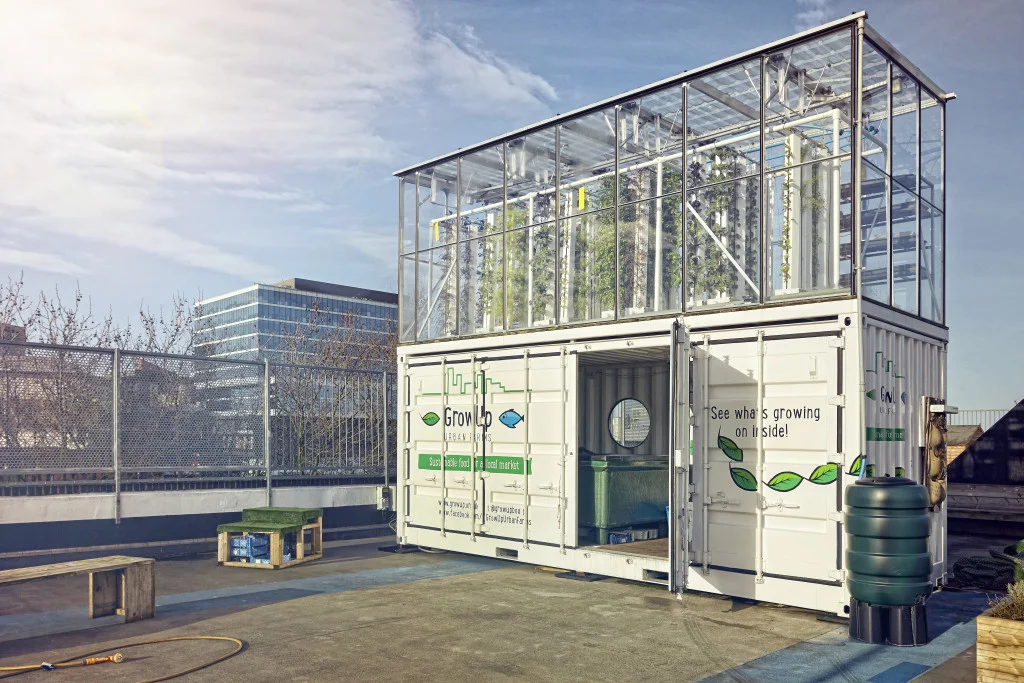
It’s problems such as these that today’s entrepreneurs have turned their attention to. The result is companies like Germany-based Tado, that has developed a thermostat that taps into the weather forecast, Green City Solutions, that is creating an artificial tree to mop up particulate pollution, and GrowUp Urban Farms, that runs a so-called vertical farm in a warehouse in London.
‘We use 90 % less water than traditional agriculture,’ explained Tom Webster, co-founder of GrowUp Urban Farms.
The company received its initial funding from the EU’s European Institute for Innovation and Technology (EIT). The EIT distributed the funding through Climate-KIC, a so-called Knowledge and Innovation Community set up to help businesses develop and to train entrepreneurs.
The Issue
More Europeans live in cities than suburbs, towns and villages, yet one in five city dwellers are directly affected by pollution, according to Eurostat, the EU’s statistical arm.
As Europe moves to cut back on greenhouse gas emissions, technology that can improve the lives of city dwellers sustainably will become increasingly important.
In a vertical farm, crops are stacked on plastic benches up to 10 levels high and illuminated by LED lighting. They are irrigated by the run-off from fish farms.
The idea is to place them in industrial warehouses close to where people live.
‘Agriculture is an industrial process the way that it is carried out globally, and the reality of it is that the current industrial process is not climate-change resilient,’ said Webster. ‘What we’re offering is a new solution which is more energy efficient and more resilient to climate change.’
It also means salad from an urban farm is fresher than salad grown in remote fields as it can be chilled immediately after being harvested, while on rural farms it has to be transported to a packing facility first.
‘By reducing the supply chain, the time it takes to get to consumers, you’re giving them more nutritious food,’ said Webster, who is also in the process of planning a site 10 times bigger than his current 600-square-metre site on the eastern edge of London.
New economy
It’s the kind of growth story that can be heard throughout this new economy of high-tech companies creating businesses that can help Europe rein back greenhouse gas emissions and improve the lives of city dwellers.
‘In Germany we have 45 % market share,’ explained Christian Deilmann, the founder and chief executive of Climate-KIC-funded Tado, a maker of a home thermostat that connects to the internet for weather updates and tracks your movements using your smartphone so it can turn on the radiators when you’re on your way home.
Heating accounts for around two-thirds of the energy used in a typical home in northern Europe, and the company claims that by using its intelligent thermostat, people can cut these costs by up to 31 % by ensuring that the boiler is only running when necessary.
‘In the future we are 100 % convinced that every home but also every building … will be heated and cooled in an intelligent way,’ said Deilmann.
Their objective is to get around 30 % of this increased market across Europe, and Deilmann hopes this will mean significant growth for the company.
‘What we’re offering is a new solution which is more energy efficient and more resilient to climate change.’
Tom Webster, Co-founder, GrowUp Urban Farms
‘Hopefully we will bring the company to the stock market,’ he said. ‘What E.ON and EDF are today, we want to become in the future.’
While they are at an earlier stage, Germany-based Green City Solutions is also getting ready for a growth phase as it develops its CITYTREE technology to filter pollution from the air on city streets.
With the help of Climate-KIC, the company has teamed up with the north Italian city of Modena to run a pilot project next year to put six CITYTREEs onto a city street.
The vertical flat-panelled device combines moss and wireless technology. It controls the humidity around the moss, which then acts as a filter, taking pollution particles out of the air.
After developing the CITYTREE, the company plans to improve the technology so that it is scaled back to just the plant and the equipment needed to supply it with the right nutrients and the correct amount of water. Once this work is complete, then it will be able to be used on existing surfaces around cities to clean the air.
‘You could apply that to every surface, every pre-existing installation, every infrastructure,’ said co-founder Zhengliang Wu. ‘You maybe even could mount it to public transportation.’
This Software Engineer Sold His Company to Start a Vertical Hydroponic Farm in Goa
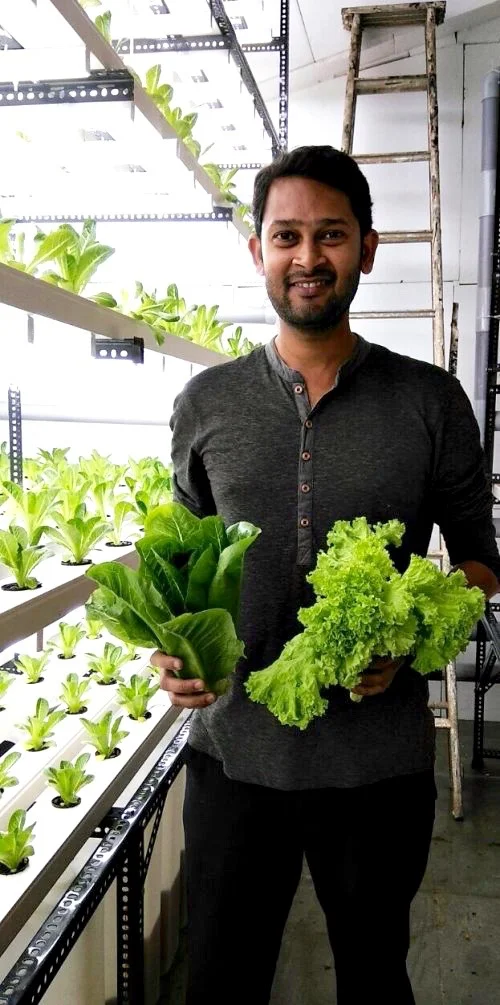
“You are what you eat,” they say. And that’s what Ajay Naik, a Goa-based hydroponic farmer, believes in. After quitting his job and giving up his company, this software engineer decided to help farmers across India learn about hydroponics and the use of technology in agriculture.
This Software Engineer Sold His Company to Start a Vertical Hydroponic Farm in Goa
December 20, 2016
“You are what you eat,” they say. And that’s what Ajay Naik, a Goa-based hydroponic farmer, believes in. After quitting his job and giving up his company, this software engineer decided to help farmers across India learn about hydroponics and the use of technology in agriculture.
“For several years I have been noticing that many farmers’ children prefer to go for an MBA or engineering degree these days instead of taking up farming. This is because agriculture is not always lucrative. But then, not many of us are focusing on the root of the system we live in – that is good quality food. Only when you have healthy food can you have a healthy country,” says Ajay Naik, a Goa-based software engineer-turned hydroponic farmer. In times like these when the younger generation of farmers choose to opt for anything but agriculture, the case of Ajay would seem to be a paradox of sorts. The 32-year-old has turned to hydroponic farming in an attempt to grow quality food because a lot of vegetables and fruits supplied to markets today are grown using harmful chemicals that are detrimental to health.
He believes that the right use of technology can improve a field’s produce but the problem is that Indian farmers are already struggling with finances and are reluctant to take risks “They fear that if their investment in technology does not work out, it may lead to huge losses,” he says. Ajay wants to change the equation by taking technology to as many farmers as he can. And that is where hydroponics comes into the picture.
Hydroponics is the process of growing plants in water with added nutrients without the use of soil.
What attracted Ajay towards this form of agriculture is that it limits the use of chemicals. After initial research he came to know about a person in Pune who has a doctorate in plant nutrition and manages a hydroponic farm. Ajay met him, saw his farms and learned as much as he could.
You may also like: Home Gardens That Require Very Little Space & Time – All You Need to Know About Vertical Gardening!
“It was inspiring and motivated me to start a farm of my own as well. The fact that hydroponics involves technology, like developing a system for automatic circulation of water, controlling the parameters of temperature, humidity, etc. made me like it even more. I have been working in the IT industry for the past 10 years and I understand these things. In fact, it would have been difficult for me to understand traditional forms of agriculture,” he says.
Fully equipped with the required knowledge, Ajay started his farm two months ago in Karaswada, Goa. With a team of six people, he now grows exotic vegetables like lettuce and salad greens using the Nutrient Film Technique (NFT). This is a hydroponic technique in which a shallow stream of water containing nutrients for plant growth circulates past the bare roots of plants in watertight cylindrical tubes also called channels. The water flows from one end and is re-circulated into the system from the other end, thus reducing water consumption by 80% when compared to traditional farming.
Since there is no soil involved in the process, there is no need for pesticides. Ajay has set up his system in a vertical farming model with racks that have seven levels to save space.
He claims that this is Goa’s first vertical hydroponics farm, which occupies an area of 150 square metres. “I grow three tonnes of lettuce every month. The farm is set up in a controlled environment that enables me to grow exotic vegetables all-year-round without being dependent on the weather,” he says. In addition, he is now trying to convince other farmers to adopt this technology. “I have already started showing the technique to farmers in vegetable expositions conducted by the agriculture department in different places in Goa. The department is also keen on collaborating with me so they can take it to more farmers,” he says. Other than this, he sells his produce to local vendors and also in supermarkets. “I am planning to grow bell pepper, cucumber and strawberries too. In the future, I would also like to shift to other hydroponics techniques and increase the produce,” he adds.
Originally from Karnataka, Ajay came to Goa to work with a software company, which he quit in 2011 to start his own enterprise to develop mobile applications.
He then sold his company this year and used his savings to start this farm. He also received help from two investors. While the initial cost of setting up the farm is high, Ajay feels that he will be able to recover it over a period of time with hydroponics farming because of the high turnover.
“Producing food nowadays is becoming a real challenge. With the increasing population, water scarcity, and the ecological impact of transportation, hydroponics is the best choice for commercial as well as home-based farming. Among many advantages, hydroponics allows you to produce more (20 to 30%) high-quality vegetables and fruits, save on water and nutrient consumption, and grow fresh food everywhere – including sterile and unproductive lands, or in big cities and capitals. It helps cutting down on expensive intermediaries and shipping costs,” he concludes.
You can contact Ajay by writing to him at ajay20naik@gmail.com
Massive Rooftop Farm In Tel Aviv Grows 10,000 Heads of Lettuce Every Month
On top of a shopping mall in Israel, a sprawling rooftop farm produces fresh vegetables and greens for thousands of local residents
Massive Rooftop Farm In Tel Aviv Grows 10,000 Heads of Lettuce Every Month
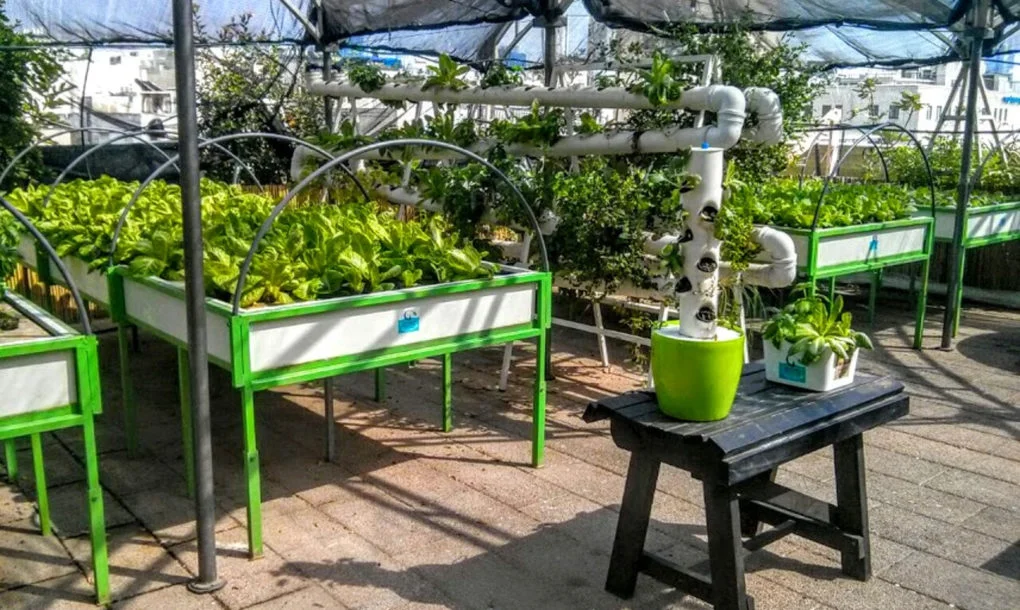
On top of a shopping mall in Israel, a sprawling rooftop farm produces fresh vegetables and greens for thousands of local residents. Tel Aviv’s Green in the City program helped set up the urban farm in the heart of the city over a year ago. While the roof of a mall may seem like an unlikely place to cultivate nutritious veggies, it actually makes a lot of sense, since the shopping center is a central meeting place with tons of foot traffic.
The rooftop farm grows atop the Dizengoff Center, a large concrete shopping center built in the 1970s. Inside the mall, a produce stand greets visitors with a lush display of freshly harvested vegetables grown upstairs in the rooftop farm. The small stand operates on the honor system and is so popular that its inventory has to be restocked four times a day to keep up with customers’ demands.
Related: World’s largest rooftop farm sprouts 10 million pesticide-free crops each year
Tel Aviv’s urban rooftop farm does more than just grow vegetables to sell. In addition to its two greenhouses with more than 8,000 square feet of growing space, the farm features an educational space where farmers teach public classes on urban farming and cooking. The group also sells hydroponic kits and helps people learn how to grow their own food at home.
The farm’s output is impressive. Every month year-round, 10,000 heads of lettuce are harvested and the rooftop farm also grows 17 different varieties of greens and herbs. All of the crops are grown hydroponically, either on horizontal or vertical setups. “People are used to lettuce tasting a certain way, after it’s been sitting in a bag in the refrigerator for a week,” farm director Mendi Falk told the Times of Israel. “With hydroponics, the lettuce is harvested just 15 minutes earlier. It has a different taste.”

The View From Inside Square Roots’ Urban Shipping Container Farms
The View From Inside Square Roots’ Urban Shipping Container Farms
By April Joyner / CONTRIBUTOR
Square Roots, the urban farming accelerator launched by Kimbal Musk and Tobias Peggs, began its yearlong program in the Pfizer Building on the border of Williamsburg and Bed-Stuy. Due in part to the boldface name behind it, and also to the growing popularity of urban farming, the program got lots of buzz right off the bat. So how’s Square Roots’ bid to kick off a “real food” revolution going?
Last Wednesday, Peggs opened up Square Roots’ doors to the public for a tour of its shipping-container farms and a first taste of its 10 participants’ greens.
The program, as he pointed out, emphasizes the “urban” in urban farming: the container farms are just across the street from the Marcy Houses, and they connect to the city’s water supply through a fire hydrant. And there’s a good reason the farms have a pink-purplish glow. Red and blue are the colors most actively involved in photosynthesis, Peggs said, so to maximize resources the farms use those colors for lighting. Electricity is the farms’ greatest expense.
As for the tasting, Technical.ly was able to sample some mustard greens, at $5 a bag, grown by participant Sylvia Channing. Upon the urging of another participant, this reporter ate them raw, straight out the bag (which she would’ve never done otherwise — not Southern tradition), and they were surprisingly enjoyable: crisp and tangy.
But the real challenge ahead isn’t how the greens taste; it’s whether the participants can make viable businesses out of them. The program has hit the five-week mark, and the participants’ crops are set to reach their first harvest, which means they will finally have tangible goods to sell. Next Wednesday, Dec. 21, Square Roots will host its first farmers market.
The farmer-entrepreneurs have been given free rein to develop farming and business strategies of their own choosing. The challenge, both Peggs and the program’s participants stressed, is figuring out how to make the economics work. The modular farms, which use technology from Boston-based Freight Farms and Laramie, Wyo.–based Bright Agrotech, cost about $3,000 a month to run, according to participant Jonathan Bernard. But they also produce a relatively high yield, given the space: one farm, for instance, could yield 55,000 mini-heads of lettuce per year, Peggs said. The farming system Square Roots uses allows the participants to yield a weekly harvest once their first crop matures.
In addition to learning how to operate their farms, the participants are also getting advice on sales and marketing, including the basics of pricing: enough to meet their expenses, but not so much that customers will balk. For instance, Bernard plans to charge no more than $3 each for his mini-heads of lettuce in order to keep his prices competitive.
While Square Roots paid for the cost of the farm and the initial expenses to run them, the participants will be responsible for meeting expenses thereafter. The farming system itself is quite reliable, Bernard said, but without a real product just yet, none of the farmers has a customer base. Whether enough people will come to shop is an open question.
“I’m fine with that risk,” Bernard said. “Maybe I was chosen because I’m one of the people who’s crazy enough to consider it.”
Jonathan Bernard, one of Square Roots’ participants, in the accelerator’s office. (Photo by April Joyner)
As it turns out, even their choice of crops involves marketing strategy. For now, all of them are focusing on herbs and leafy greens, because they offer the most bang for the buck — the majority of the plant is eaten, as opposed to, say, a strawberry plant, from which only the fruit would be sold. In the beginning, Bernard said, they were given starter crops by lottery — each person drew a particular choice of plant — and then traded amongst each other for their preferred crop. Since then, they’ve had the opportunity to pick crops that appeal to their desired market.
And yes, as this reporter learned, there is a specific market segment for certain vegetables. Some of the participants have chosen specialty crops, such as Japanese shiso, to sell to high-end restaurants, while others are focusing on selling more common greens such as lettuce at farmers markets.
Another participant we spoke with, Electra Jarvis, chose kale and cilantro in order to appeal to vegetarians and vegans. Kale, of course, has been a trendy green (almost to the point of punchline) for some time, in part because it is known for being rich in nutrients. Jarvis chose cilantro, she said, because it’s versatile as a seasoning and as a garnish for many types of dishes.
She’s applied to several farmers markets, including New York City’s greenmarket program. Jarvis said she hopes to sell at the farmers market in Greenpoint’s McCarren Park, both for its relative proximity to her farm and its enthusiastic customer base. In addition, Jarvis, who is vegetarian and in the process of transitioning to a vegan diet, plans to attend meetups that cater to vegetarians and vegans in order to familiarize herself to her target customers.
“I want them to feel supported by somebody’s who looking out for that cause, to be a farmer that they can relate to,” she said.
On the farming side, the participants are beginning to experiment as well. At the launch of the program, they received general guidelines for the appropriate temperature, light and humidity settings for their farms, as well as a standard nutrient mix — potassium, nitrogen and phosphorus — for their plants. But as Peggs explained, the containers enable farmers to create custom environments, or “recipes,” for their crops — even to mimic particular climes in hopes of, say, reproducing the best kale out of Tuscany. Many of those “recipes,” which are usually tailored to specific plants, are proprietary, Jarvis told Technical.ly, so it’s been up to the farmers to figure out what works best for their specific crops.
So what drew Square Roots’ participants to the program in the first place?
As Peggs noted in our previous interview with him, they are indeed passionate about changing how people think about the food they consume. Bernard, for instance, is an avid cook interested in having high-quality ingredients available to the average person. He lives in Huntington, on Long Island, where he’s currently testing out his lettuce with members of a local CrossFit gym. His eventual dream, he told Technical.ly, is to see Square Roots’ urban farming system shrunk down into a module that could fit into a home kitchen.
“Once people start doing this at home, then they’re changing habits,” he said. “They’re not just paying more at the restaurant or at the grocery store, but they’re actually taking part in it. I think the consumer is the end goal.”
Jarvis also came to the program with a keen interest in the food industry. She is a student in Pratt’s masters program in sustainable environment systems, from which she’s on track to graduate this spring. Jarvis told Technical.ly that’s she particularly interested in helping to promote a plant-based diet as well as exploring whether vertical farms such as those used in Square Roots’ systems could be a path toward food justice — in other words, making fresh vegetables more accessible to everyone.
“I don’t know if this is the answer, but that’s what I’m here to find out,” she said.
-30-
April Joyner is a journalist who covers business, tech and finance. As a freelance writer, she has contributed to OZY, NewYorker.com and FastCompany.com. Joyner's writing has also appeared on Business Insider and USAToday.com.

Farm Tour and the First Farmer's Market 🌱🎅
THIS EVENT WILL BE THEIR FIRST FARMERS MARKET THIS COMING WEDNESDAY (12/21) AND WE WOULD LOVE YOU TO COME
Farm Tour and the First Farmer's Market 🌱🎅
Wednesday, December 21, 2016
5:00 PM to 8:00 PMSquare Roots Urban Farming Campus
630 Flushing Avenue, Brooklyn, 11206, New York, NY (map)
Tour the Square Roots farms, meet the farmers, and buy a bundle of fresh, tasty, locally-grown greens - just in time for cooking up a holiday feast!
Our indoor, modular, vertical farms squeeze the equivalent of 2 acres of outdoor farmland into a climate-controlled shipping container. So our farmers can grow non-GMO, fresh, tasty greens all year round. Like, now!
This should be a fun event - so bring a friend :)
Square Roots’ mission is to empower the next generation to become leaders in the "real food" revolution. This means coaching young, passionate people to grow real food, sell locally and build sustainable businesses.
The first cohort of farmer-entrepreneurs are just about to harvest their first crop. They will be growing a wide variety of leafy greens and herbs - from lettuce and basil to chard and kale to specialty items like shiso.
THIS EVENT WILL BE THEIR FIRST FARMERS MARKET THIS COMING WEDNESDAY (12/21) AND WE WOULD LOVE YOU TO COME.
We know, we know, it's a busy time of year. There are holiday parties and year end deadlines, and all sorts of legitimate excuses that could be made. But if you are buying food from the grocery store this week in time for holiday feasts, then why not buy fresh, locally-grown produce from Square Roots - and support a local farmer!
We are located at 630 Flushing Ave, Brooklyn. We have a community space is inside a crazy old Pfizer Pharmaceutical factory (that alone is worth seeing!), and our farm is in the parking lot (yes, really). It's right off the J, M and G trains - 10 mins max across the Williamsburg Bridge if you are coming from Manhattan.
The event kicks off at 5pm. We will do a farm tour at 5:30pm and again 6:30pm - where you will get to see the farms and talk about the tech. Meanwhile you can sample and buy freshly harvest, tasty greens - while hanging out with the farmers - in the comfort of our indoor space.
Thanks for reading this far down. See you there! 🌱

Farm In The City
Farm In The City
BY ZULIANTIE DZUL - 17 DECEMBER 2016
Malaysia ventures into indoor farming to inspire more urbanites to grow their own food, writes Zuliantie Dzul
“I AM a city farmer,” read the words in black and striking green on the black T-shirt worn by the youth who greets me at the door of the second-floor office in Sri Kembangan, Selangor.
Walking in, I spot brown boxes of fertilizers neatly placed on the shelf across the door. Stacks of PVC pipes are on the concrete floor next to the shelf. The air inside is a little stuffy as the office had just recently opened for business.
The young man introduces himself as Jayden Koay, one of the founders of CityFarm Malaysia, a newly-founded organisation with the objective to inspire more people to become city farmers with the ability to grow locally from anywhere for a more sustainable future of food production. CityFarm Malaysia serves as a one-stop-centre to kick start your farming journey, supplying parts such as piping and products such as fertiliser and germination sponge. The sight of vegetables behind a closed wooden door and a glass panel catches my eyes. The affable
The sight of vegetables behind a closed wooden door and a glass panel catches my eyes. The affable Koay takes me inside the room, a vertical farm of lettuce, where slabs of leafy greens of different stages — from seedlings to ready-to-harvest — take up most of the 42sq m space. After a quick tour of the “farm”, we return to the office where we’re soon joined by Looi Choon Beng and Johanson Chew, the other co-founders of CityFarm Malaysia.
CityFarm Malaysia ventures into indoor farming to inspire more urbanites to grow their own food. Pix by Owee Ah Chun
HYDROPONIC IS BACK
The United Nation predicts that the world’s population will grow to 9.6 billion by 2050. 70 per cent of people will live in the cities and 70 per cent more food will be required to feed them. Yet, 80 per cent of cultivated land is already in use. Moreover, extreme weather patterns and devastated crops will create higher food prices, and consumers will become more conscious of how their foods are produced.
As the population rises, more cities will be developed. In the long run, we can no longer depend on food supplies from outside. And it is this very knowledge that drives the team of five to venture into indoor farming to cater to the rapid growth in consumer demand for affordable, high-quality, locally produced crop in any climate.
“We need sustainable supply. There won’t be enough land,” begins Koay.
Hydroponic is one of the basic farming methods which took the country by storm decades ago. Progression of hydroponic technology makes soilless farming possible within the urban household and this is the key to address food supply issue, where everyone can be a city farmer and part of the food supply process. “Soon after that, many other methods were engineered,” adds Koay.
For example, the farmers in Cameron Highlands are using the nutrient film technique, wherein a very shallow stream of water containing all the dissolved nutrients required for plant growth is re-circulated past the bare roots of plants in a watertight gully, also known as channels. There’s also the technology to replace sunlight with LED lights so your farm can be cultivated indoors.
Farming within the city can help reduce carbon foot print where transportation can be optimised. “The vegetables we buy from the markets travel about 300km to reach consumers in the city. The travelling produces carbon dioxide and petrol is needed to transport the fresh produces. What we do here is indoors and in the city. It’s already close to consumers,” explains Koay.
CITY FARM MADE POSSIBLE
Urban farming isn’t really an alien concept. It’s fast growing in popularity around the world. Across the Causeway, our neighbour Singapore has its own campaign. The scarcity of land in the city has prompted the Edible Garden City to promote the Grow Your Own Food movement. The hope is that — as stated in their website — people would grow edibles on all the under-utilised spaces such as rooftops and sidewalks.
“We do foodscaping. Our gardens work doubly hard to be both productive and pretty. We use herbs, vegetables and fruit trees to create a landscape that you can munch on.”
In addition, Edible Garden City supplies fresh produce and conducts workshops on farming-related topics. While focusing on the community, the company also seeds the knowledge of food growing in schools. “We believe that children are more likely to eat the greens that they grow,” it states.
The awareness of urban farming in the country, however, remains relatively low. This is why CityFarm Malaysia aims to play a part in the movement by creating simple and affordable farming system in cities.
“Our farming method is suitable for high rise buildings, with small balconies. We can customise the design for you, whether you want it on your balcony or mount it on your wall,” shares Koay.
The City Balcony Hydroponic set with a dimension of 1.5m by 60cm by 60cm is a simple and easy to use PVC system which includes 20 or 30 plants capacity, nutrient tank, nutrient pump, fittings and net pots. It’s suitable for city growers as it doesn’t require frequent supervision. It’s also affordable.
“Based on our climate, you can breed local vegetables and will have no problem growing them here. You can have lettuce, kale, choy sum, pak choy and herbs,” says Koay.
If you live in a small apartment with just one window, the City Window Farm is the best setup for growing vegetables.
Koay says: “City Window Farm is a basic hydroponic starter pack, all in one box. You can master that first. Just put near your window.” “Don’t worry, it comes with a manual,” Looi chips in.
Besides providing farming equipment, the team also organises classes, training, exhibitions and talks in public and in schools. So far, they have visited three schools in the Klang Valley. “We want to teach students about urban farming so when they go home, they can share their knowledge with their parents,” explains Koay.
THE A-TEAM The self-taught trio and two others behind the set-up are graduates of the Multimedia University in Cyberjaya. It was through clubs and student activities that they met as they were all on different programmes.
“It all started as a hobby about two years ago,” shares 28-year-old Chew, who’s a freelance software engineer. “I saw this urban farming concept on TV. It’s big in the US and Europe, and I was interested. So I bought a plant and put it in a small corner in Malaysian Global Innovation & Creativity Centre, where he worked. Soon after that, Koay decided to join as well.”
Discussions followed soon after and eventually, the idea became a reality and CityFarm Malaysia was born.
IT management consultant Looi says: “I want to be able to do something impactful but also something that can still feed my family.”
Koay, 27, from Terengganu, concurs: “Yes, we need to do something influential and make a difference. I was in the Oil & Gas industry before but I resigned to do this. But I still have a few other businesses.”
Their green hearts don’t just stop at CityFarm. They also practice green living as well. Looi and Koay confide that they use less plastic bags and polystyrene now while Chew plans to get an electric car for himself.
So what’s next?
Education. According to the team, they want to train the next generation on the importance of farming and how we can play a part to make the world a better place by growing food that is healthy, clean and fresh.
Koay concludes: “We want to start ahead and now it’s the time. There are only five of us and we can’t possibly reach the whole country by ourselves. Everyone should play a part for this kind of effort.”
Details at cityfarm.my and www.facebook.com/CityFarmMalaysia
Read More : http://www.nst.com.my/news/2016/12/197593/farm-city
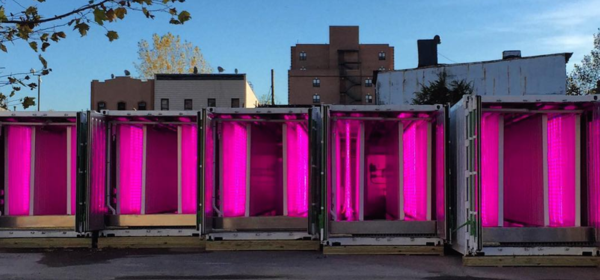
The Square Roots Urban Farming Community, NYC
Farm Tour and the First Farmer's Market 🌱🎅Wednesday, December 21, 2016
- 5:00 PM to 8:00 PM
Square Roots Urban Farming Campus
630 Flushing Avenue, Brooklyn, 11206, New York, NY (map)
Tour the Square Roots farms, meet the farmers, and buy a bundle of fresh, tasty, locally-grown greens - just in time for cooking up a holiday feast!
Our indoor, modular, vertical farms squeeze the equivalent of 2 acres of outdoor farmland into a climate-controlled shipping container. So our farmers can grow non-GMO, fresh, tasty greens all year round. Like, now!
This should be a fun event - so bring a friend :)
Square Roots’ mission is to empower the next generation to become leaders in the "real food" revolution. This means coaching young, passionate people to grow real food, sell locally and build sustainable businesses.
The first cohort of farmer-entrepreneurs are just about to harvest their first crop. They will be growing a wide variety of leafy greens and herbs - from lettuce and basil to chard and kale to specialty items like shiso.
THIS EVENT WILL BE THEIR FIRST FARMERS MARKET THIS COMING WEDNESDAY (12/21) AND WE WOULD LOVE YOU TO COME.
We know, we know, it's a busy time of year. There are holiday parties and year end deadlines, and all sorts of legitimate excuses that could be made. But if you are buying food from the grocery store this week in time for holiday feasts, then why not buy fresh, locally-grown produce from Square Roots - and support a local farmer!
We are located at 630 Flushing Ave, Brooklyn. We have a community space is inside a crazy old Pfizer Pharmaceutical factory (that alone is worth seeing!), and our farm is in the parking lot (yes, really). It's right off the J, M and G trains - 10 mins max across the Williamsburg Bridge if you are coming from Manhattan.
The event kicks off at 5pm. We will do a farm tour at 5:30pm and again 6:30pm - where you will get to see the farms and talk about the tech. Meanwhile you can sample and buy freshly harvest, tasty greens - while hanging out with the farmers - in the comfort of our indoor space.
Thanks for reading this far down. See you there! 🌱